






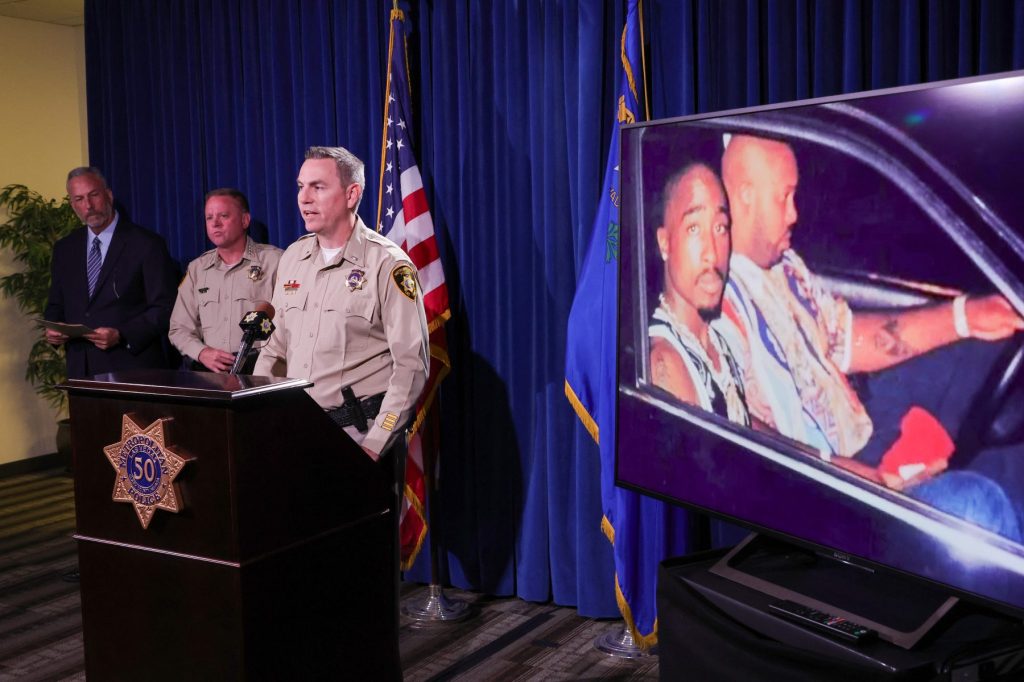
A jury trial for a man accused of masterminding the murder of Tupac Shakur is finally set to start next week, more than three decades after the rap legend’s 1996 killing.
The Las Vegas drive-by shooting that killed Tupac has long been one of music’s great unsolved mysteries. But Duane “Keffe D” Davis was arrested in September 2023 and charged with first-degree murder over allegations that he orchestrated the attack.
Related


After three years of litigation and appeals, a trial will at last kick off Monday morning (Aug. 10) with jury selection in a Las Vegas courtroom. After a jury is picked, the proceedings are expected to run at least four weeks; if he’s convicted at the end, Davis, 63, could be sentenced to life in prison without parole.
Despite previous statements in which he linked himself to the shooting, Davis now steadfastly maintains his innocence. “I wasn’t in Nevada, period,” Davis said in a local television interview last week.
On the night of Sept. 7, 1996, Shakur was in the passenger seat of a car driven by Death Row Records boss Suge Knight after a Mike Tyson boxing match in Las Vegas. When they stopped at a red light, a white Cadillac pulled beside them and a shooter in the backseat opened fire, striking Shakur four times. He died six days later on Sept. 13.
The killing, which came amid the infamous East Coast-West Coast hip hop feud, was followed months later by the shooting of friend-turned-rival Notorious B.I.G. Both rappers were then at the peak of their rising careers, and the pair of shootings quickly became fixtures in American cultural history. “You have two guys, two of the brightest stars to emerge out of the hip-hop era in that time, and they’re gone, just like that,” said Joel Anderson, host of Slate‘s Slow Burn podcast on the killings, in a 2019 interview.
Despite rampant theories and rumors, no one was ever charged with either murder. But starting in 2018, Davis began talking about his own involvement in Tupac’s killing. A former Crips gang leader in 1990s Los Angeles, Davis gave media interviews and released a 2019 memoir called Compton Street Legend in which he admitted he was in the car during the attack and had obtained the .40 handgun that was used.
Davis described the shooting as part of a broader gang war between Los Angeles Bloods and Crips that had come to overlap with the hip-hop feud — a dispute that escalated further when Shakur and others beat up Davis’ nephew, Orlando “Baby Lane” Anderson, earlier in the night at the MGM Grand hotel: “Tupac chose the wrong game to play,” Davis wrote in the book.
The book didn’t say who actually pulled the trigger from the backseat, where both Anderson and DeAndrae “Dre” Smith were seated; both men are now dead, as is the driver of the Cadillac. But Davis said the fight with Anderson had “crossed the line” and that they “couldn’t let no record company studio gangsters do us like that.” Describing the fateful moment, Davis said he believed Tupac was reaching for a gun and that “one of my guys from the back seat grabbed the Glock and started bustin’ back.”
Those statements came back to haunt him. In 2023, Las Vegas prosecutors secured a grand jury indictment charging Davis with first-degree murder. At an initial hearing, a prosecutor told the judge that the former gang leader had openly acknowledged having “ordered the death” of the rap legend: “He admitted… that he was the on-the-ground, onsite commander of the effort to kill Tupac Shakur.”
Following his arrest, Davis pleaded not guilty and his attorneys quickly sought to have the charges dismissed, arguing that a 27-year delay represented an “egregious” constitutional violation. They cited a lack of physical evidence — the gun and car were never recovered — and also argued Davis had signed immunity agreements with federal and local authorities in the years since the killing.
A judge rejected those arguments early last year, prompting an extended appeal in which Davis took his case all the way to the Nevada Supreme Court. But the state high court rejected the appeal in November, clearing the way for next week’s trial.
As the courtroom showdown approached, Davis sought to exclude key evidence from the case — including those damning admissions in his memoir. In doing so, his lawyers argued that he hadn’t really written the book himself and that his statements were essentially fictional, aimed simply at hyping up his image and making money.
“We’re putting way too much credence and value and weight on statements that are made for entertainment purposes only,” his attorney Michael Sanft said at a June hearing. “Not a confession to a priest, not a confession to a police officer, but rather to promote a book, to sell a product.”
But the judge rejected those arguments, too, pointing to an interview in which Davis described the memoir as the “real truth.” That means prosecutors can directly tell jurors about the statements by Davis in which he seemingly admits to the crime, an unusually direct piece of evidence in a disputed murder trial. Davis’ lawyers will likely reprise their same defense before the jury: That the book was a work of fiction that cannot be believed.
Last week, the judge also ruled that jurors can hear a recording of an interview in which Davis discussed the shooting with police in 2008. Defense attorneys had argued detectives promised Davis his statements would be confidential and not be used against him, but prosecutors said he waived that argument by later talking about the same events publicly.
Looming in the background of the coming trial is a civil wrongful death lawsuit filed earlier this year by Tupac’s stepbrother, Mopreme Shakur. The case resurfaced longstanding rumors that Sean “Diddy” Combs had been involved in the shooting — claims that the incarcerated rapper has denied for decades. That means whatever the verdict for Davis, questions about the Tupac killing could remain unanswered.
Related

Beyond the book and the recording, jurors will hear from a slew of testimony. A list of potential witnesses includes Knight, the only other surviving witness; various members of Tupac’s family; Reggie Wright Jr., a former head of security at Death Row who Davis has publicly claimed was involved; Yusuf Jah, the co-author of Davis’ memoir; Kirk Burrowes, an early exec at Diddy’s Bad Boy Records; and Rasheena Smith, a girlfriend of Davis’ nephew Anderson at the time of the shooting.
For his part, Davis has maintained his innocence since the charges were filed. “I did not do it,” he insisted during an interview last year with Good Morning America. “They don’t have nothing. And they know they don’t have nothing. They can’t even place me out here. They don’t have no gun, no car, no Keffe D, no nothing.”


