


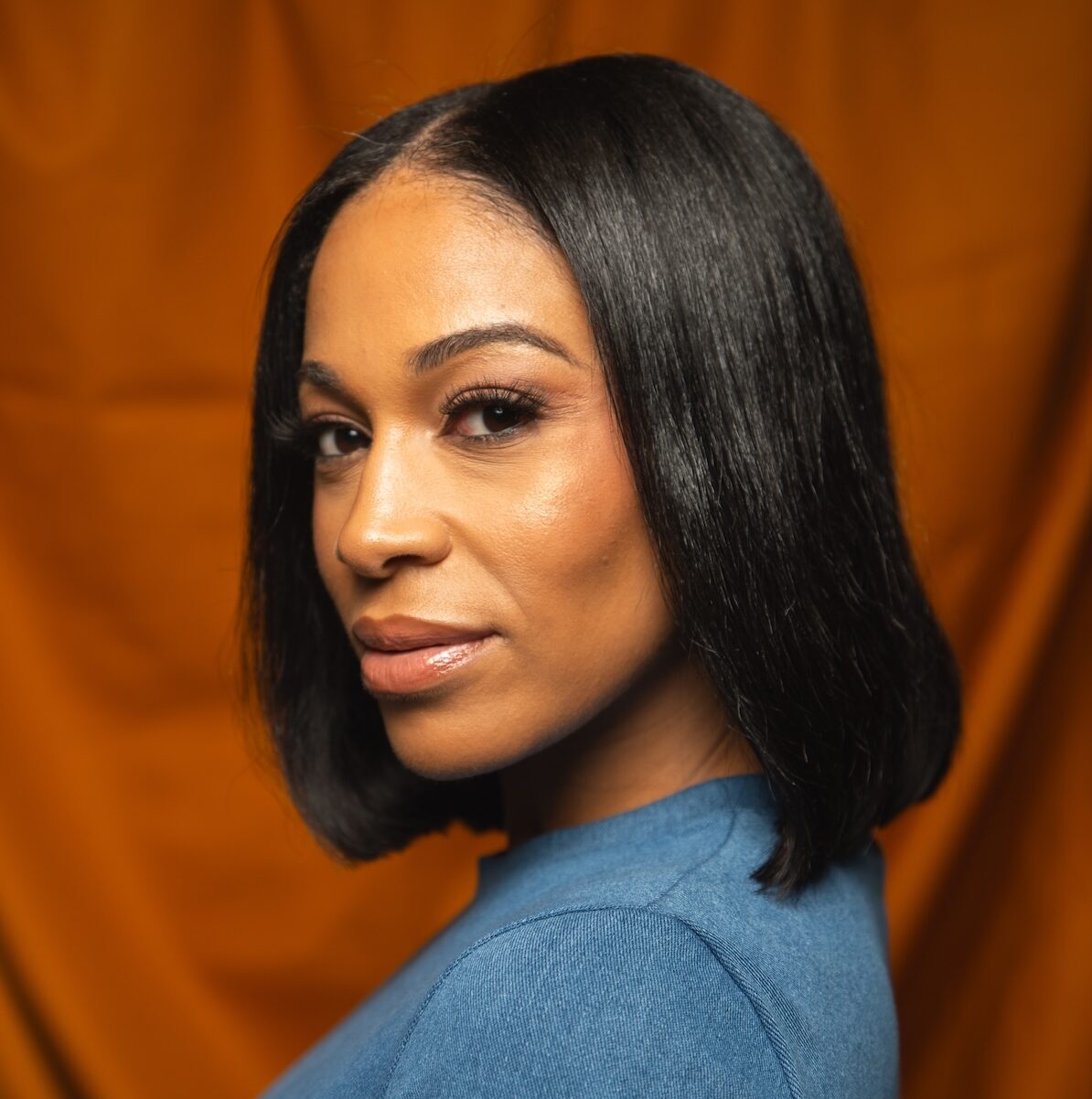
Victoria Reese Brathwaite knows multiple sclerosis can look like a beautiful young woman contemplating partnership and motherhood. She received a multiple sclerosis diagnosis in 2012. It made her wonder about her future living with a chronic illness.
Braithwaite Noticed the Lack of Black Female MS Representation
She faced a void of information. “The lack of representation is a big deal,” she told Black Health Matters. Multiple sclerosis (MS) patient outreach efforts did not reach her 25-year-old corner of the internet. A 2022 study from the Journal of Neurology found that MS. disproportionately impacted Black women. You wouldn’t know it by what Reese Brathwaite found on the internet in 2012.
The faces of the patients she saw sharing information did not mirror her own. Searches for multiple sclerosis symptoms rarely churned out baddies with straight-back cornrows.
“When you don’t see yourself, which is a big part of my origin story, but [when] you don’t see yourself in a health condition, especially one that you have to live with for the rest of your life, that really changes the trajectory of how you care for yourself,” she said.
From Patient Advocate for Nonprofit Leader
She founded We Are Ill, a community-focused patient advocacy organization, in 2020. The seeds were planted in 2017, with the hashtag #WeAreIllmatic, putting a new spin on the face of illness.
Being a voice for others struggling was not something the Howard University graduate planned on. “I started off as simply a patient advocate telling my personal story, so I had no idea I would start a nonprofit,” she said.
We Are Ill helps to bring the community together. They host an annual Wellness Weekend that brings community members together.
They are expanding their efforts to offer insights on lupus and neuromyelitis optica spectrum disorder, two other conditions that disproportionately affect Black women. “We’re always trying to make sure that patient care is patient-centered,” said Reese Brathwaite.
People form friendships with those who understand they may need to cancel a dinner due to fatigue and are unfazed by sudden spasms. “Providing social connectedness by community and fellowship that has proven to lead to better health outcomes,” she said. “Underrepresentation can impact healthcare access and hence result in poorer health outcomes in these populations,” according to the International Journal for Equity in Health.
How We Are Ill Provides Support
Patient advocacy organizations can serve as connective tissue between the public and the services developed by healthcare firms. Reese Brathwaite noted that resources can be difficult for patients to access if they cannot be found.
She noted that global corporations may not be as adept at communicating with those who need their support as they believe. “You have all these different departments, and so whoever is working in patient advocacy might not be working in marketing,” she said.
“We’re also dealing with patients who are dealing with their own lives and children, work, careers, spouses, and health conditions. And so, it is a lot to ask patients to go and find and seek out another thing,” she added.
They focus on showing up in the paths of those who need to learn. “We find them where they are.”
Speakers at We Are Ill are briefed before engaging with the audience. The instructions are clear. Leave your pessimism at home. “We are not a ‘Debbie Downer’ community,” said Reese Brathwaite. “We get enough of that.” We Are Ill brings familiarity and glamour to learning about chronic illness. They include happy hours, spirited workout plans, and other activities that attendees might not expect at a healthcare conference. Attendees mill around in customized pilates socks and little black cocktail dresses. Speakers include Ashley Blaine Featherson and Jennifer Holliday.
“We are redefining what sick looks like,” she declared.
They promote living full lives by developing programming that focuses on what is possible, not what isn’t. “We had a session about intimacy and how we can help with intimacy issues, because that’s a big issue in our community,” she said.
Challenging Stereotypes About Black Women and Chronic Illness
Part of what We Are Ill does is challenge the stereotypes existing about Black women dealing with chronic illness. “When we talk about underrepresented and underserved communities, there’s an archetype that comes with it, and that is that everyone is low income, underinsured, uneducated,” she said. “We are actively dispelling that by making sure we’re tapping into our community and showing the representation accurately.”
Assuming that chronically ill Black women can only be located in particular places ensures that some of them will miss out on messages they need to hear to improve their lives.
“These community members are savvy, educated, well-informed,” she added. “They know their stuff. They just don’t trust the healthcare system.”
Stereotypes can work both ways. Medical mistrust due to medical gaslighting can cause Black women to put off seeking therapies that might improve their day-to-day pain. “When we’re not proactive about it, and we let it linger. We normalize it so much so that it is a part of our lifestyle, and it doesn’t have to be,” said Reese Brathwaite. “Proactivity saves lives.”
Being Black women, Reese Brathwaite and her growing team are uniquely positioned to address apprehensive patients. She knows they are speaking to her 25-year-old self in her work.
“We already understand some of the barriers that just exist naturally.”
Resources
Journal of Neurology
World Health Organization
CDC: Social Connection
International Journal for Equity in Health
