


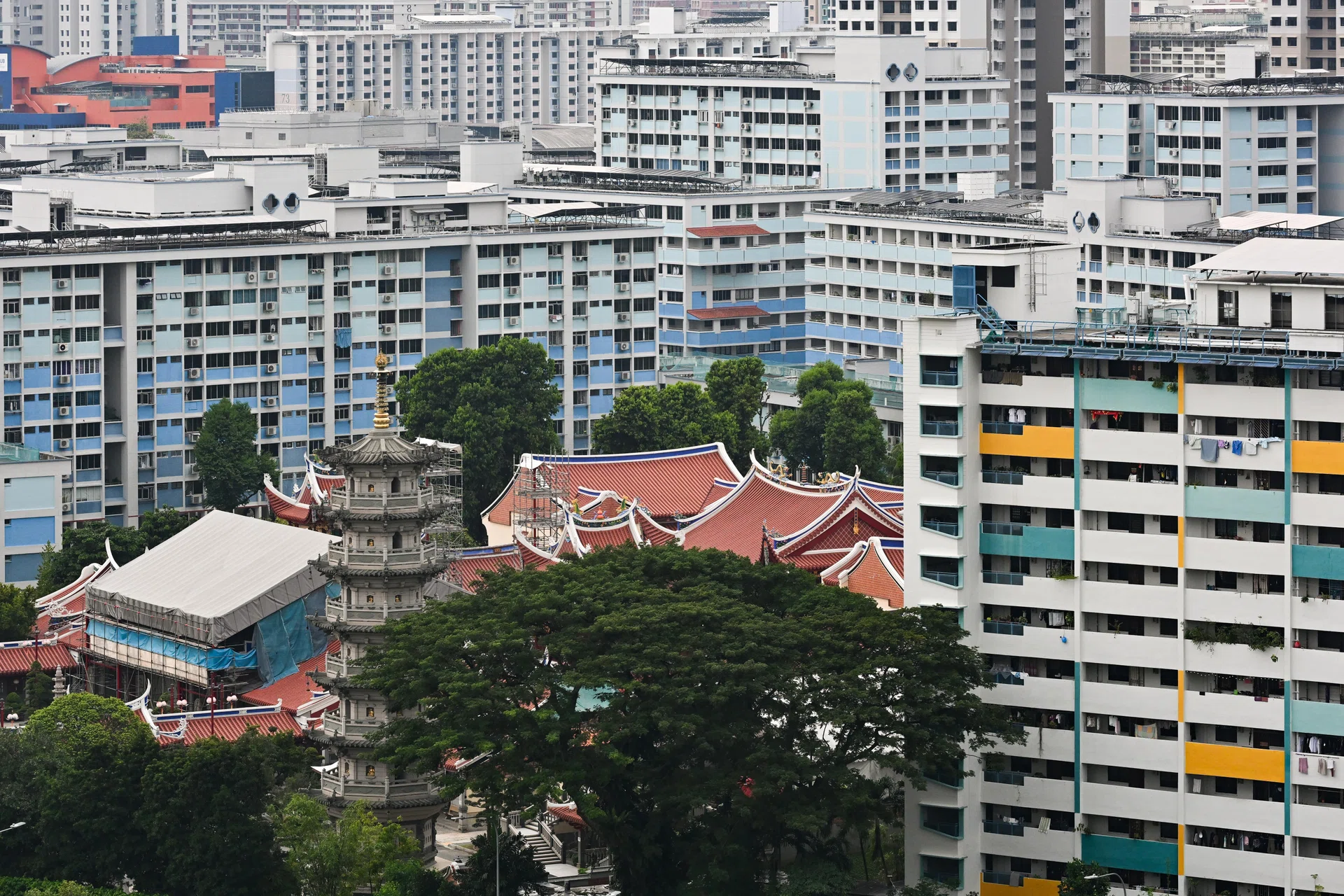
The first set of official wealth data shows that property and CPF savings form the bulk of assets across all income groups
[SINGAPORE] The wealthiest 20 per cent of resident households in Singapore held an average net wealth of S$5.3 million in 2023, driven primarily by property assets valued at S$3.4 million, the first comprehensive household wealth data released by the Ministry of Finance (MOF) on Monday (Feb 9) indicated.
MOF defines net wealth as total assets minus total liabilities. Assets comprise property values, net CPF balances and other financial assets such as savings and dividends; liabilities consist mainly of outstanding mortgages and other debts.
The wealth figures were released alongside MOF’s regular household income data report, in an occasional paper on income growth, inequality and social mobility trends in Singapore.
The wealth data was calculated by the Singapore Department of Statistics (SingStat), drawing on the 2023 Household Expenditure Survey and supplemented with administrative data where available.
The five-yearly survey has been expanded progressively to improve the quality of wealth data captured. Improvements to the 2023 survey enabled SingStat to estimate, for the first time, non-owner-occupied home equity, a significant source of wealth.
Positive wealth
The survey found that most resident households across income groups held positive wealth. Across all quintiles, home equity and Central Provident Fund (CPF) balances are the largest asset components; liabilities consisted mainly of outstanding mortgages.
Navigate Asia in
a new global order
Get the insights delivered to your inbox.
Home equity – property value less outstanding mortgages – made up over half of average household wealth across all quintiles, ranging from 54 per cent for the bottom 20 per cent to 58 per cent for the top 20 per cent.
CPF balances constituted about 22 per cent of household wealth overall, ranging from 39 per cent for the bottom quintile to 15 per cent for the top quintile.
As the CPF is a defined contribution pension system, balances can be directly attributed to individuals and captured in Singapore’s household wealth estimates, said MOF.
SEE ALSO
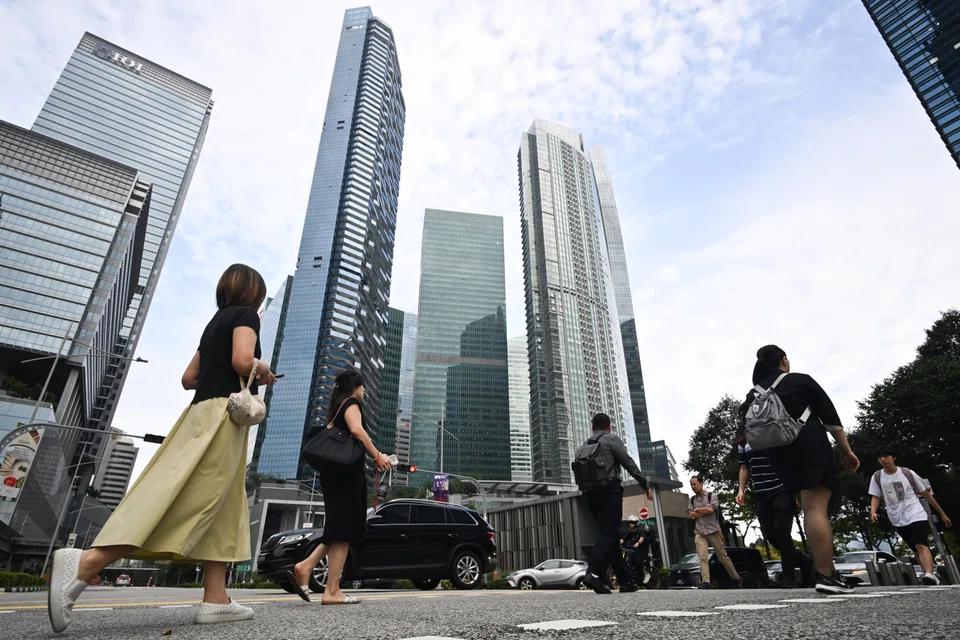
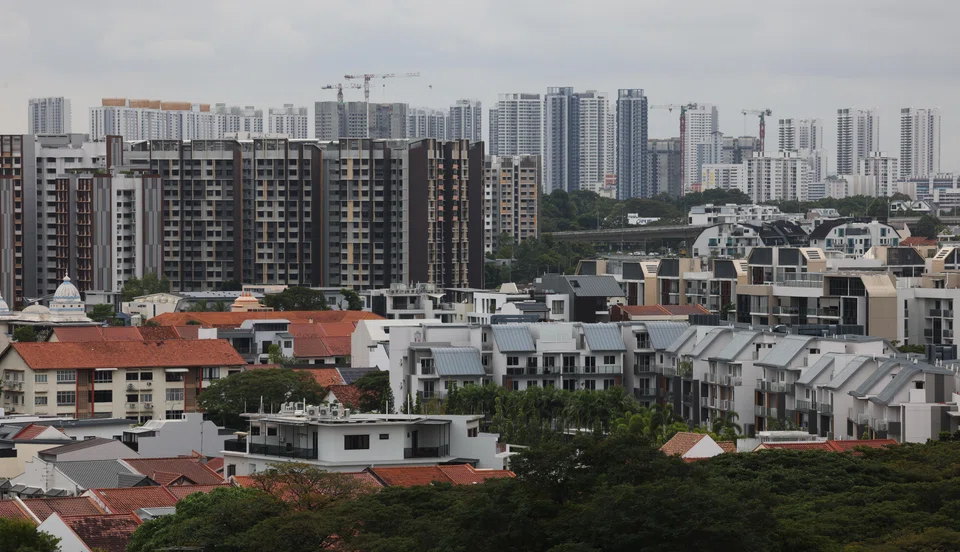
Other financial assets, comprising investments such as savings and dividends, made up the remaining portion of household wealth, at 22 per cent. This ranged from 7 per cent for the bottom quintile to 27 per cent for the top quintile.
Overall, households in the 61st to 80th percentile had average net wealth of S$1.6 million; those in the middle 20 per cent held S$994,000, and those in the 21st to 40th percentile, S$666,000.
Meanwhile, households in the bottom 20 per cent held positive net wealth of S$293,000 on average, also driven by home equity.
This contrasts sharply with countries elsewhere. In the United Kingdom and Australia, for example, households in the bottom quintile have zero or negative home equity on average, MOF said.
In the top quintile, property assets accounted for the lion’s share of wealth, followed by other financial assets of S$1.4 million and net CPF balances of S$771,000. Total liabilities averaged S$331,000, with mortgages accounting for S$317,000.
Among the bottom 20 per cent, average household wealth comprised property assets of S$221,000, net CPF balances of S$114,000 and other financial assets of S$29,000. Total liabilities averaged S$71,000, comprising S$64,000 in mortgages and S$8,000 in other liabilities.
Overall, resident households held average net wealth of S$1.76 million in 2023.
Wealth inequality
Singapore’s wealth Gini coefficient is estimated at 0.55, higher than the income Gini coefficient of 0.379 after taxes and transfers based on household market income.
Internationally, wealth inequality tends to be higher than income inequality, and Singapore is no exception, MOF said.
The ministry noted that, based on available data, Singapore’s wealth Gini coefficient is broadly comparable to that of other advanced economies, including the United Kingdom, Japan and Germany, where wealth Gini coefficients are estimated to be in the range of 0.6 to 0.7.
Still, the ministry cautioned that the data may be susceptible to under-reporting in surveys, as respondents may have decided against providing sensitive financial information, or had difficulty recalling details.
To the extent that this is more prevalent among the wealthy, wealth at the top of the distribution is likely underestimated.
Globally, certain assets such as equity in private companies and overseas holdings are difficult to track and value, while provisions for financial confidentiality further constrain data collection, said MOF.
Nevertheless, the government will continue to improve its wealth estimates.
Falling income inequality
The occasional paper also found that income inequality, measured both before and after taxes and transfers, has declined over the past decade.
The Gini coefficient after taxes and transfers, based on household employment income, improved to 0.359 in 2025, from 0.409 in 2015.
The Gini coefficient based on household market income also improved – to 0.379 in 2025 from 0.437 in 2015.
Income growth has been broad-based, with resident households at all deciles experiencing real income growth over the last decade. Lower-income households also enjoyed higher real income growth.
Most Singaporeans have experienced upward income mobility across generations, and Singapore has done relatively well in sustaining social mobility relative to other advanced economies, said MOF.
Prime Minister Lawrence Wong, in a social media video in response to the paper, said that as Singapore’s economy matures, early signs of slowing social mobility have began to show.
“The data tells us that our policies have worked well over the past decade. But amid new headwinds, keeping Singapore moving in the right direction will require more effort and a willingness to adapt and do things differently,” he said.
The prime minister added that the findings underscore the need for approaches laid out under the Forward Singapore initiative, which aims to refresh policies and renew the social compact.
“In this term of government, we will press on with our efforts to build a fairer and more just society, and a more inclusive Singapore for all,” he said.
The occasional paper is an update of a paper published in August 2015, which examined income growth, inequality and mobility trends based on household employment income.
Decoding Asia newsletter: your guide to navigating Asia in a new global order. Sign up here to get Decoding Asia newsletter. Delivered to your inbox. Free.
