







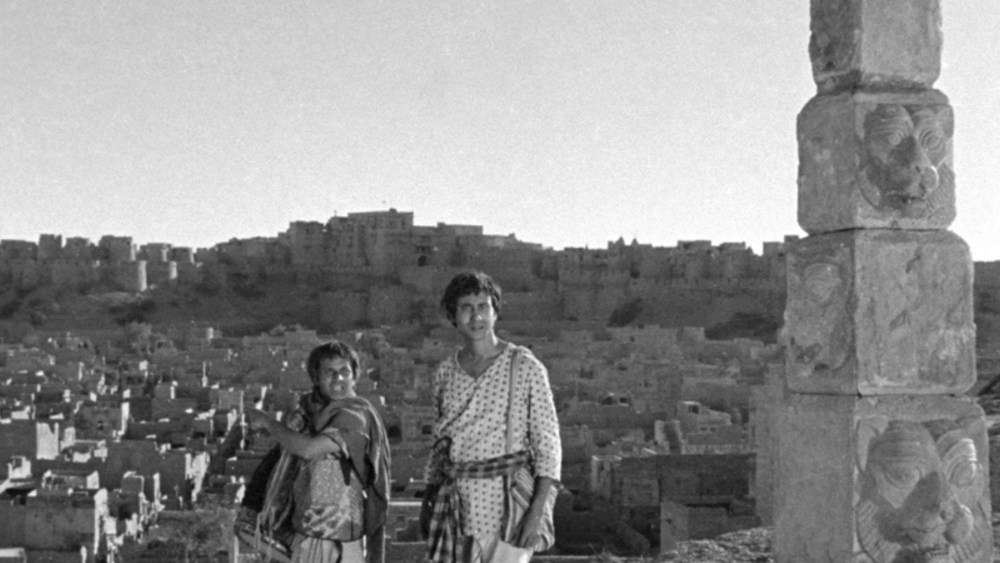
Indian National Award-winning filmmaker Srijit Mukherji is bringing to screen the making of Satyajit Ray‘s “Goopy Gyne Bagha Byne,” one of Indian cinema’s most celebrated classics, in a new film titled “Maharaja Tomare Selam.”
Jeetu Kamal, Ritwik Bhowmik, Rudranil Ghosh, Satakshi Nandy, Sairity Banerjee and Arijit Dutta star in the film, produced by Hoichoi Studios and Friends Communication in association with Piyali Films Pvt. Ltd, the original producer of “Goopy Gyne Bagha Byne.”
“Maharaja Tomare Selam,” which is also the title of a song in “Goopy Gyne Bagha Byne,” centers on Ray himself – the pressures he faced and the choices he made against the backdrop of a politically charged Kolkata – as he willed “Goopy Gyne Bagha Byne” into existence. Principal photography will commence in January 2027.
Released on May 8, 1969, “Goopy Gyne Bagha Byne” followed two inept village musicians, played by Tapen Chatterjee and Rabi Ghosh, who are banished from their homes and granted magical powers by the King of Ghosts, which they use to avert a war between two rival kingdoms. Beneath the fantasy, the film carried social and political undertones around class and the role of art, a thread Ray sharpened into direct satire of authoritarian rule with his 1980 sequel, “Hirak Rajar Deshe.” His son, Sandip Ray, closed out the trilogy with “Goopy Bagha Phire Elo” in 1992.
Ray built a body of work over more than three decades that includes “Pather Panchali” and “Charulata” among its landmarks. In 1992, weeks before his death, he received an honorary Academy Award for lifetime achievement, becoming the first Indian filmmaker so honored.
“I am just trying to tell the incredible true story of how one of the greatest classics of Indian cinema, ‘Goopy Gyne Bagha Byne,’ was conceived and made,” Mukherji said.
Mukherji’s own credits include “Chotushkone,” for which he won the Indian National Film Award for best director, along with “Jaatishwar” and “Baishe Srabon.” He is known for his engagement with Bengali culture and storytelling, and with “Maharaja Tomare Selam,” he takes on a pivotal episode in the country’s film history.
“Maharaja Tomare Selam” joins a run of Bengali films that have turned the camera on Ray’s own legacy. Anik Dutta’s “Aparajito” dramatized the making of “Pather Panchali,” with Kamal playing a character modeled on Ray, while Kaushik Ganguly’s “Apur Panchali” traced the later life of Subir Banerjee, the child actor who played Apu in that film. Mukherji’s debut feature “Autograph” is an homage to Ray’s “Nayak.”


