


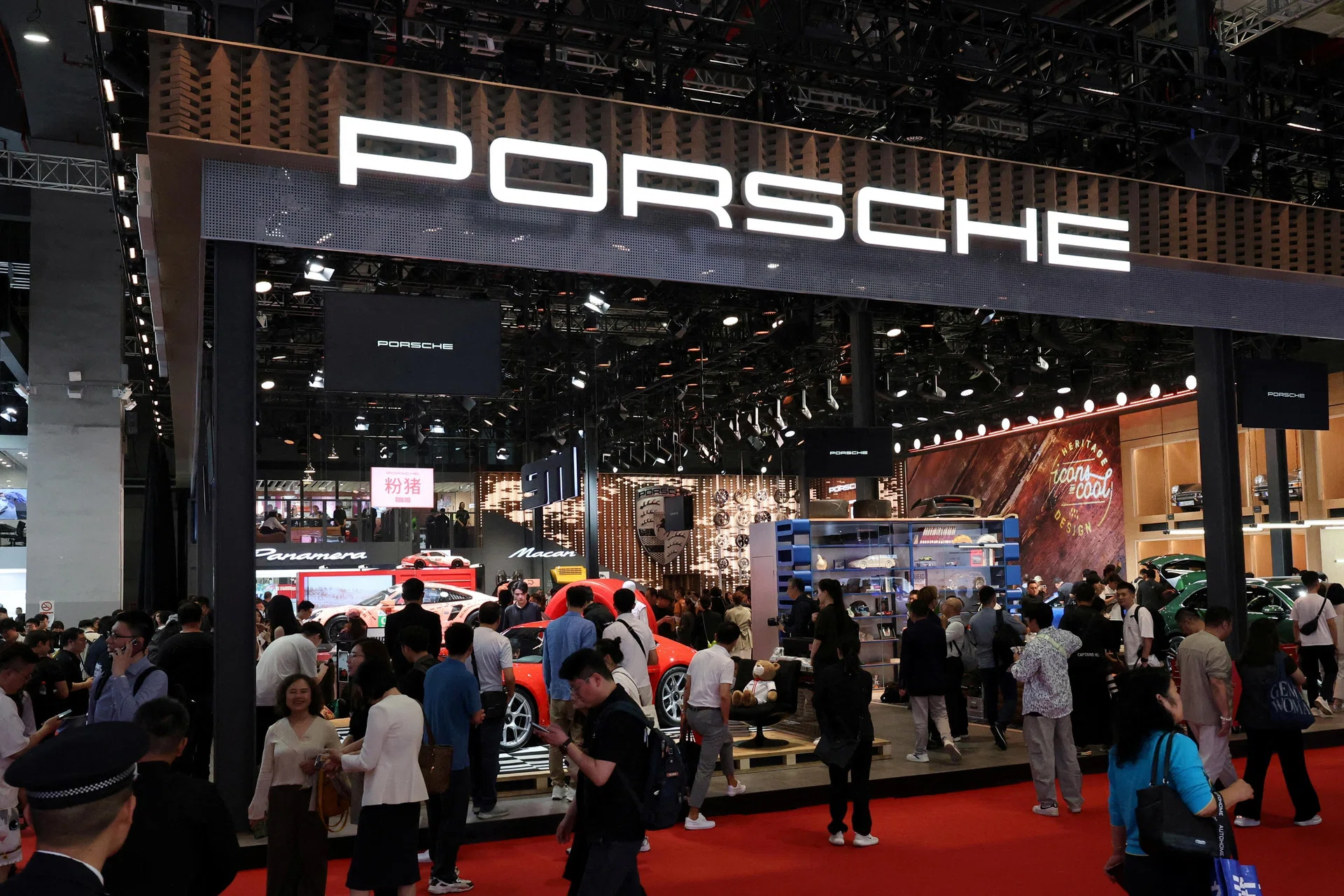
Its sales are down 26% as the nation’s economic slowdown hit consumers across all income brackets
[BERLIN] Porsche’s deliveries fell 10 per cent last year, following weak demand for electric vehicles (EVs) and a slump in China. This is the steepest drop since 2009, when the global financial crisis roiled the markets.
The Volkswagen luxury brand delivered 279,449 vehicles in 2025, it said on Friday (Jan 16), with China and Germany leading the declines. Porsche said that the “supply gaps” for combustion-engine versions of the 718 sports car and Macan sport utility vehicle (SUV) also hurt sales.
Porsche has struggled with a range of challenges, including correcting an overly ambitious EV rollout that upended model plans and weighed on margins.
The tariffs in the US – which has surpassed China as Porsche’s most important market – have also weighed on profit.
In China, where local competition is becoming more intense, Porsche’s sales slumped 26 per cent. The country’s economic slowdown has hit consumers across all income brackets, with a protracted real estate crisis weighing on luxury spending.
At the same time, homegrown manufacturers, including BYD, Xiaomi and Huawei Technologies, are targeting wealthier customers with premium materials as well as advanced software and battery technology.
Navigate Asia in
a new global order
Get the insights delivered to your inbox.
German peers BMW and Mercedes-Benz Group faced similar demand issues in China, the world’s biggest auto market.
In Europe, the deliveries fell in part because of supply issues related to the 718 and Macan models.
Porsche was forced to phase out production of the popular combustion-engine vehicles, due to the more stringent European Union cybersecurity regulations they did not meet.
Porsche shares fell as much as 1.2 per cent in Frankfurt. The stock is down over 30 per cent in the past year, and has fallen out of Germany’s DAX Index.
The company has pledged improvements after 2025’s setbacks, when it walked back its outlook four times. Its performance trough has come at a critical time for parent Volkswagen, which relies on profit from its premium brands that also include Audi.
The global demand for Porsche’s first EV, the Taycan, fell 22 per cent last year, with residual values for the vehicle proving less resilient than comparable combustion models.
The manufacturer has warned that its course correction on EVs would slash operating profit by as much as 1.8 billion euros (S$2.7 billion) in 2025.
Michael Leiters, the former head of McLaren Automotive, has been tasked with turning the company around. He took over as chief executive officer on Jan 1, ending Volkswagen CEO Oliver Blume’s double role.
A manager with a knack for hybrids, who previously worked at Porsche on the popular Cayenne SUV, Leiters also will negotiate with labour leaders this year on additional cost cuts.
Achieving lasting improvement will take some time. In October, chief financial officer Jochen Breckner said that while 2025 would be a low point, returning to double-digit margins would be a target for the years to come after 2026. BLOOMBERG
Decoding Asia newsletter: your guide to navigating Asia in a new global order. Sign up here to get Decoding Asia newsletter. Delivered to your inbox. Free.
