


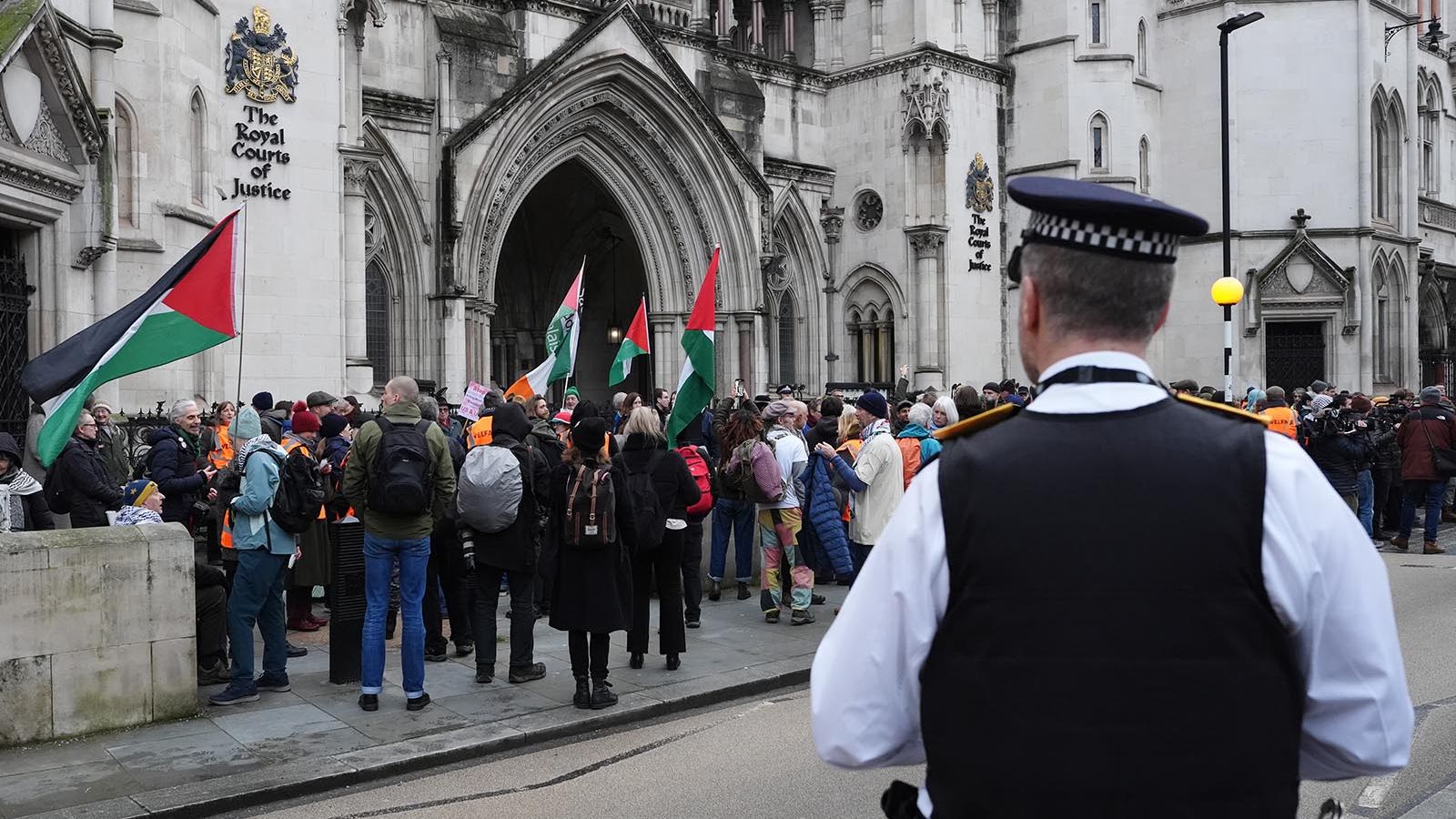
Palestine Action’s co-founder has won a legal challenge over the group’s ban as a terrorist organisation on two grounds.
However, it will remain outlawed for now as the government intends to take the case to the Court of Appeal.
Huda Ammori launched the challenge after former home secretary Yvette Cooper’s decision to proscribe the group, which came into force in July last year.
It followed action by members of the group that included breaking into RAF Brize Norton and damaging two aircraft.
The ban put Palestine Action on the same footing as ISIS and al Qaeda, making membership or support a crime punishable by up to 14 years in prison.
Even wearing a T-shirt or carrying a sign with the group’s name on it can carry a six-month sentence.
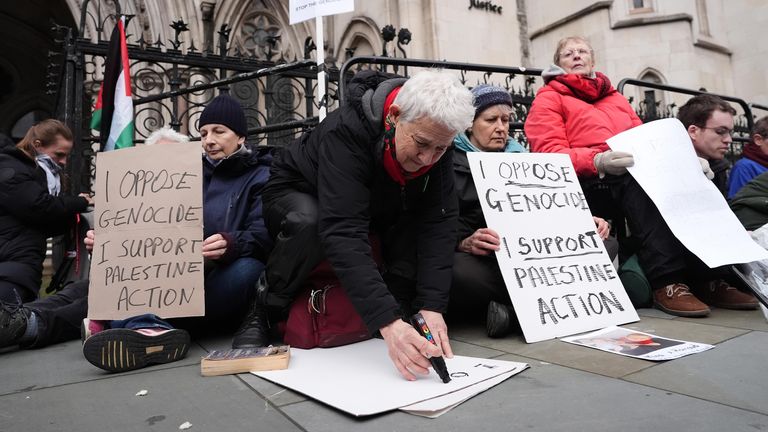
Protesters opposing the ban gathered outside the court. Pic: PA
Home Secretary Shabana Mahmood said she was “disappointed” with today’s decision and disagreed with the court that the ban was disproportionate.
She said she would appeal and the government had used a “rigorous and evidence-based decision-making process” when outlawing the group.
“The court has acknowledged that Palestine Action has carried out acts of terrorism, celebrated those who have taken part in those acts and promoted the use of violence,” said a statement from Ms Mahmood.
She said the ban still allowed people to protest peacefully in support of Palestinians.
Ms Ammori’s lawyers had argued the High Court the move was unprecedented and compared Palestine Action to the suffragettes.
In her ruling, Judge Dame Victoria Sharp agreed Palestine Action “promotes its political cause through criminality”.
However, she said the ban was still disproportionate as it interfered with the Human Rights Act, specifically the freedom of expression and freedom of assembly.
Legal expert Joshua Rozenberg said the court had decided a very small number of the group’s members carried out acts amounting to “terrorism” and these hadn’t reached a level that warranted a blanket ban.
He said the court had also ruled the former home secretary’s decision was in breach of her own policy at the time, but that it failed on two further grounds; including a claim that Ms Cooper should have consulted it before the ban.
Some 2,787 people have been arrested since the ban came into force, according to the Defend Our Juries group, which organises protests against the ban.
Raza Husain KC, representing Ms Ammori, had told the court “priests, teachers, pensioners, retired British Army officers” and an “81-year-old former magistrate” were among them.
Normal People author Sally Rooney also supported the challenge.
The writer said she might not be able to publish new books in the UK after saying she would donate earnings to the group.
