


Labour movement expects to roll out partial funding for eligible artificial intelligence tools within the first half of the year for union members
[SINGAPORE] The National Trades Union Congress (NTUC) on Friday (Feb 13) launched an initiative to help workers and businesses adapt to the growing use of artificial intelligence (AI) in the workplace, including subsidised access to AI tools and a dedicated training pathway.
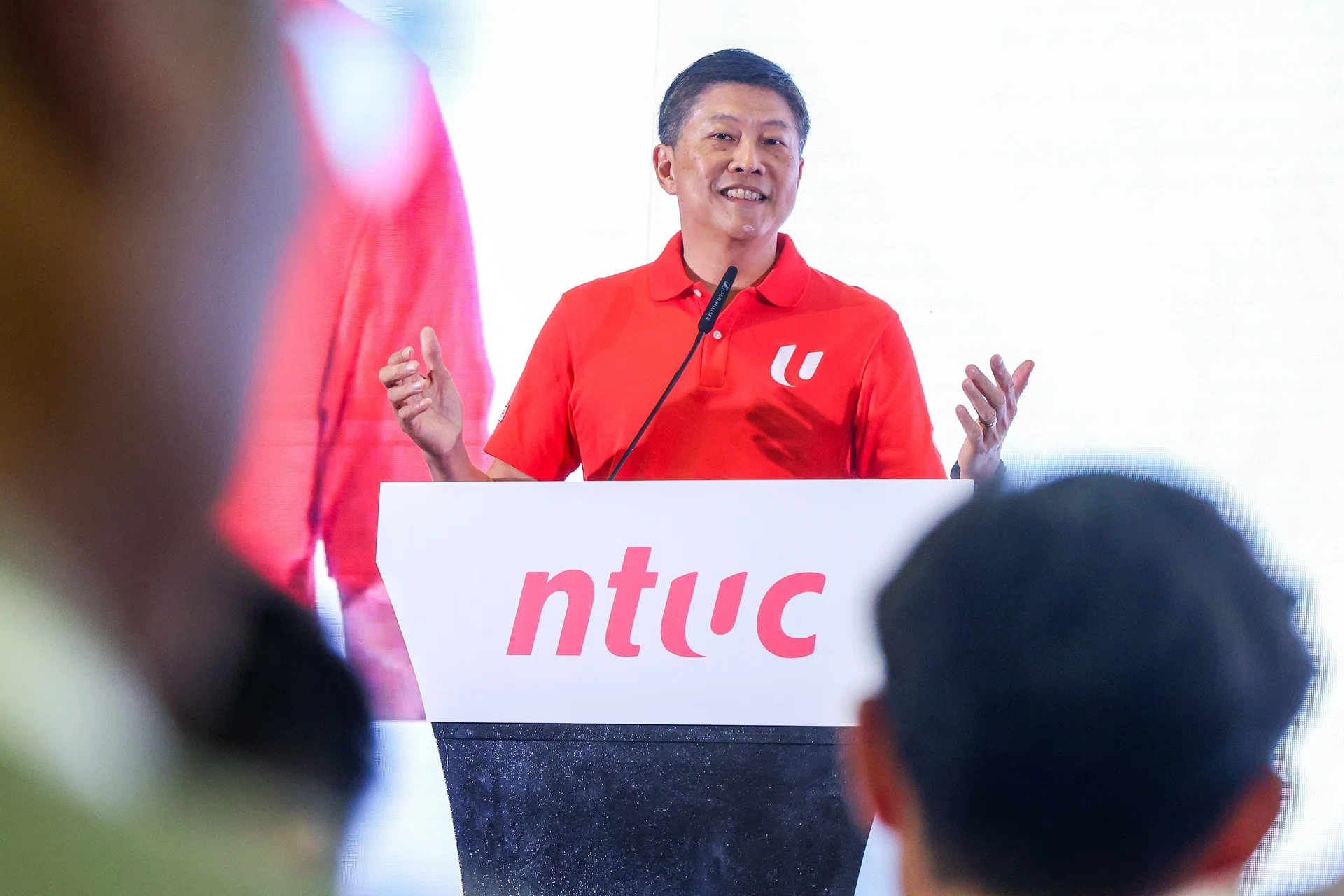
Labour chief Ng Chee Meng, who launched the AI-Ready SG initiative at the start of the NTUC’s two-day career festival, said that it reflects the labour movement’s focus on supporting workers and addressing job security concerns arising from the rapid adoption of AI.
Earlier this week, NTUC had called for “stronger job security measures and improved transition support for workers, particularly PMEs (professionals, managers and executives)” as AI continues to reshape workplaces.
This was as its survey found that more than half of PMEs n Singapore feel the need to upskill, as their current skills and career pathways may not be keeping pace with AI disruptions.
NTUC’s announcement came a day after Finance Minister Lawrence Wong told Parliament during his Budget speech that how Singapore harnesses AI will be a “decisive factor for success” in a changing world.
He said that workers can expect more AI-related support from the government to help them navigate its growing prevalence in the workplace.
MORE ON BUDGET 2026

Visit our Budget 2026 site for more stories and analyses.
Explore Now
Measures include providing Singaporeans who enrol in selected AI training courses with six months of complimentary access to premium AI tools, as well as revamping the SkillsFuture website to make AI learning pathways clearer and easier to access.
What’s in it?
At the festival held at the Sands Expo and Convention Centre, Ng said that workers today, especially PMEs, are facing mounting pressures in this period of significant disruption from AI.
“They want to embrace AI but may not know where to begin, or whether they can keep pace,” he said, adding that the AI-Ready SG initiative seeks to address this challenge.
SEE ALSO
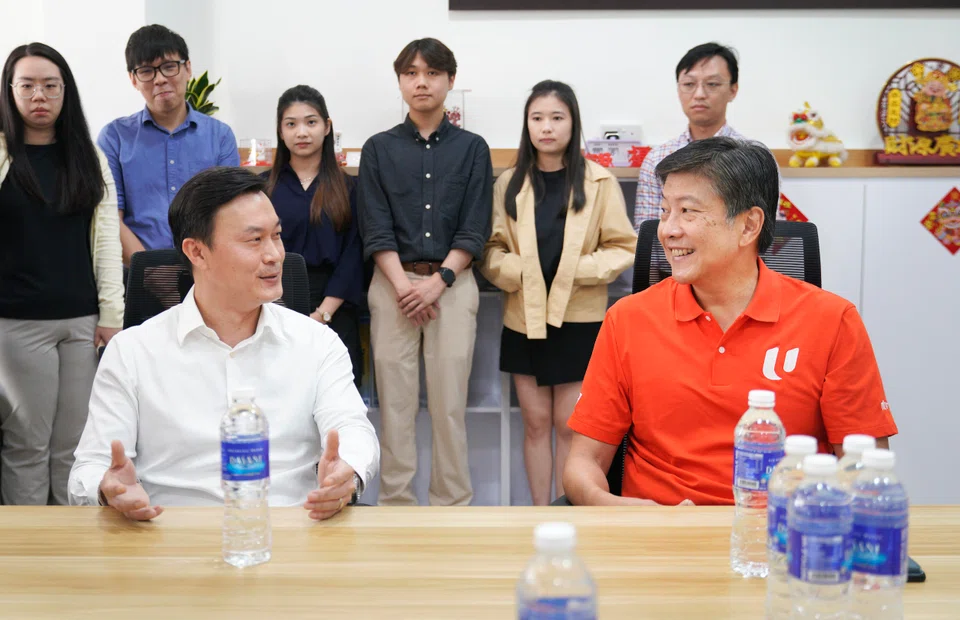
As part of the initiative, and to encourage learning and adoption, NTUC noted that it will provide its members a “first-of-its-kind” subsidy of up to 50 per cent to help defray the cost of subscribing to eligible AI tools by the first half of the year.
While NTUC did not provide a list of eligible tools, it said that the tools should enhance productivity and support tasks such as content creation and writing.
The labour movement added that funding support will be piloted for two years, with training incorporated as part of the adoption process.
“Yes, we cannot quite afford what was announced in the Budget, where there will be six months of free access (to AI tools), but NTUC will also put our resources to help workers…with the costs (involved with AI tool subscriptions),” said Ng.
Beyond the subscription subsidy, NTUC’s latest initiative also includes new AI training pathways developed by NTUC LearningHub (NTUC LHub) that aims to provide all Singaporean workers with a “clear starting point and direction to build their AI-related skills”.
The labour movement said that the pathways, which will be rolled out by the first quarter of 2026, will be tailored to an individual’s skill level, job and sector, as well as skills gaps identified by industry stakeholders.
This allows the pathways to be “accessible, relevant and responsive to evolving industry needs”, added NTUC.
A third feature of the initiative is a new NTUC LHub Career Mentorship Programme.
It aims to connect PMEs with certified and experienced mentors who can offer practical guidance through an AI-enabled match-scoring system that pairs applicants with mentors aligned with their career goals.
Support for fresh graduates
Separately, NTUC said the number of its AI-related Company Training Committee (CTC) Grant projects embarked by firms in 2025 more than doubled from 2024. This, it said, is a “clear sign of growing interest and investment in AI technologies”.
The CTC is a S$300 million fund that co-funds up to 70 per cent of costs for company transformation projects.
During the event, Ng also witnessed the signing of a memorandum of understanding (MOU) between NTUC’s Employment and Employability Institute (e2i) and institutes of higher learning.
The goal of the MOU, said NTUC, is to help fresh graduates transition smoothly into the workplace by expanding access to job-matching services, industry exposure and employability workshops.
e2i also signed a MOU with self-help group Yayasan Mendaki to strengthen AI readiness and employability within the Malay and Muslim community.
This will be achieved through curated AI workshops, talks and community engagement activities, alongside expanded access to career advisory services, skills development programmes and job opportunities.
“Workers, especially our young PMEs, remain anxious about AI. They worry that AI will replace their jobs instead of supporting them. And these fears are real,” said Ng. “Even with the right training for their first or second job, the pace of AI change can outstrip anyone. If we do not move together, our workers may feel left behind.”
Decoding Asia newsletter: your guide to navigating Asia in a new global order. Sign up here to get Decoding Asia newsletter. Delivered to your inbox. Free.
