






Mid-term report was released before Iran war; now, final recommendations clearly take the conflict into account
[SINGAPORE] One common reaction to yet another set of recommendations by a government committee on the economy – with these seemingly convened every few years or so – is to ask: “What’s new?”
The final recommendations of the Economic Strategy Review (ESR) released on Wednesday (May 13) provide a simple answer, at least when compared to the mid-term report released earlier this year.
Spread across eight focus areas, the recommendations mostly elaborate on ideas from the mid-term report.
But there is one major exception: the eighth focus of building economic resilience, with four recommendations.
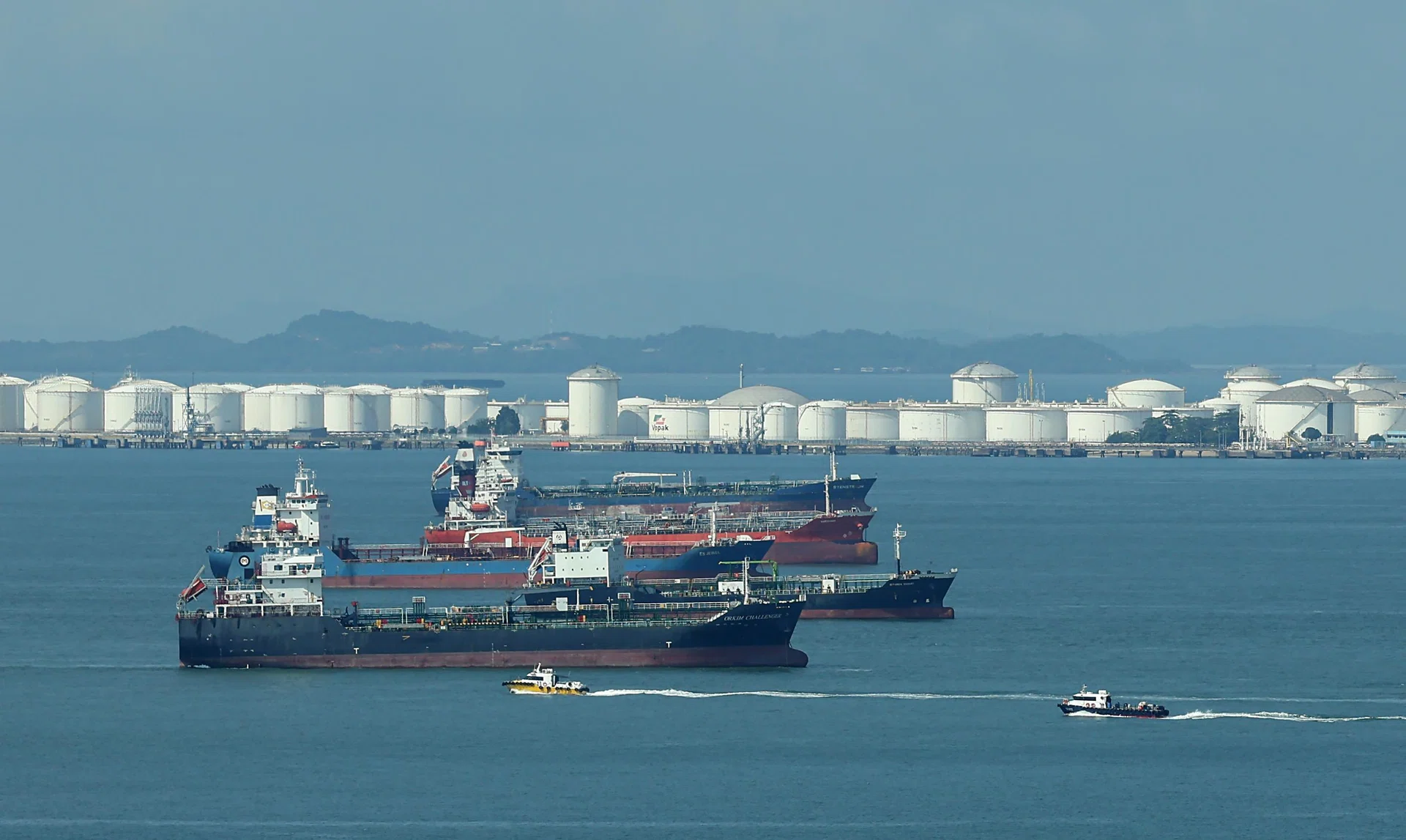
What’s new? The most obvious answer: the US and Israel’s war with Iran, and the accompanying closure of the Strait of Hormuz.
The latter has affected supply chains of everything from fuel and fertilisers to plastics and printing, raising fears of a longer-term energy crisis and food shortages.
Navigate Asia in
a new global order
Get the insights delivered to your inbox.
On Wednesday, Deputy Prime Minister and Minister for Trade and Industry Gan Kim Yong noted: “The ongoing energy crisis has shown how quickly disruptions can cascade through the global economy, affecting energy markets, shipping routes, production costs, inflation and business confidence around the world.”
It is unsurprising, then, that the ESR’s final recommendations include new ones on improving energy resilience and mitigating supply chain risks in major industries. If anything, one might wonder why these were absent from the mid-term report to begin with.
Turbulent times
When the ESR’s mid-term report was released in late January, the economic outlook seemed relatively promising at the time.
Along with better-than-expected 2025 growth figures released on Feb 10, the Ministry of Trade and Industry (MTI) upgraded its 2026 growth forecast range to between 2 and 4 per cent, from between 1 and 3 per cent before.
The outlook has since clouded over, even if official figures may not have caught up yet.
According to advance estimates in April, Singapore’s economy grew 4.6 per cent year on year in the first quarter of 2026, slowing from 5.7 per cent the previous quarter. On a quarter-on-quarter seasonally adjusted basis, the economy shrank 0.3 per cent, reversing from the previous quarter’s 1.3 per cent growth.
While describing such growth as resilient, MTI warned that the conflict in the Middle East “may weigh on economic activity in the coming quarters”.
The government has convened the Homefront Crisis Ministerial Committee to coordinate its response, which includes improving energy and supply chain resilience.
The added section on resilience in the ESR’s final report thus seems like a clear acknowledgement of the current crisis.
A stormier climate
Yet, the Iran crisis is not so much a turning point as simply the latest storm in a worsened global climate.
The changes to which the ESR responds, as DPM Gan put it, are not “passing headwinds” but “structural shifts in the global operating environment”. And the ESR “is not simply a response to immediate challenges”, but about how Singapore positions itself for the longer term.
As Prime Minister Lawrence Wong warned in his May Day Rally speech earlier this month: “The reality in this changed world is that there will be more volatility – we will be facing storm after storm.”
After all, even the better-than-expected growth in 2025 was achieved against a grim background of US tariffs.
Singapore’s leaders have spoken about the fragmented world order and erosion of globalisation for the past few years, not just the past few weeks.
Perhaps the new section on resilience is best seen as a reminder: not introduced, but brought back to the fore by the Middle East conflict.
In that section, the freshest suggestion is for the government to work with key industries to understand their supply chain risks and mitigate them together, through measures such as diversification, substitution and even stockpiling.
The other three recommendations are mostly about the government continuing to do what it already does: building energy resilience, preparing for a low-carbon future and expanding its network of partnerships.
In this sense, they are not that new – and we should perhaps be glad for that. The Iran war is an ongoing lesson in how the background work of building resilience needs to continue, even as bold new ideas are being explored.
Decoding Asia newsletter: your guide to navigating Asia in a new global order. Sign up here to get Decoding Asia newsletter. Delivered to your inbox. Free.


