






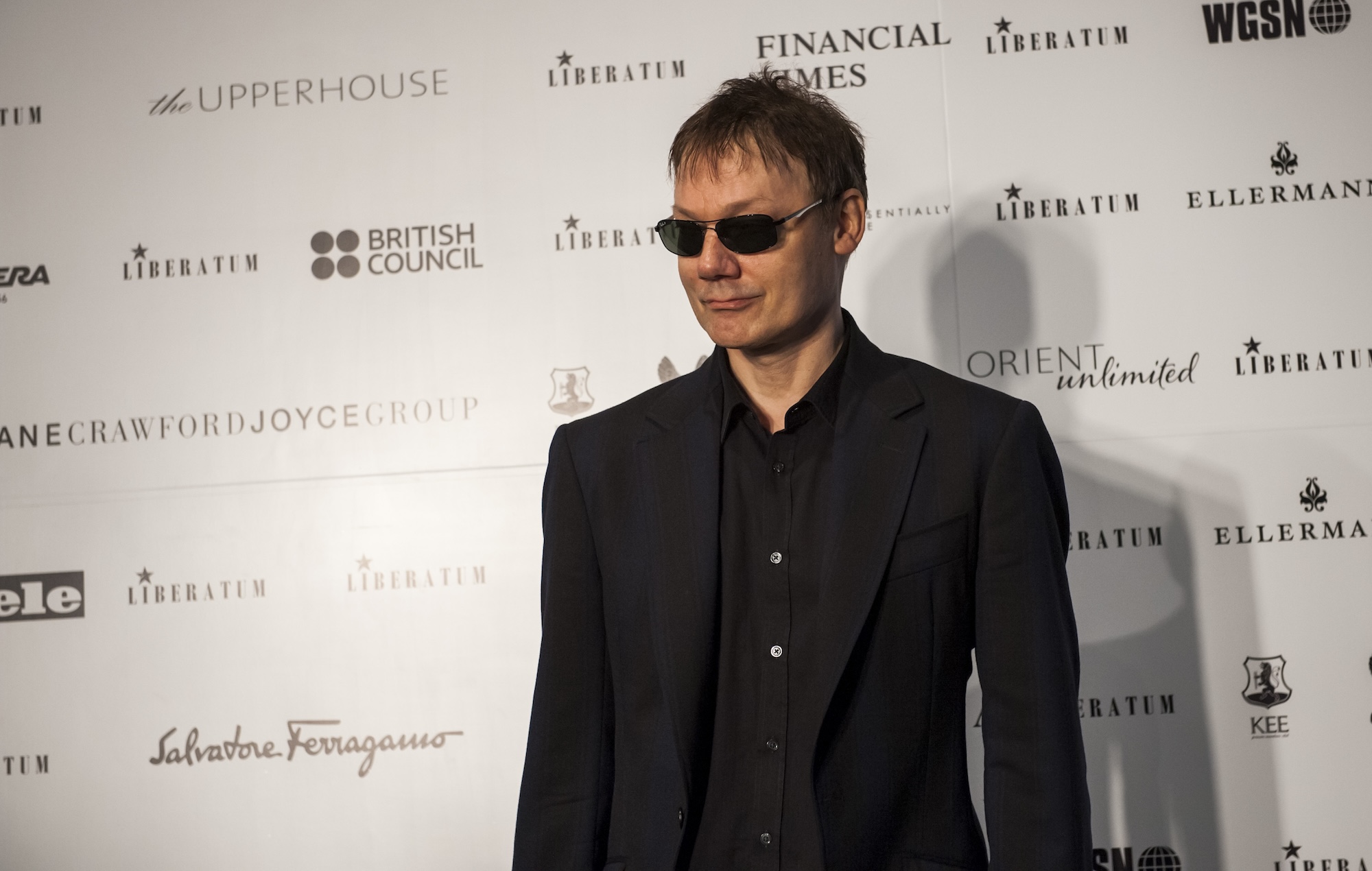
William Orbit secured his place in music history during the Y2K era, when he made a great electronica album with Madonna (1998’s ‘Ray Of Light’), a great alt-rock album with Blur (1999’s ’13’), and produced two stunning singles for All Saints: 2000’s ‘Pure Shores’ and ‘Black Coffee’. Yet this innovative musician and producer, who has died aged 69, also enjoyed a fascinating career before and after his heyday. Orbit was a musical maverick whose beautiful signature sound – leftfield dance influences accessorised with retro guitars – is destined to sound fresh forever.
Born William Mark Wainwright on December 15 1956, Orbit was raised in Palmers Green in suburban North London. He described his childhood as “liberal but rigid” because his schoolteacher parents had “struggled to become middle-class”, an unusual combination that proved useful, perhaps, when he leapt down a creative rabbit hole with Madonna. In 2021, he said that working with the free-thinking but famously exacting singer on her ‘Ray Of Light’ album had nearly “killed” him.
However, when he launched his music career in the early ’80s, Orbit’s approach was definitely more liberal than rigid. While squatting in West London, he formed the offbeat synth-pop outfit Torch Song with singer Laurie Mayer and fellow producer Grant Gilbert. They lived and recorded at Centro Iberico, a disused school in Notting Hill that attracted anarcho-punk bands like Throbbing Gristle and Poison Girls. Relatively commercial in comparison, Torch Song enjoyed a taste of mainstream success when their percolating club banger ‘Prepare To Energize’ featured in a Tom Hanks movie, 1984’s Bachelor Party.
It was at Centro Iberico that Orbit founded his own Guerrilla Studios, which moved premises several times over the years as he honed his skills by remixing Belinda Carlisle, Seal and Erasure and co-writing a novelty hit for British comedian Harry Enfield: 1988’s yuppie satire ‘Loadsamoney (Doin’ Up The House)’. Two years later, with his house music project Bass-o-Matic, Orbit scored a rather more credible chart hit: the soulful club jam ‘Fascinating Rhythm’, which contained echoes of his emerging, swirling sound. That same year, he also co-founded Guerilla Records, which released trendy dub house singles by the likes of Leftfield and Felix da Housecat.
![Madonna - Frozen (Official Video) [HD]](https://i.ytimg.com/vi/XS088Opj9o0/hqdefault.jpg)
Throughout the late ’80s and early ’90s, Orbit released a series of ambient electronica albums under his own name. In 1993, he scored a minor UK hit with the lovely, vibey ‘Water From A Vine Leaf’, which featured vocals from his then-girlfriend Beth Orton. Orbit produced Orton’s house-influenced debut album, 1993’s ‘Superpinkymandy’, but his game-changing collaboration came nearly half a decade later. In 1997, having previously impressed Madonna with his remixes for ‘Justify My Love’ and ‘Erotica’, he sent the singer a cassette tape of instrumental tracks and landed the top job co-producing her next LP. At the time, he was such an industry outlier that he didn’t even have a manager.
Home to the era-defining singles ‘Frozen’, ‘Ray Of Light’ and ‘Nothing Really Matters’, the resulting album, 1998’s ‘Ray Of Light’, sold over 16million copies worldwide and rerouted each musician’s career. By setting some of her most personal songwriting to Orbit’s textured palette of club sounds, which ranged from techno and trip-hop to ambient electronica and drum-and-bass, Madonna re-established herself as a pop visionary; in recent years, the album has been cited as an influence by FKA Twigs, Addison Rae and Kelly Lee Owens, who branded it “the perfect blend of pop sensibility and electronic innovation”.
After ‘Ray Of Light’, Orbit found himself in hot demand. He co-produced Blur’s most experimental and intimate album to date, 1999’s ’13’, which yielded the lovely, gospel-flecked single ‘Tender’, and worked on hits by All Saints (‘Pure Shores’, ‘Black Coffee’), U2 (2002’s frenetic ‘Electrical Storm’) and Pink (2003’s retro bop ‘Feel Good Time’). In 1999, Orbit scored a chart smash of his own when Dutch remixer Ferry Corsten put a trance spin on his reimagined ‘Barber’s Adagio For Strings’, taken from Orbit’s genre-melding classical-meets-electronica collection, ‘Pieces In A Modern Style’.
However, he later confided that he felt unable to capitalise on his post-‘Ray Of Light’ purple patch. “A cleverer person than me would have gone: ‘You’ve won the lottery! You’ve made a record everyone loves and made a shitload of money. Stop right now with all the remixes. Get a plan together to take it to the next level,’” Orbit told Classic Pop in 2022. “But I never did. I let it slip away.”


His productivity was also halted for periods by mental health difficulties. In 2021, Orbit revealed he had been sectioned the previous year after suffering a drug-induced breakdown. Still, he took on the odd interesting assignment: he produced a surprisingly varied jazz-pop album for soft focus singer-songwriter Katie Melua, 2010’s ‘The House’, and co-wrote an excellent Britney Spears song in 2013’s melancholy electro bop ‘Alien.’ He even reunited with Madonna for her 2012 album ‘MDNA’, an experience he later lamented because he felt “pushed for time”. Still, their renewed collaboration did yield the dazzling deep cut ‘Love Spent’.
However, long after he produced his last hit single, Orbit’s name remained a byword for brilliant, innovative and distinctive pop music. Discussing his production technique in 2022, he said revealingly: “I want the mystery of the layers interacting with each other and the happy accidents that happen with that – like different colours of paint mingling into another one.” It’s this inimitable mix of skill and intuition that makes pop masterpieces like ‘Pure Shores’ and ‘Frozen’ so beguiling to this day.


