






[KUALA LUMPUR] The Malaysian government’s one-off cash handout of RM100 (S$30.50) – that is being disbursed to each citizen aged 18 and above, starting last Sunday (Aug 31) – ended up sparking a nationwide system failure and long queues.
But even amid the frenzy, economists said that the scheme could potentially inject as much as RM2 billion into the economy and deliver a boost to fourth-quarter gross domestic product.
The money – given out as part of Malaysia’s National Day celebrations and framed as a gesture of economic inclusivity – was distributed via the MyKasih welfare platform with payments made through recipients’ MyKad identity cards. Citizens have until Dec 31 to spend the money.
Unlike previous help schemes that were mostly targeted at low-income groups, this cash handout – known as the Sumbangan Asas Rahmah (Sara) programme – benefits middle and high-income earners too, extending the scheme’s potential coverage to some 22 million people.
Within the first 48 hours, more than 1.7 million recipients had spent more than RM110 million, according to figures released by the finance ministry on Monday.
Dr Geoffrey Williams, an economist and the founder of Williams Business Consultancy, said the aid was likely to have a multiplier effect of RM3.4 billion, potentially contributing 0.18 per cent to Malaysia’s GDP.
A NEWSLETTER FOR YOU


Friday, 8.30 am
Asean Business
Business insights centering on South-east Asia’s fast-growing economies.
The Malaysian economy expanded by 4.4 per cent in the second quarter of 2025, the same pace as in the first quarter. Bank Negara Malaysia has kept its 2025 GDP growth forecast at between 4 and 4.8 per cent.
Dr Williams noted that the early spending spike – RM50 million on the first day alone – was likely driven by the timing of the launch, which coincided with family celebrations over the long holiday weekend.
“The larger impact is expected in the fourth quarter, when the remainder of the RM2 billion is spent,” he said. “For now, 92 per cent of recipients appear to be holding on to the aid and intend to spend it gradually until the December deadline.”
He added that some higher-income recipients may not redeem the credits at all, either due to a lack of awareness or because they do not shop at participating merchants.

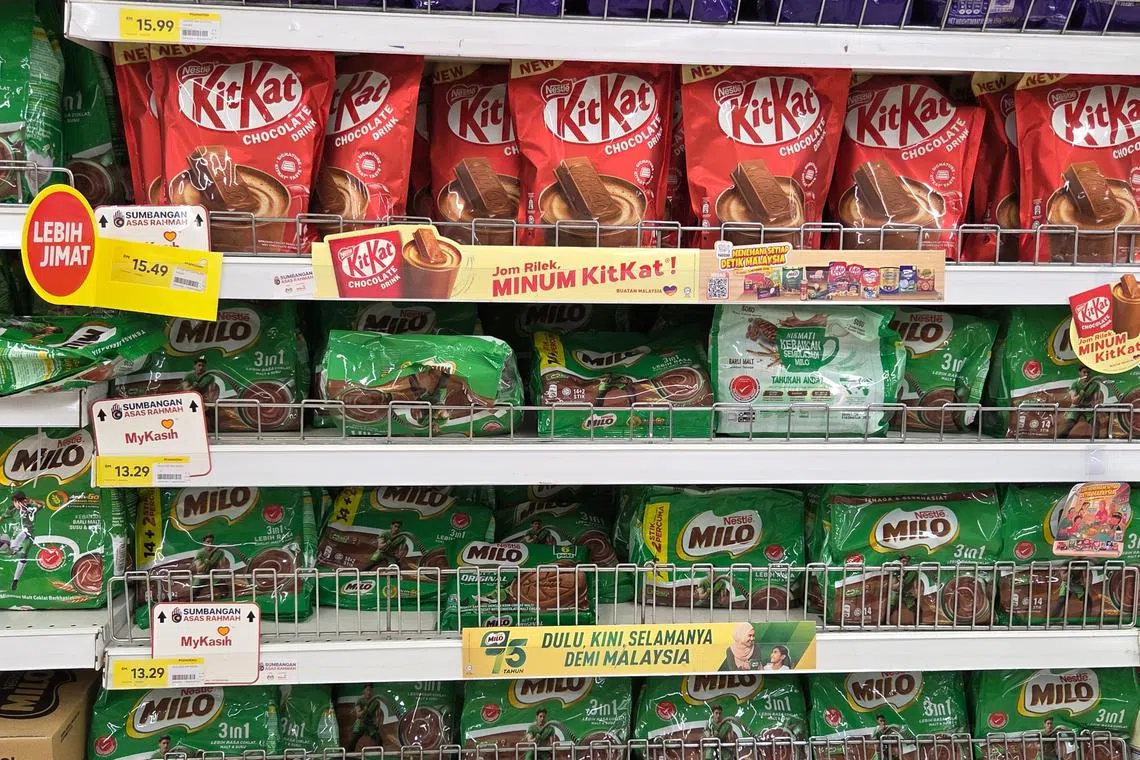
The cash aid is currently accepted at more than 7,300 retail outlets nationwide, including major supermarkets, convenience store chains and local grocers. However, purchases are limited to around 100,000 essential goods listed in the MyKasih app.
While the RM100 amount may not dramatically alter consumption patterns in the third quarter, the programme offers a valuable learning opportunity for the government that will enable it to evaluate future cash aid policies, said Dr Williams.
“By December, the government will better understand who spends, who doesn’t, and whether a universal approach is sustainable.”
Such insights could shape the design of more targeted assistance schemes, or inform broader discussions around universal basic income and digital welfare infrastructure in Malaysia.
Technical glitches, abandoned shopping carts
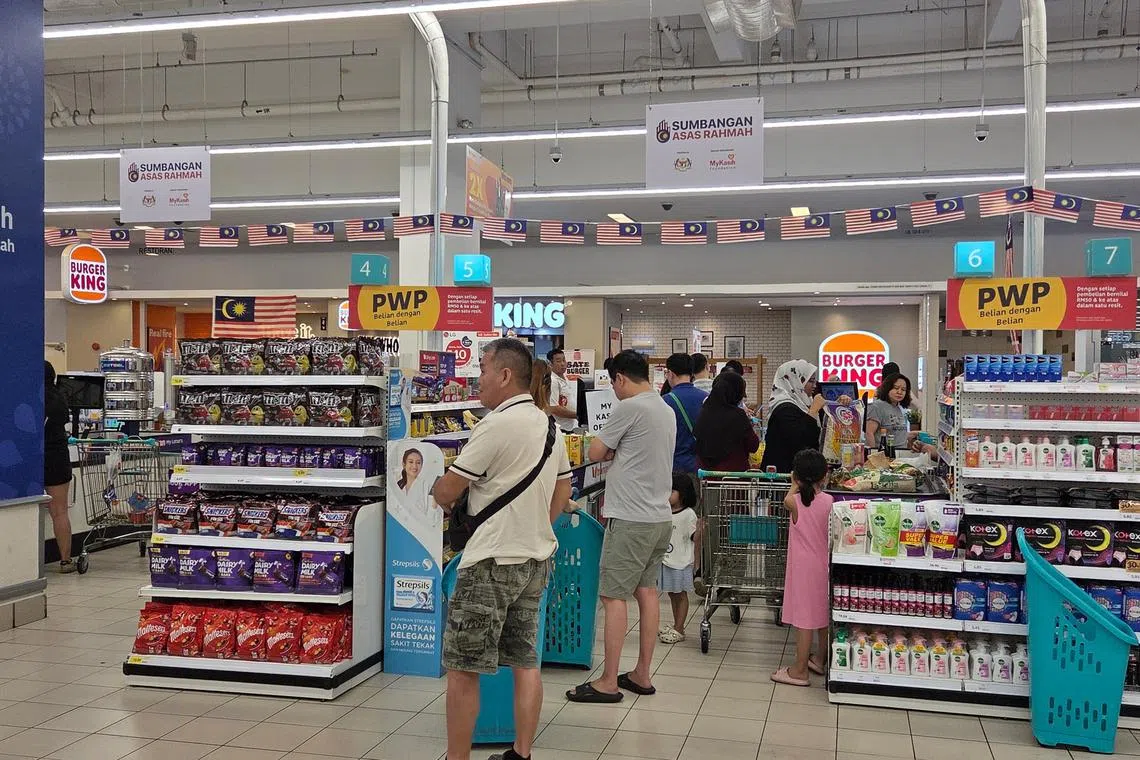
Among the early birds who made use of the cash aid were Nur Farhana Fauzi and her husband, who received a combined RM200. They visited a supermarket on Monday at around lunch time and waited nearly an hour to make their purchase due to the overwhelming demand.
“I heard some shoppers say they queued for up to two hours due to system glitches. But overall, the experience was good,” said the 35-year-old accountant.
Their basket reflected the priorities of many: rice, instant noodles, flour, sauces, cooking oil, milk and biscuits.
“My kids were more excited than I was,” she said with a laugh. “To them, it was like a free shopping trip.”
The final bill came up to RM270, with the difference paid out of pocket, but she was not too bothered. “It still helped a lot. I see it as the government sponsoring part of my monthly groceries,” she added.

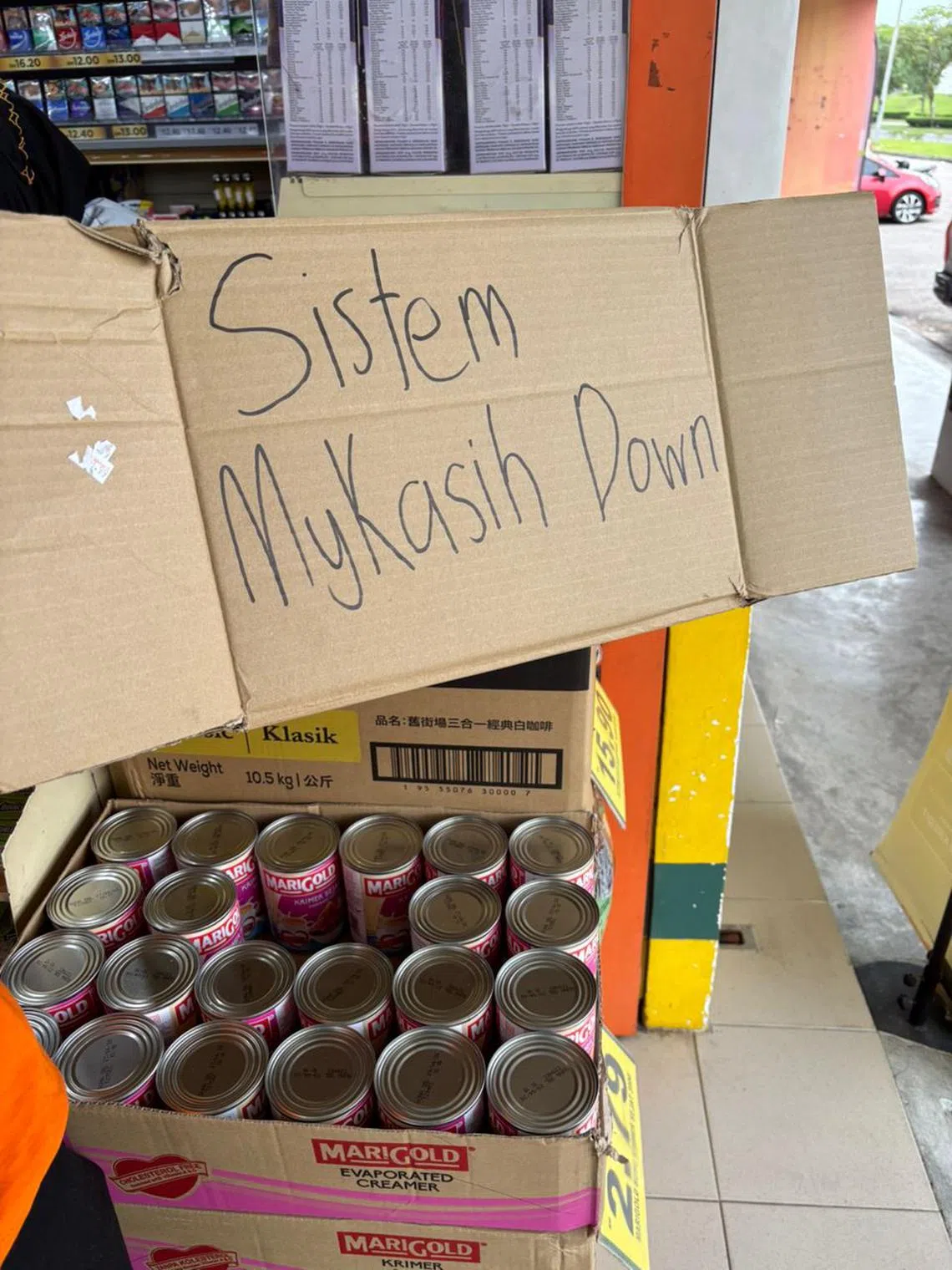
Other recipients gave feedback that the MyKasih platform, despite having been used for other cash aid programmes, was not prepared for the scale and immediacy of the nationwide demand.
Technical issues occurred almost as soon as the programme went live, with supermarket checkout systems frozen and reports of transactions failing repeatedly.
Social media posts showed dozens of filled shopping carts left abandoned in stores due to payment system failures, with staff forced to return the items to the shelves. Some users complained that they had to pay with their own money after many unsuccessful attempts to use the credits.
Another recipient, May Chua, had hoped to redeem her credits on Sunday. But the system crashes forced her to abandon her shopping plans that day. She returned to the grocery store on Tuesday, when she was finally able to complete her transaction.
“This time it worked. The waiting time was under 30 minutes,” she told The Business Times.
In response to public frustration, the finance ministry announced on Tuesday that the MyKasih platform’s capacity had been increased to handle up to 15,000 transactions per minute, up from 5,000 previously.
Economists said this incident offered policymakers a lesson for future disbursements. If the objective was to stimulate domestic demand, such schemes should have greater flexibility in its use, be it more withdrawal options or a wider range of participating merchants.
Signals of resilience
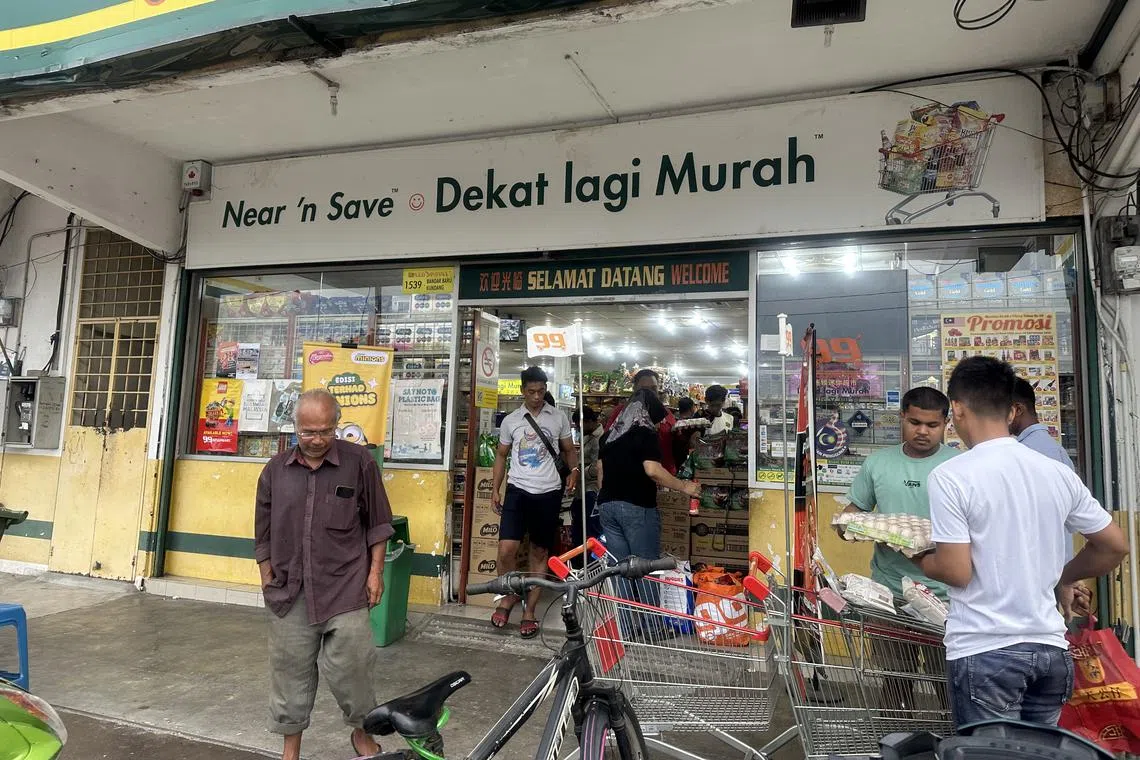
Despite the initial hiccups, analysts remained optimistic about Malaysia’s overall consumption outlook.
Eunice Ng, an equity research analyst at MBSB Research, said that retail momentum in Malaysia was expected to remain resilient, anchored by strong fundamentals and supportive fiscal policies.
“Income support via higher minimum wages, enforcement of a living wage for employees from government-linked companies, and the RM100 cash assistance to all adults will effectively lift disposable income and sustain retail momentum,” she pointed out.
She expected consumer sentiment to improve further in the next few months, particularly as the government doubles down on economic initiatives under various macro development blueprints.
The aid also comes at a critical time, as external risks mount.
Dr Mohd Afzanizam Abdul Rashid, chief economist at Bank Muamalat Malaysia, said the cash handout complements the government’s broader efforts to cushion the impact on the economy.
“The timing of the programme is crucial amid external uncertainties affecting market sentiment,” he noted.
“For instance, the high tariff measures recently announced by the US are expected to significantly impact demand from the US, which will in turn affect the global economy, including Malaysia.”
Dr Afzanizam pointed out that Malaysia’s openness to trade makes it vulnerable to global shocks. On the domestic front, however, he said fiscal support and monetary easing are providing critical buffers.
Bank Negara Malaysia lowered the statutory reserve requirement by 100 basis points in May and reduced the overnight policy rate by 25 basis points in July – moves that could potentially inject RM90 billion in liquidity into the system.
On Thursday, the central bank held its benchmark interest rate steady at a review, as widely expected by most economists.
“Combined with government financial aid schemes such as the new cash handout, these measures will provide a much-needed boost to Malaysia’s economy in the coming quarters,” said Dr Afzanizam.


