






The FCC removed a key constraint on broadcasters’ ability to consolidate stations, voting to repeal an ownership cap put in place to try to limit to power of any one media company.
The FCC’s 2-1 vote on Thursday was to repeal a restriction that limits companies from owning stations reaching more than 39% of TV households. But it faces a potential court challenge, amid warnings that only Congress has the authority to remove the restriction.
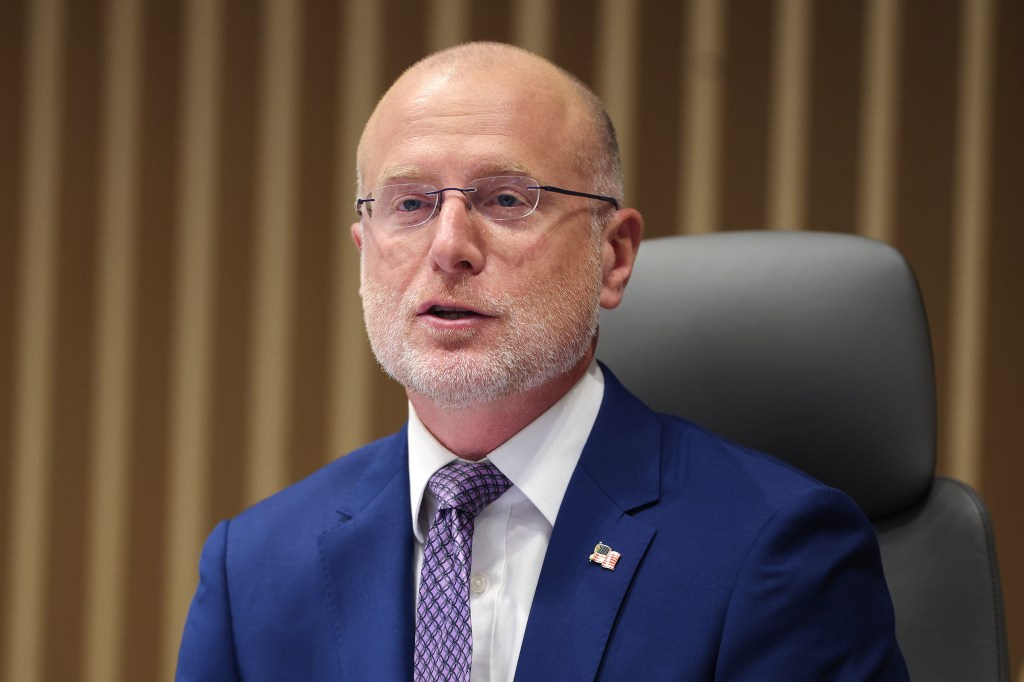
FCC Chairman Brendan Carr said that the move was long overdue given the dramatic changes to the competitive landscape, warning that inaction risked seeing local stations “going the way of newspapers.”
“It is time to restore balance to the broadcast airwaves,” Carr said. “Repealing the national cap will provide essential relief for local broadcasters by restoring a healthy counterbalance to the growing leverage of national programmers.”
He predicted that allowing broadcasters to increase scale will allow them to attract capital and boost advertising to produce news and other local programming.
Removal of the cap — which limits any company from collecting stations that reach more than 39% of the country — has long been a goal of broadcasters, who have complained that they have been unable to scale up to compete with unregulated tech giants as they have siphoned off local television advertising revenue.
Nexstar Media Group has been among the companies championing the repeal of the cap, having already obtained a waiver from the FCC’s media bureau to merge with Tegna, a transaction creating a broadcast giant with around 260 stations covering 80% of the country. The merger closed, but Nexstar has been ordered by a judge to keep the assets and operations separate amid an antitrust lawsuit brought by state attorneys general and DirecTV.
Anna Gomez, the sole Democrat on the FCC, said in a statement, “The large station groups positioned to grow even larger under this decision are not local broadcasters, they are national companies that own local stations and increasingly dictate what airs on them. Trading a squeeze from Big Tech for a squeeze from Big Media does nothing to protect the communities this cap was designed to serve.” She warned of shrinking newsrooms, as large station groups seek efficiencies in local operations.
Skepticism of the FCC’s action crosses party lines. Sen. Ted Cruz (R-TX) has said that he has doubts that the FCC can repeal the cap on its own, and Michael O’Rielly, a former Republican commissioner, has said that the authority lies with Congress as it was a statute. Former House Majority Leader Tom DeLay, in a recent op ed, wrote of how he negotiated the 39% figure in a 2004 appropriations bill. “Regulatory agencies cannot defy or modify laws enacted by Congress,” DeLay wrote for The Daily Wire.
Newsmax CEO Chris Ruddy told a congressional hearing earlier this year that he was “prepared to litigate” over the FCC’s action, arguing that the TV industry “is too important to be handed over to a small number of conglomerates.”
The FCC under Carr has argued that while Congress “has at times directed the Commission to change our rules, it has never withdrawn our authority under the Communications Act to regulate or change ownership limits.” In its order, the FCC claimed that Congress’ 2004 action was a directive only for the commission to “modify its rules.” The agency also cited a 2002 appellate court decision that characterized a specified percentage for the cap as a “starting point from which the Commission was to assess the need for further change.”
Major station groups were praising the FCC’s action even before the vote. Chris Ripley, the CEO of Sinclair Broadcast Group, said on an earnings call on Wednesday, “We fully expect people to challenge this order, and we think the FCC is on solid legal ground here in terms of their authority to change this rule and the rationale behind changing it. The FCC’s mandate is to deregulate over time. That was the mandate from Congress, as conditions change, and that’s what’s happening here.”
With the cap repealed, the FCC will shift to a case-by-case review of merger transactions that otherwise would exceed the 39% threshold. Carr has said that a rationale behind removing the cap was to bolster local TV station groups in the leverage against major broadcast networks. That raises the prospect that some companies will get the greenlight and others, like networks with a national footprint, will not.
“Congress never envisioned that local broadcast TV stations would become nothing more than undifferentiated passthroughs of national programming produced in Hollywood and New York,” Carr said on Thursday. “But if the FCC does not change course, this could become the reality in many towns and cities and counties.”
In announcing the plans, the FCC stated, “There may be transactions that would have exceeded the limits of
the 39% national cap that do not promote the public interest and those will be denied. On the other
hand, there may be transactions that would have exceeded the cap that do promote the public interest
and could gain Commission approval.”


