






Once focused on electrifying buildings, engineering company Busways now charges vehicles too – and is preparing for an initial public offering (IPO).
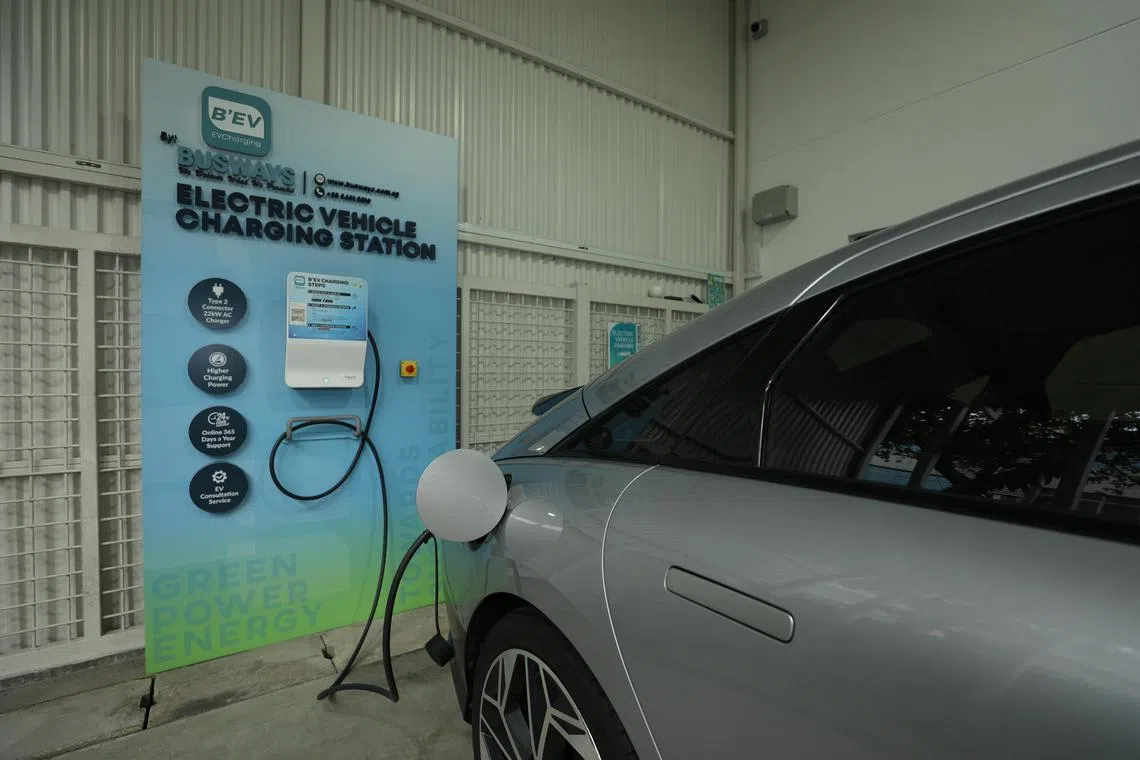
The electrical and mechanical engineering provider has diversified into electric vehicle (EV) charging solutions in line with Singapore’s push for greener transport.
“There is a need for the company to stay competitive, as we see a growing demand for electric vehicles and charging infrastructure in Singapore,” founder and chairman Sunny Chong told The Business Times.
The company also wants to play its part in reducing carbon emissions in support of Singapore’s Green Plan 2030. The government aims to provide 60,000 EV charging points by that year, with all new car registrations to be cleaner-energy models from then on.
With its EV push and a diversification into property, Busways has kick-started the process for going public. It intends to do so by mid-2026, but has not decided where to list.
Said chief executive Martin Toh: “Gathering more funds from the public will allow us to deliver more services to society, especially in the realm of EV charging to further the sustainability agenda.”
A NEWSLETTER FOR YOU


Friday, 8.30 am
SGSME
Get updates on Singapore’s SME community, along with profiles, news and tips.
Founded in 2006 with a team of five engineers, Busways began as a contractor providing electrical services, focusing on the supply and installation of bus ducts. These high-current prefabricated electrical distribution systems are used particularly in industrial and commercial facilities.
Today, the company has grown to 280 employees and offers the full spectrum of high and low-voltage electrical engineering services. These include the supply, installation, testing and commissioning of bus duct systems, cabling infrastructure, cable support system and metal fabrication works.
Entering the EV charging market
Recognising Singapore’s shift towards electrification of vehicles, Busways set up an EV charging division in 2021. A year later, it was certified by the Land Transport Authority (LTA) as an EV charge point operator.
At first, the company mainly supplied and installed EV chargers at car parks within private condominiums.
But Chong wanted to compete for bigger contracts. “We expected more demand for EV charging solutions, given the government’s emphasis on green sources of energy,” he said.

A breakthrough came in late 2023, when a consortium formed by Busways and Shell Singapore clinched a S$31.3 million LTA tender to install 480 EV chargers at two bus depots. Singapore is expanding its electric bus fleet and related infrastructure, aiming for all public buses to run on cleaner energy by 2040.
Busways has now installed more than 1,300 charging devices across residential and commercial estates, and operates 300 charging points.
It is also building a public EV charging hub for trucks and buses in its factory compound at 27 Senoko Way.
To be completed in the fourth quarter of this year, the hub will be powered entirely by solar energy and wind – with a back-up power grid – thanks to a pilot battery energy storage system.
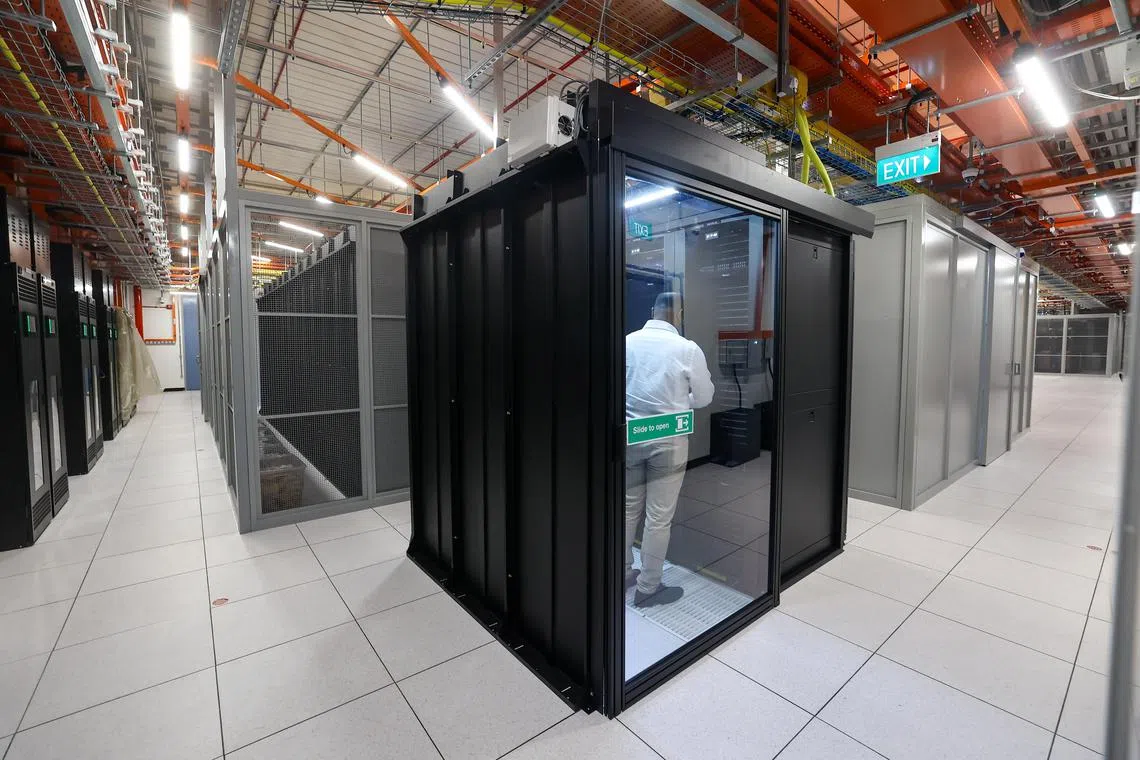
A boom in data centres is also driving growth. Since 2016, Busways has worked on more than 20 data centre-related projects.
Its ability to take on projects was boosted in 2022, when it was upgraded to an “L6” contractor under the Building and Construction Authority’s contractors’ registration system.
This allows Busways to bid for projects of unlimited value across all sectors, including those involving data centres and semiconductor fabrication plants. Such projects have critical power needs and therefore tend to be of a larger scale, noted Toh.
Property development
Not only does Busways set up electrical systems indoors, it is now constructing entire buildings.
In September 2024, it established a build and construct division to offer interior design, mechanical and electrical (M&E) services, as well as addition and alteration works.
This move into construction was prompted by its own business needs. Some of Busways’ M&E projects required infrastructural enhancements, such as enlarging or modifying substations, noted Chong.
With its new division, the company can do these works internally and no longer needs to engage third-party contractors.
The move has since paved the way for a larger ambition. Busways now wants to become a private residential property developer, specialising in landed property.
Going into residential property will help the company raise its public profile, said Toh.
“By continuing to just focus on industrial developments, which are business-to-business in nature, Busways may remain relatively unknown to consumers,” he explained. “But this will help our brand to be more recognisable to the broader public.”
The company has already secured contracts from developers to construct two semi-detached properties.
It has also begun work on its first property as a developer. This March, it bought a plot of land with a corner terrace house for S$4.7 million. The unit will be demolished and redeveloped into a 3.5 storey terrace house with attic, basement and swimming pool, by 2027.
Longer-term goals
For its latest financial year ended December 2024, Busways’ revenue was S$72 million, up from S$57 million the year before.
About 70 per cent was from its core M&E services. Its EV charging unit contributed 18 per cent, followed by high voltage switchgear and transformers at 10 per cent, with the rest from its build and construct division.
Chong expects revenue of S$120 million for FY2025, driven by higher-value projects across M&E services and the growth of its EV stream. Its order book stands at S$80 million in value.
Busways is now looking across the Causeway for growth – especially at data centre and semiconductor plant projects within industrial parks in Johor.
The Malaysian state has emerged as a data centre hot spot, pulling in a reported RM17 billion (S$5.2 billion) in related investments last year.
To facilitate these efforts, Busways registered an entity in Johor in December 2024 and has established a physical office there.


