







TARIFF RULING CLOUDS FED’S RATE PATH
The Supreme Court’s ruling also poses new questions for Federal Reserve policymakers who have spent the last year trying to understand how Trump’s sharply higher import taxes would affect inflation and the economic trajectory.
Many of them only recently gained confidence that last year’s tariff-driven price increases would soon wane.
Now, they are forced to wonder whether the process might be thrown into reverse, or put on hold while the Trump administration looks for workarounds to reimpose the same taxes under other authority.
All the while, the Fed is left guessing about the outcome, facing a more complicated decision on when or if to resume cutting interest rates.
“Is there a requirement to pay back the firms that have paid in? … If so, that’s a lot of disruption,” Atlanta Fed president Raphael Bostic said at an appearance in Birmingham, Alabama.
“Does this cause businesses to revert back to old business models about where they are getting their supplies? … Will there be another vehicle to put all those tariffs in at the same level or are there constraints?”
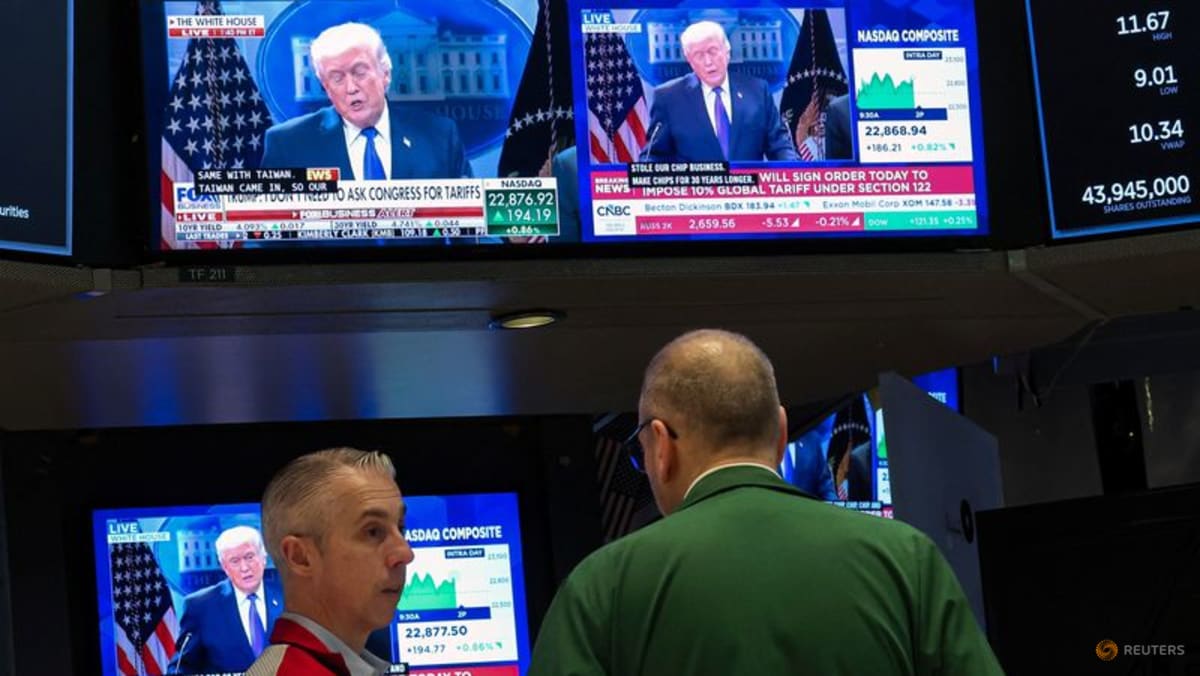
The fresh uncertainty around the Fed’s outlook was evident in interest rate futures markets, where traders wager on the direction of borrowing costs.
Those markets seesawed on Friday between bets that the Fed would start cutting rates again in June or would wait until July, reflecting the complications the court ruling has introduced.
Treasury Secretary Scott Bessent said the legal fight over refunds of the invalidated taxes could take “weeks, months, years” to be resolved.
Meanwhile, the Trump administration will impose alternative import levies under what Bessent called “well-tested” authorities to fill the tariff gap left by the court’s 6-3 ruling.
“No one should expect that the tariff revenues will go down,” Bessent told the Economic Club of Dallas.
If the Trump administration’s new tariffs are essentially one-for-one replacements of the old tariffs imposed under emergency powers known as the International Emergency Economic Powers Act (IEEPA), St Louis Fed president Alberto Musalem told Fox Business Network that his own economic forecast would not change much.
Still, he said, he plans to talk directly with CEOs to find out how they plan to manage the switch.
“It is possible that as companies begin to think of how they’re going to transition from paying IEEPA tariffs to paying a different kind of tariffs, that could introduce a period of uncertainty there for companies,” Musalem told Fox Business Network’s Edward Lawrence.
For Dallas Fed president Lorie Logan, the ruling also means a fresh lack of clarity.
“It’s something we’ll be paying attention to, but I don’t have any specific perspective,” she said in New York.


