


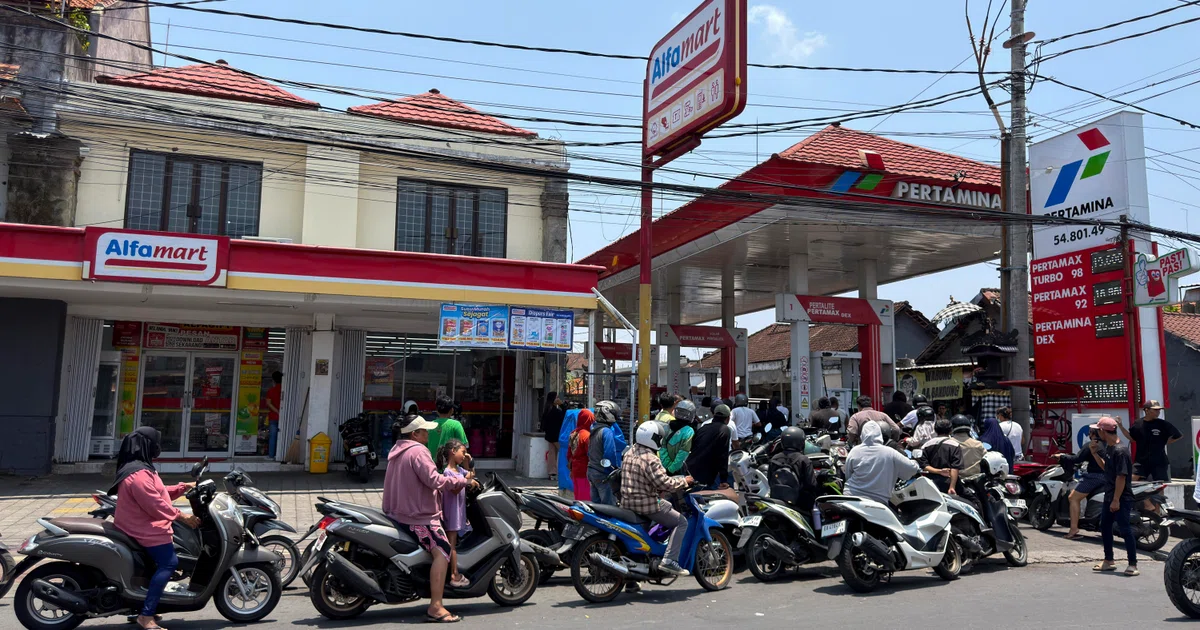
Shortages from distribution woes and high demand threaten the province’s tourism economy
[BALI] Distribution bottlenecks and surging demand have triggered severe fuel shortages across Bali, leaving residents and tourists in hours-long lines at petrol stations and throwing the Indonesian holiday island’s tourism economy in disarray.
Christine Nababan, a Sanur-based resident with a catering business, spent nearly three hours queuing at a petrol station to refuel her motorbike, disrupting her work transporting food around the island.
“I spent almost three hours queuing just to get fuel. It is exhausting and frustrating, especially when you depend on your bike to get to work,” she told The Business Times.
The disruption, which began on Sunday (Oct 11), was reported across Denpasar, Badung and petrol stations near I Gusti Ngurah Rai International Airport, with traffic congestion along Tuban Road leading towards the airport, local media reported.
Lines of motorcycles and cars spilled onto public roads, disrupting traffic, while some motorists were forced to push their vehicles after running out of fuel.
Diving operator Komang Agus and his foreign guest were stranded at a petrol station for nearly two hours on Tuesday after he picked the guest up from the airport, putting their onward boat connection to Nusa Penida at risk.
The Business Times turns 50
Five decades of milestones and moments that shaped Singapore’s success story – told through our headlines.
Explore BT50
“I feel bad making my guest wait nearly two hours and risk missing the connecting boat,” he said.
The shortages have also pushed up prices at informal roadside fuel sellers, adding to costs for residents and businesses.
Spike in demand
The fuel distribution disruption in Bali is reported to have been caused by delays in Pertamina’s tanker arrivals, local media said.
Daily newspaper Tribun Bali reported that Pertamina Patra Niaga, the fuel-distribution arm of state-owned Pertamina, had adjusted delivery schedules, while tanker delays at the Sanggaran and Manggis terminals disrupted supplies to petrol stations amid strong demand.
Meanwhile, Pertamina Patra Niaga attributed the shortage to higher fuel consumption in Bali, which averages about 2,200 kilolitres a day.
In a statement, the company said that it was monitoring fuel stocks and consumption across the island, and stepping up distribution following the arrival of fuel tankers. “We are continuing to optimise deliveries to petrol stations, taking into account stock levels and consumption in each area,” it added.
The disruption persisted on Tuesday, despite assurances from Bali Governor Wayan Koster a day earlier that the shortage had been brought under control, state news agency Antara reported.
The shortage threatens to disrupt travel for tourists and the drivers, guides and small businesses that depend on transporting visitors around the island.
Bali welcomed about five million foreign tourists in the first half of this year, highlighting how much the island’s tourism industry relies on a steady supply of fuel.
The province generated about US$10.7 billion in tourism-related foreign-exchange earnings in 2025, accounting for roughly 55 per cent of Indonesia’s total tourism foreign-exchange receipts, data from the country’s statistics agency showed.
Motorbikes, cars and private drivers are a mainstay of Bali’s tourism economy, connecting visitors to destinations beyond the main resort areas.
The fuel shortage is also driving a surge in demand for electric motorbike rentals, offering some tourists an alternative as petrol stations run short.
Cyntia Jasmine, an electric-motorbike rental operator, said that daily inquiries had jumped to more than a dozen from the usual one or two requests a week, with interest coming from areas including Tabanan, Kuta and Ubud.
The increase began on Monday, she said, prompting her to raise rental rates to 195,000 rupiah (US$10.90) a day from 150,000 rupiah and impose a minimum three-day booking, as demand outstripped normal levels.
Energy security tested
The latest disruption comes as Indonesia, a net oil importer, seeks to maintain energy security amid volatile international markets.
In Makassar, South Sulawesi, local media also reported fuel shortages that triggered long queues spilling out of petrol stations.
Fabby Tumiwa, CEO of energy policy think tank Institute for Essential Services Reform, said that rising oil prices amid the Middle East conflict had increased fuel procurement and distribution costs, putting further pressure on Pertamina’s cash flow.
“Recurring fuel shortages are not merely a distribution problem,” he noted, adding that the issue required “immediate attention”.
