


The San Sebastián Film Festival will dedicate a 20-feature retrospective to José Giovanni, the French director, screenwriter and novelist who became one of the defining figures of the country’s postwar crime cinema.
Running during the festival’s 74th edition, the program will span films released between 1960 and 2001, presenting almost all of Giovanni’s work as a director alongside eight titles he wrote for filmmakers including Jacques Becker, Jean-Pierre Melville, Claude Sautet, Jacques Deray, Robert Enrico and Henri Verneuil.
Born Joseph Antoine Roger Damiani in Paris in 1923, Giovanni helped shape the French crime genre known as polar, first through his novels and screenplays and later as a director with a raw, direct and highly physical style.
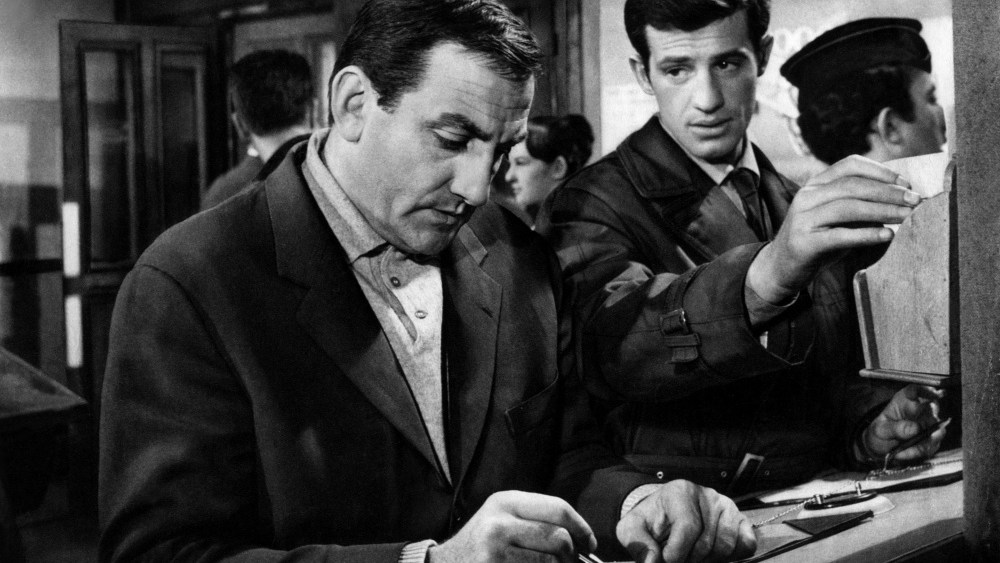
His turbulent and controversial life supplied much of the material for his fiction. Accused of murder and sentenced to death, Giovanni avoided the guillotine after his punishment was commuted to hard labor. His prison experience inspired his 1958 novel “Le Trou,” which Becker adapted as “The Hole” in 1960. Initially hired as a technical adviser, Giovanni ultimately co-wrote the screenplay for Becker’s final film.
Other novels from the period also became key works of French crime cinema. Sautet adapted “Classe tous risques” as “The Big Risk,” while Melville turned “Le Deuxième souffle” into “Second Wind,” starring Lino Ventura. Giovanni later wrote Verneuil’s “The Sicilian Clan,” which brought together Ventura, Alain Delon and Jean Gabin.

Courtesy of San Sebastián Film Festival
After collaborating with Deray and Enrico, Giovanni made his directing debut with “Law of Survival” in 1967. The war-inflected polar introduced three subjects that would recur throughout his work: the French Resistance, the Corsican milieu and betrayal.
Across 15 theatrical features, Giovanni focused on hired killers, Marseille gangsters, prisoners, marginalized thieves, wayward youths and ex-convicts struggling to re-enter society, often portraying characters governed by personal codes of loyalty and honor.
The program will include “Birds of Prey,” “Last Known Address,” “One Way Ticket,” “Hit Man,” “Two Men in Town,” “The Gypsy” and “Une robe noire pour un tueur,” as well as his final films, “My Friend the Traitor” and “My Father Saved My Life,” which drew more directly on the experiences and moral conflicts that shaped his life.
Organized by the festival and the Basque Film Archive, in collaboration with the Spanish Film Archive, the retrospective will be accompanied by a bilingual study written by Felipe Cabrerizo and edited by Quim Casas.
The 74th San Sebastián Film Festival will run Sept. 18-26.
