


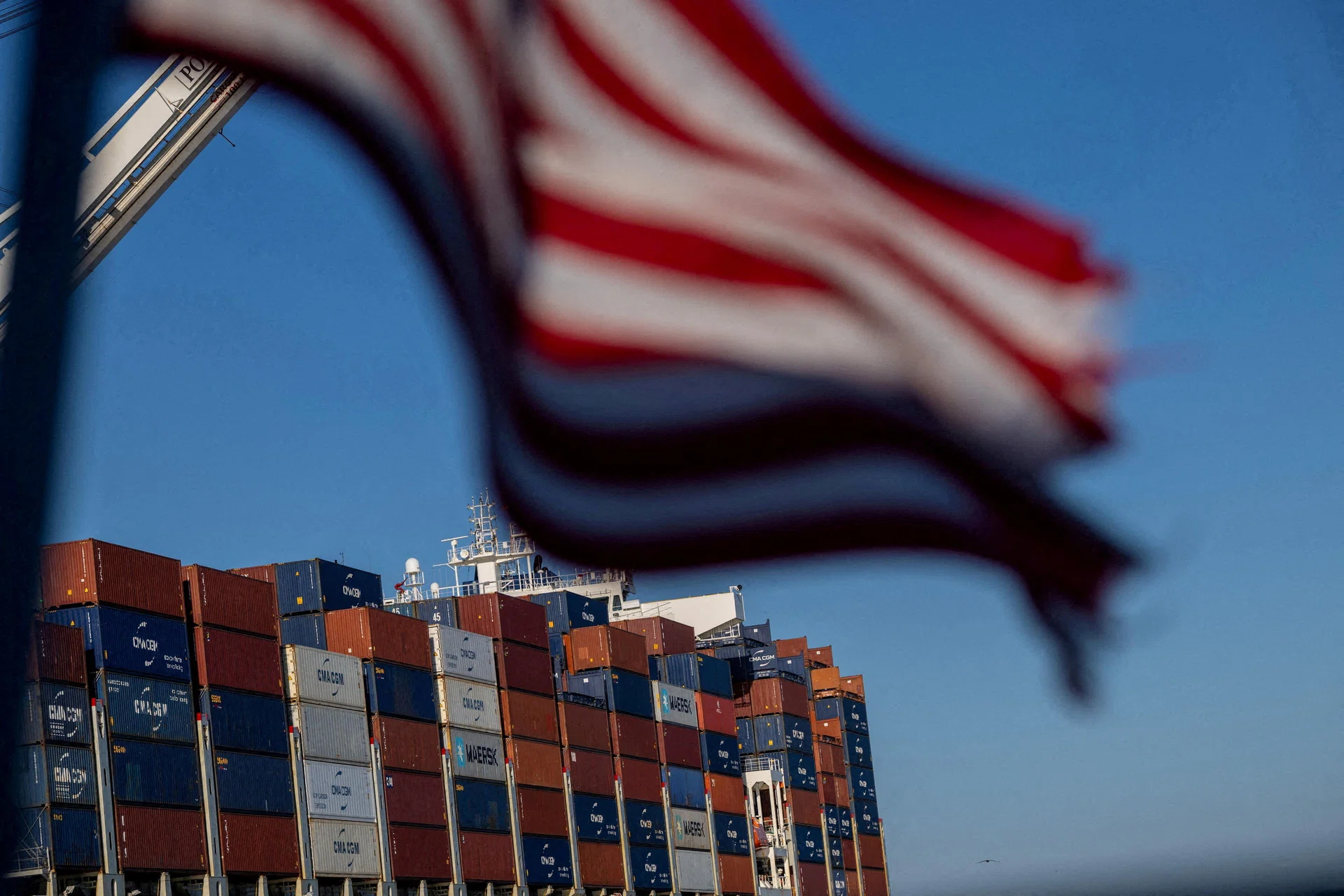
Exemptions for semiconductors and electronics are expected to keep city-state’s export engine largely intact
[SINGAPORE] The economic impact of new tariffs imposed by the US on Singapore over forced labour concerns is likely to be limited, as exemptions for semiconductors and other key products are expected to cushion the blow, economists said on Friday (Jul 24).
Businesses here, meanwhile, are calling for greater clarity on how the new tariff will be implemented.
The Office of the United States Trade Representative (USTR) announced an additional 12.5 per cent tariff on Singapore’s exports to the US, effective Friday, after concluding its Section 301 probe into 60 economies.
The USTR found that all the investigated economies, including Singapore, had failed to impose and/or effectively enforce a prohibition on the importation of goods produced with forced labour.
Products subject to Section 232 tariffs are exempt. There are also specific exclusions for energy products, pharmaceuticals, certain electronics, aerospace products, semiconductors, and metals used in currency and bullion.
About a third of Singapore’s domestic exports to the US will be subject to the new tariff.
Singapore’s Ministry of Trade and Industry (MTI) said it will continue to engage the USTR to explore options on the matter, and that further details on implementation will be shared when ready.
MTI reiterated that Singapore does not condone forced labour, and has a comprehensive enforcement framework against such practices domestically.
It added that any trade restriction would need to be carefully considered in consultation with the Singapore Economic Resilience Taskforce and the business community.
SEE ALSO

Separately, Singapore is subject to a USTR investigation into structural excess capacity in manufacturing, the findings of which have not yet been released.
Impact contained
Economists said the exemption for semiconductors and electronics – among the products excluded under Section 232 – is the key factor limiting the fallout on Singapore’s economy.
Maybank economist Brian Lee said the tariff increase is “modest” at 2.5 percentage points, given that the temporary Section 122 tariff expired the same day.
With the exemptions broadly maintained and only about a third of Singapore’s domestic exports to the US being subject to the new tariff, the effective rate hike on the city-state’s exports is significantly smaller than the headline 2.5 percentage point increase, he noted.
Still, there could be additional tariffs stemming from the pending excess-capacity probe, he said.
Nonetheless, the impact on overall non-oil domestic exports (NODX) to the US is expected to remain contained, provided semiconductors stay exempt.
Lee added that demand from other export markets, particularly China, is likely to remain strong, supported by specialised machinery and tech components amid a ramp-up in domestic capital expenditure.
He said that Maybank maintains its 2026 growth forecast for Singapore at 4.8 per cent.
This is premised on slower year-on-year growth of 3.7 per cent in the second half, alongside slower quarter-on-quarter momentum of 0.5 per cent compared with 1.2 per cent in H1.
It also remains “plausible” that MTI upgrades its full-year growth forecast to a range of 4 to 5 per cent in August, from the current 2 to 4 per cent, he added.
DBS senior economist Chua Han Teng said the tariff would represent a modest increase in the US average effective tariff rate on Singapore. It would also continue to weigh on the city-state’s non-electronics NODX to the US, which have already been underperforming.
“The exemption of certain electronics products and semiconductors would be crucial,” he added.
“It would imply that the strong performance of regional and Singapore electronics exports, supported by robust global demand related to artificial intelligence tailwinds, is likely to remain intact in the coming months…
“This should help keep Singapore’s (gross domestic product) growth resilient, despite some moderation partly due to high base effects.”
OCBC chief economist Selena Ling agreed that the short-term impact of the new tariffs may be muted.
The greater risk, she said, was the unpredictability of US policy, with other investigations and potential additional tariffs still in play, including a review of excess manufacturing capacity.
This could dampen near-term expansion and capital expenditure plans if policy uncertainty rises further, particularly running up to the US midterm elections and alongside the ongoing Middle East conflict, she noted.
She maintains her 2026 growth forecast of 4.3 per cent, as it is still too early to gauge the impact. “The key takeaway from the 2025 “Liberation Day” tariff announcements is that things are still in flux.”
She added that the AI-related boom remains the biggest growth driver for Singapore’s economy, and this may pose the bigger risk should there be a sharp correction – whether triggered by fresh punitive tariffs or other factors.
Businesses call for clarity
Singapore Business Federation (SBF) chairman Mark Lee said businesses recognise the importance of addressing forced labour risks in global supply chains and are prepared to play their part.
“Singapore has not introduced an import prohibition on goods produced with forced labour, and we appreciate that the government has been mindful of the potential impact on our companies and Singapore’s position as a global trading hub,” he said.
Any new regulatory requirements should be carefully studied and developed in close consultation with industry, given the potential implications for business operations, supply chains, compliance costs and Singapore’s position as a trusted global trading and transhipment hub, Lee said.
The apex business chamber added that companies should first determine whether their exports are covered by the tariff or fall within the stated exclusions before assessing the impact.
Companies with US market exposure should review product classifications, engage customers early, and assess implications for pricing, contracts and supply chains.
SBF will work closely with affected businesses to understand the impact and support them through this period.
Meanwhile, a spokesperson for the Singapore International Chamber of Commerce (SICC) said it was too early to assess the full impact of the tariffs, and that the business chamber would consult its members to better understand the implications across sectors.
Businesses value certainty, predictability and open markets, the spokesperson said, adding that SICC remains hopeful that both the US and Singapore will continue their discussions constructively.
The chamber will continue to monitor developments, gather feedback from its members, and share relevant business perspectives with the appropriate authorities where necessary.
