


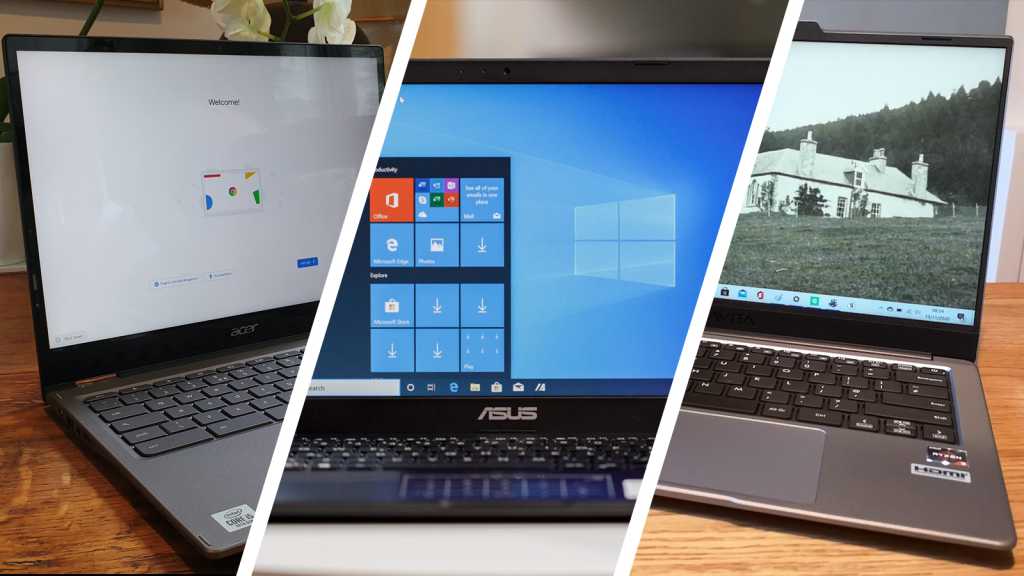
Shopping for a laptop starts simple enough, but it always ends with a dozen open tabs full of specs you didn’t really care about in the first place. Graphics cards, display types, confusing processor names… it gets confusing (and overwhelming!) fast.
That’s where we can help.
|
Best Price Today $1099.99 at Best Buy View Deal |
View Deal | |
|
Show Pros & Cons Pros
Cons
Hide Pros & Cons |
|||
|
View Deal | ||
|
Show Pros & Cons Pros
Cons
Hide Pros & Cons |
|||
|
View Deal | ||
|
Show Pros & Cons Pros
Cons
Hide Pros & Cons |
|||
|
View Deal | ||
|
Show Pros & Cons Pros
Cons
Hide Pros & Cons |
|||
|
Best Price Today $999.99 at Best Buy View Deal |
View Deal | |
|
Show Pros & Cons Pros
Cons
Hide Pros & Cons |
|||
|
Check on Amazon | ||
|
Show Pros & Cons Pros
Cons
Hide Pros & Cons |
|||
|
View Deal | ||
|
Show Pros & Cons Pros
Cons
Hide Pros & Cons |
|||
|
View Deal | ||
|
Show Pros & Cons Pros
Cons
Hide Pros & Cons |
|||
|
View Deal | ||
|
Show Pros & Cons Pros
Cons
Hide Pros & Cons |
|||
|
|
|||
PCWorld’s experts have testing everything from affordable everyday laptops to powerful gaming machines. We’ll break down the options and point you toward what actually fits your lifestyle.
Why you should trust PCWorld for laptop reviews and buying advice: It’s in our name! PCWorld prides itself on laptop experience and expertise. We’ve been covering PCs since 1983, and we now review more than 70 laptops every year. All of the picks below have been personally tested and vetted by our experts, who’ve applied not only performance benchmarks but rigorous usability standards. We’re also committed to reviewing PC laptops at every price point to help you find a machine that matches your budget.
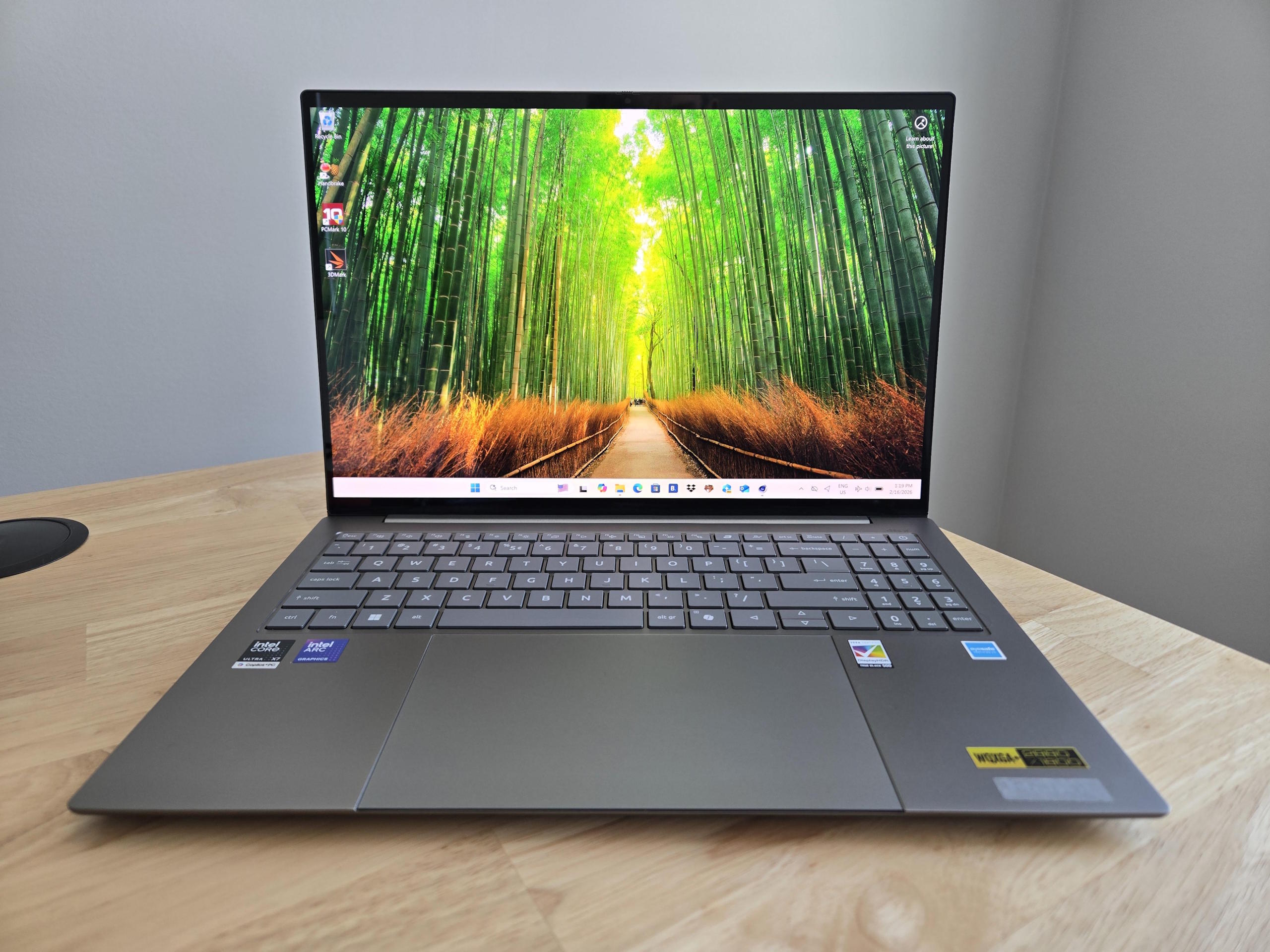
Acer Swift 16 AI (Panther Lake) – Best laptop overall
Pros
- Incredible performance
- Amazing battery life
- Beautiful OLED display
- Excellent trackpad
- Lots of RAM and storage
Cons
- Glossy display is prone to reflections
- Active pen doesn’t work on the screen
- Grainy webcam
Best Prices Today:

$1099.99

$2399.99
CPU: Intel Core Ultra X7 358H | RAM: 32GB LPDDR5X | Storage: 1TB PCIe Gen5 SSD | Screen: 16-inch, 2880×1800 OLED touchscreen, 120Hz | Battery life: Almost 18.5 hours in testing | Weight: 3.42 lbs
Who should buy the Acer Swift 16 AI?
The Acer Swift 16 AI is the best choice for most people and I’ll tell you why.
First of all, it’s running Intel’s Panther Lake platform, so it feels consistently fast in everyday use. Apps open up fast, and it stays pretty smooth even when you’ve got a bunch of stuff running at once. In testing, it scored a PCMark 10 of 10,474, and in the video playback battery test it hit around 18 hours, which is honestly a lot more than you’d expect. It’s not perfect, though.
The glossy OLED can get kind of annoying with reflections, and the webcam is just okay, nothing special. But overall, the performance and efficiency are definitely the highlights. Battery life is another thing it really does well with.
Getting around 18.5 hours in testing is not something you usually associate with a 16-inch OLED machine. In real use, it just means you stop worrying about the charger unless you’re doing something heavy.
And, despite the bigger screen, it doesn’t feel ridiculous to carry around. At 3.42 pounds, it’s totally manageable.
Acer Swift 16 AI: Further considerations
Acer also did a pretty solid job with the physical stuff here.
The aluminum chassis feels sturdy, the keyboard is roomy with a numpad (which you either love or ignore), and the haptic trackpad is actually one of the better implementations on a Windows laptop. It has a consistent, clean feel instead of that uneven click you get on cheaper setups.
Port selection is also better than you’d expect on something this thin. Two Thunderbolt 4 ports, two USB-A ports, HDMI 2.1, microSD, and a headphone jack. It’s the kind of layout that saves you from immediately living the dongle life.
Read our full
Acer Swift 16 AI review
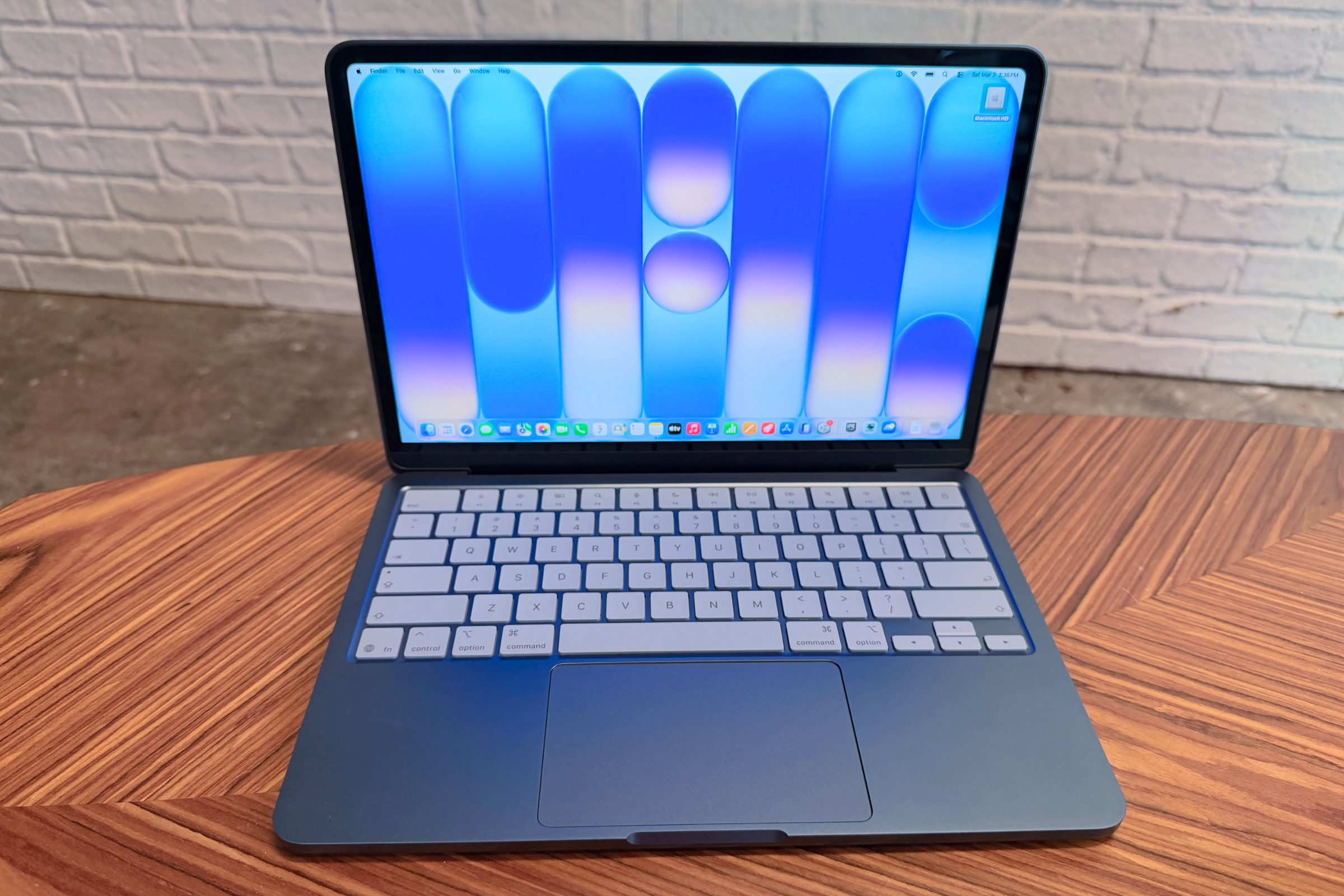
MacBook Neo – Best budget laptop
Pros
- Distinguished and sturdy design
- Excellent single-core CPU performance
- Great-looking display
- Nothing feels cheap
Cons
- Different USB implementations on the two ports
- Trackpad lacks pressure-sensitivity
- Multi-core performance lags
- No P3 color gamut support
Price When Reviewed:
$699 (was $599)
Best Prices Today:

$566

$689

$689.99

$699

$699

$699.99
CPU: A19 Pro | RAM: 8GB | Storage: 256GB SSD | Screen: 13-inch 2408×1506 Liquid Retina display | Battery life: 13 hours | Weight: 2.7 pounds
Who should buy the MacBook Neo?
If you’ve been holding off on buying a MacBook because of the steep price, Apple’s latest installment is your golden ticket. At just $599, it’s the most affordable MacBook ever, but don’t let the “budget” label fool you.
Inside, it’s got an A19 Pro chip with 6 CPU cores, a 16-core Neural Engine, 5-core GPU, 8GB of memory, and a 256GB SSD. That’s more than enough for everyday productivity like browsing, emailing, streaming, documents, spreadsheets, and so on. The 13-inch Liquid Retina display is bright and sharp at 2408×1506 with 500 nits, and the all-aluminum case is both strong and lightweight, the kind of quality you’d expect from a MacBook.
MacBook Neo: Further considerations
The MacBook Neo isn’t perfect. The screen only supports sRGB, so it’s not great for serious color work. The SSD is also a bit slower, and one of the USB-C ports is really slow (according to our review). There’s no Thunderbolt connectivity and Touch ID is only available on the $699 model. But for $599, these are expected trade-offs. For normal everyday use, the battery easily lasts all day, the keyboard feels good, and macOS runs smoothly.
Read our full
Apple MacBook Neo review
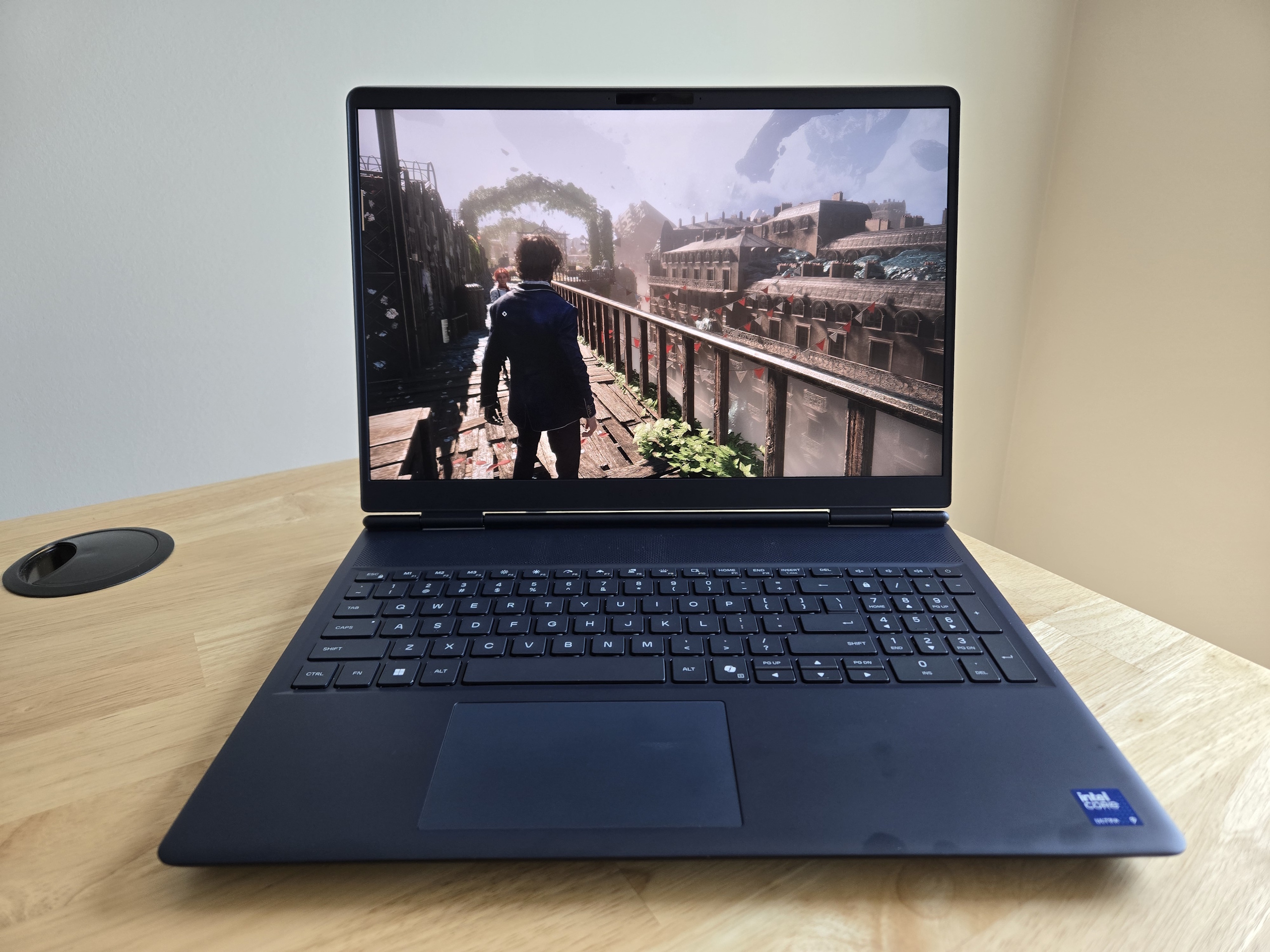
Alienware 16X Aurora – Best gaming laptop
Pros
- High-end CPU performance
- Bright and beautiful display
- Great gaming experience
- Very competitive price
Cons
- You can get better gaming performance with a faster GPU (of course)
- Some hot air blows out the sides
Price When Reviewed:
$1,999.99
Best Prices Today:
$3,147

$3379.99
CPU: Intel Core Ultra 9 275HX | GPU: Nvidia GeForce RTX 5070 RAM: 32GB DDR5 | Storage: 1TB PCIe 4.0 SSD | Screen: 16-inch, 2560×1600 IPS | Battery life: Just under 7 hours | Weight: 5.86 lbs
Who should buy the Alienware 16X Aurora?
The Alienware 16X Aurora delivers serious speed with its Intel Core Ultra 9 275HX CPU and RTX 5070 GPU. The 16-inch 2560×1600 display keeps every frame looking buttery smooth thanks to its 240Hz refresh rate, and its subtle Interstellar Indigo finish makes it look sharp in just about any setting, whether it’s in a dorm or office space.
Alienware 16X Aurora: Further considerations
Alienware packs in plenty of goodies here, like a crisp 1080p webcam (with Windows Hello facial recognition), Wi-Fi 7 for super fast connectivity, and a wide variety of ports. The full-size keyboard has a number pad and customizable backlighting. And you get nearly seven hours of battery life, which is awesome since long runtimes aren’t common in gaming laptops.
Read our full
Alienware 16X Aurora review
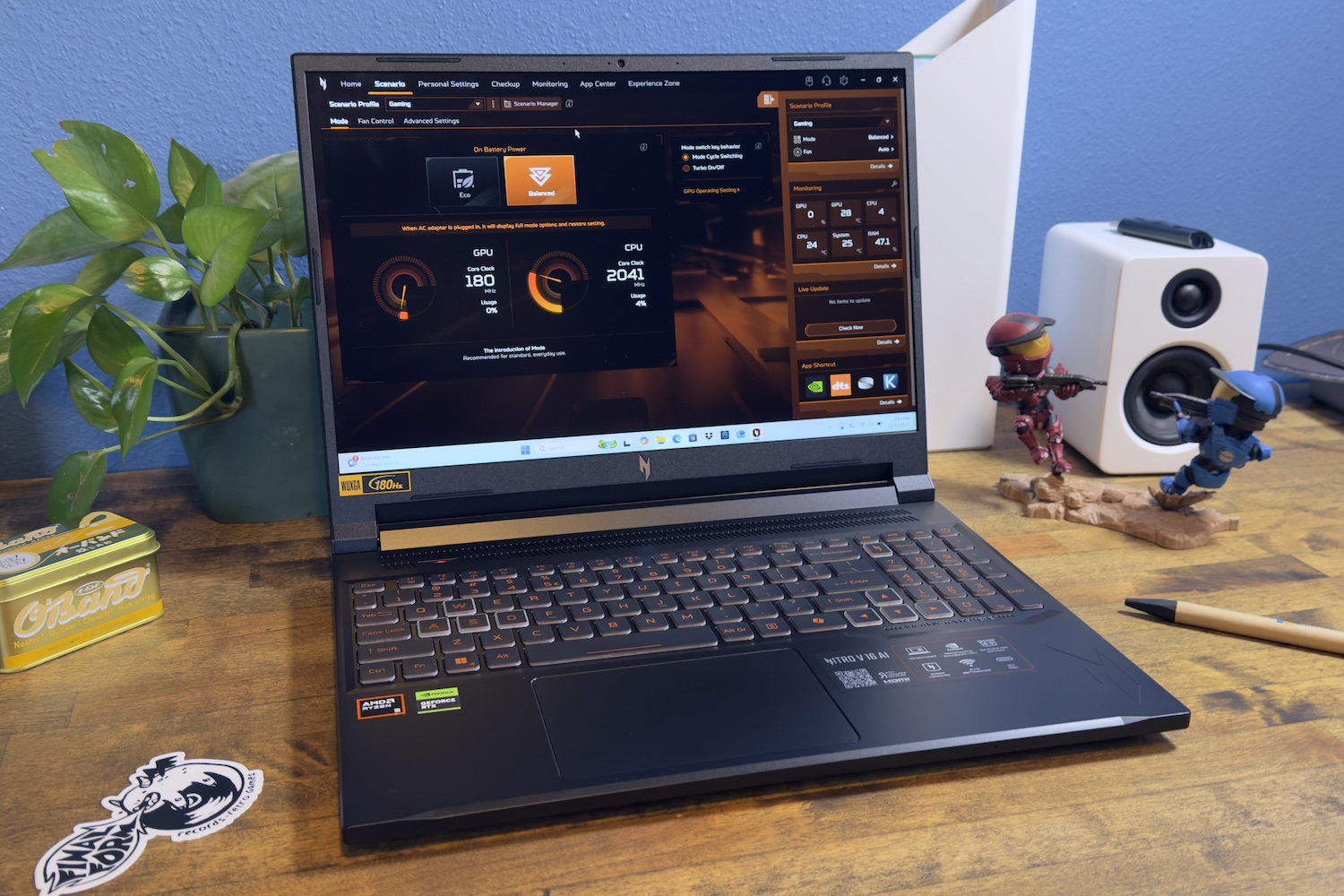
Acer Nitro V 16 AI – Best budget gaming laptop
Pros
- Large touchpad compared to alternatives
- 16-inch 1200p display at a low price
- Lots of physical connectivity
- Impressive battery life for a budget gaming laptop
Cons
- Sub-par CPU performance
- Terrible audio quality from built-in speakers
- Wireless connectivity stuck on the Wi-Fi 6 standards
- Slightly more expensive laptops offer better value
Price When Reviewed:
$899
CPU: AMD Ryzen 5 240 | GPU: Nvidia RTX 5050 RAM: 16GB LPDDR5-5600 | Storage: 512GB M.2 PCIe 4.0 SSD | Screen: 16-inch, 1920×1200, 180Hz IPS-LCD | Battery life: 8 to 12 hours | Weight: 5.38 lbs
Who should buy the Acer Nitro V 16 AI?
The Acer Nitro V 16 AI, which can occasionally be found as low as $629 at times, delivers great 1080p gaming performance–making it a great choice for gamers who don’t want to spend a ton. Its RTX 5050 outperforms other (older) entry-level graphics like the 4050, hitting an average 72 FPS in Cyberpunk 2077. Surprisingly, for a gaming laptop, the battery life is surprisingly good, lasting eight to 12 hours with light use.
Acer Nitro V 16 AI: Further considerations
The 16-inch 1920×1200 IPS display offers more vertical space than standard 1080p panels, and the 180Hz refresh rate keeps things snappy during fast-paced games. The audio isn’t the best, but you can always hook up to external speakers. Overall, though, the Acer Nitro V 16 AI really hits the sweet spot between performance and affordability.
Read our full
Acer Nitro V 16 AI review
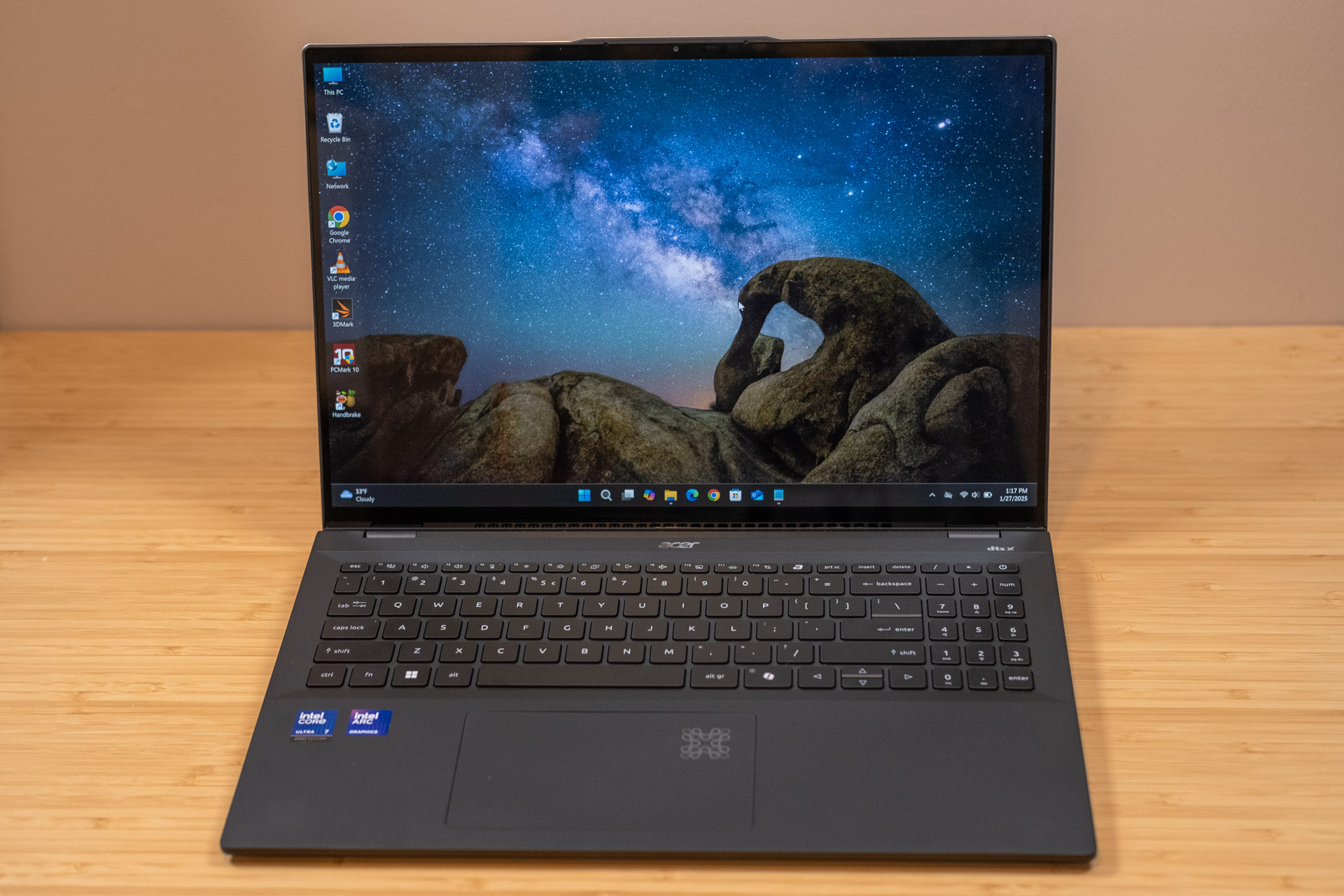
Acer Swift 16 AI – Best college laptop
Pros
- Sleek, sturdy design
- Sharp OLED screen
- Pleasantly tactile keyboard
- Good battery life
Cons
- AI features still lacking
- Some keyboard keys too cramped
- Too many pre-loaded apps
Price When Reviewed:
$1,199.99
CPU: Intel Core Ultra 7 256V | RAM: 16GB LPDDR5X | Storage: 1TB PCIe 4.0 SSD | Screen: 16-inch, 2880×1800 OLED | Battery life: 17.5 hours | Weight: 3.37 lbs
Who should buy the Acer Swift 16 AI?
If you need a laptop for college that won’t kill your back and doesn’t look boring, the Acer Swift 16 AI is worth checking out. It’s only 3.37 pounds, and the 16-inch OLED screen looks really sharp. Inside you get an Intel Core Ultra 7, Intel Arc graphics, 16GB of RAM, and a 1TB SSD. Not the fastest thing ever, but it handles schoolwork and big files without complaint.
The 70Wh battery will get you through a full day of classes (we clocked it at 17.5 hours), and you can charge it via either of the USB-C Thunderbolt 4 ports. There’s also two USB-A ports, HDMI 2.1, Wi-Fi 7, and Bluetooth 5.4.
Acer Swift 16 AI: Further considerations
The OLED screen is such a lovely thing to behold–it’s bright, colorful, and sharp. The keyboard feels good for long typing sessions and, although the trackpad is on the smaller side and may feel cramped to some, it works fine for daily use. If you want a laptop that’s portable and won’t die on you halfway through the day, the Acer Swift 16 AI is the one to spring for.
If you’re looking for a more high-end machine, check out the latest Acer Swift 16 AI ($1,899 at the time of testing), which comes equipped with the new Panther Lake processor.
Read our full
Acer Swift 16 AI review
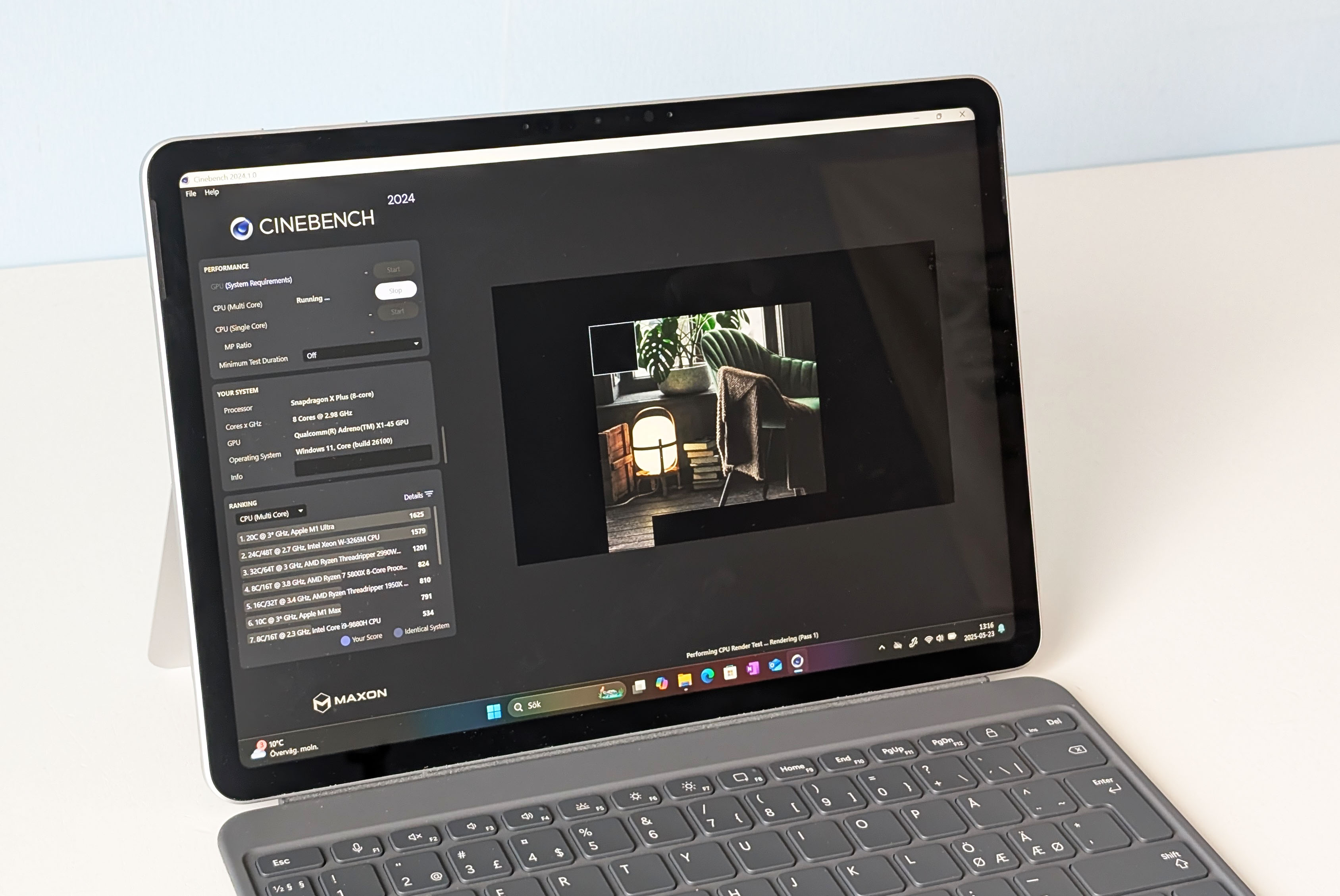
Microsoft Surface Pro – Best lightweight laptop
Pros
- Compact and well-built
- Great office performance
- All Copilot Plus features available
- Good battery life
Cons
- Narrow screen to work on
- No HDR support
- No charger included
Price When Reviewed:
$799.99
Best Prices Today:
CPU: Qualcomm Snapdragon X Plus | RAM: 16GB LPDDR5X | Storage: 512GB SSD | Screen: 12-inch, 2196×1464 IPS | Battery life: Up to 2 hours at full brightness, up to 19 hours with light use | Weight: 1.51 lbs
Who should buy the Microsoft Surface Pro?
If you’re always on the go — whether it’s the train, a coffee shop, or just hopping around the house — the Surface Pro is pretty much made for that. It’s super light (under two pounds!) and still powerful enough to handle all the usual stuff like emails and Zoom calls.
With its Qualcomm Snapdragon X Plus CPU, it’s great for anyone who wants something that works like a laptop but feels like a tablet. You can doodle or get work done, all without feeling like you’re lugging around a heavy brick.
Microsoft Surface Pro: Further considerations
The smaller screen might not be great if you’re juggling a bunch of stuff all day, and there’s only two USB-C ports (so you’ll probably need a dock or something). Battery life can last a while, but honestly, it’s kind of all over the place. Expect around two hours at full brightness under heavy use or up to 19 hours with lighter tasks.
Still, if your work mostly lives in the cloud and you value portability above raw power, this is the best ultraportable Windows device you can get right now.
Read our full
Microsoft Surface Pro 2025 review
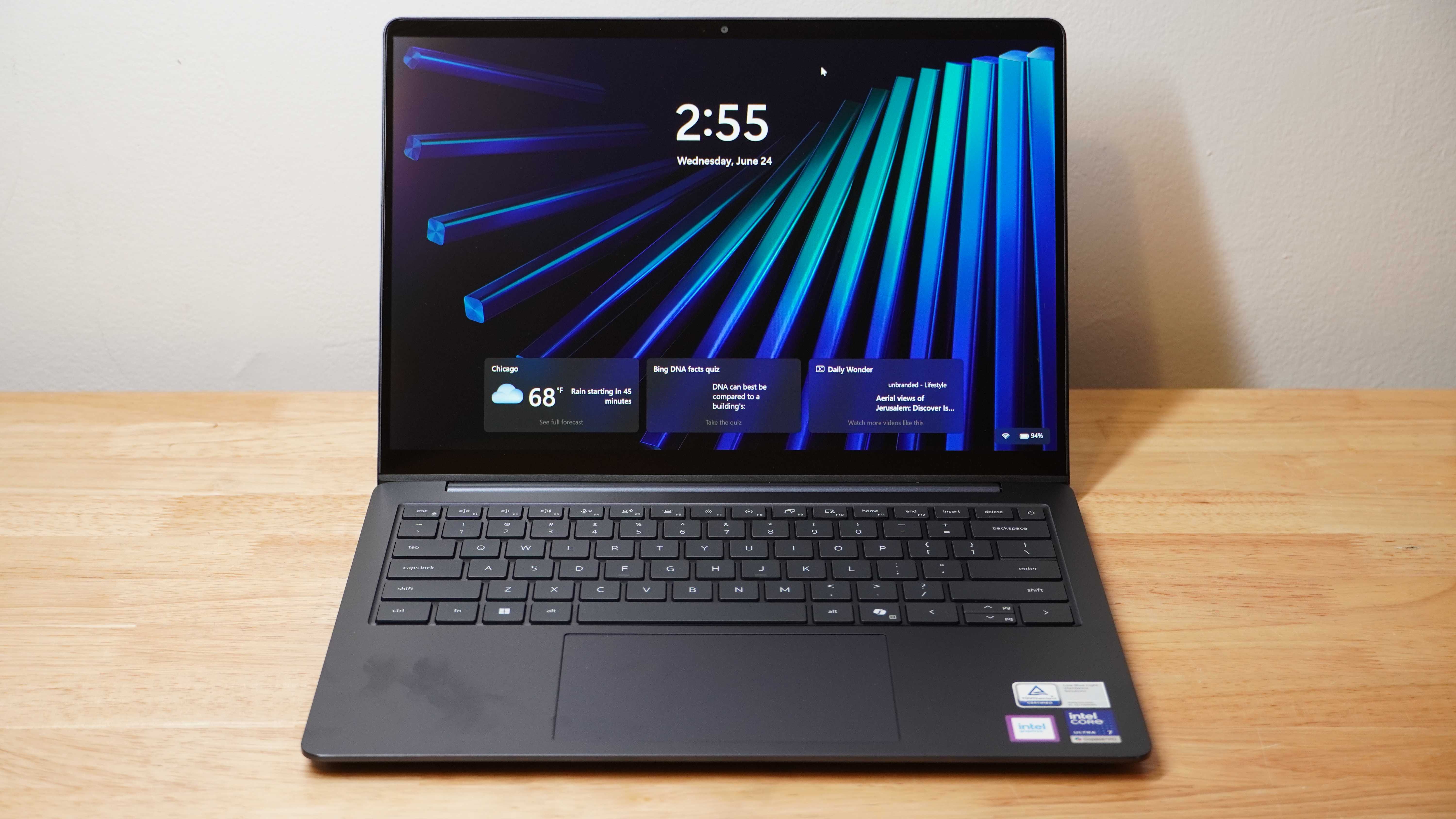
Dell 14S – Best laptop for battery life
Pros
- Class-leading battery life
- Slick build
- Colorful and accurate display
- Good port selection
Cons
- Dismal 3D performance
- Display isn’t very bright
- So-so performance for the money
Price When Reviewed:
$1,469
Best Prices Today:
$1869.99
CPU: Intel Core Ultra X7 358H | RAM: 32GB LPDDR5x-7467 | Storage: 1TB PCIe 4.0 SSD | Screen: 14-inch 1920×1200 OLED touchscreen | Battery life: Nearly 36 hours | Weight: 3.28 pounds
Who should buy the Dell 14S?
If battery life is at the top of your list, the Dell 14S is hard to beat. It lasted nearly 36 hours in our offline video playback test–the longest runtime PCWorld has ever recorded from a laptop. If you normally spend days away from an outlet, this is the laptop to get.
The Dell 14S doesn’t skimp on performance, either. You’re getting plenty of headroom for multitasking thanks to the Intel Core Ultra X7 358H processor and 32GB of RAM. This specific configuration also includes Intel Arc graphics, which provides a nice little boost in the graphics department.
Dell 14S: Further considerations
The OLED display is colorful and accurate, but its 1920×1200 resolution and 60Hz refresh rate aren’t exactly impressive when compared to other premium laptops. Graphics performance also depends on the configuration you’ve got. Lower-end models with standard Intel Graphics are noticeably weaker for creative work and light gaming.
Read our full
Dell 14S review
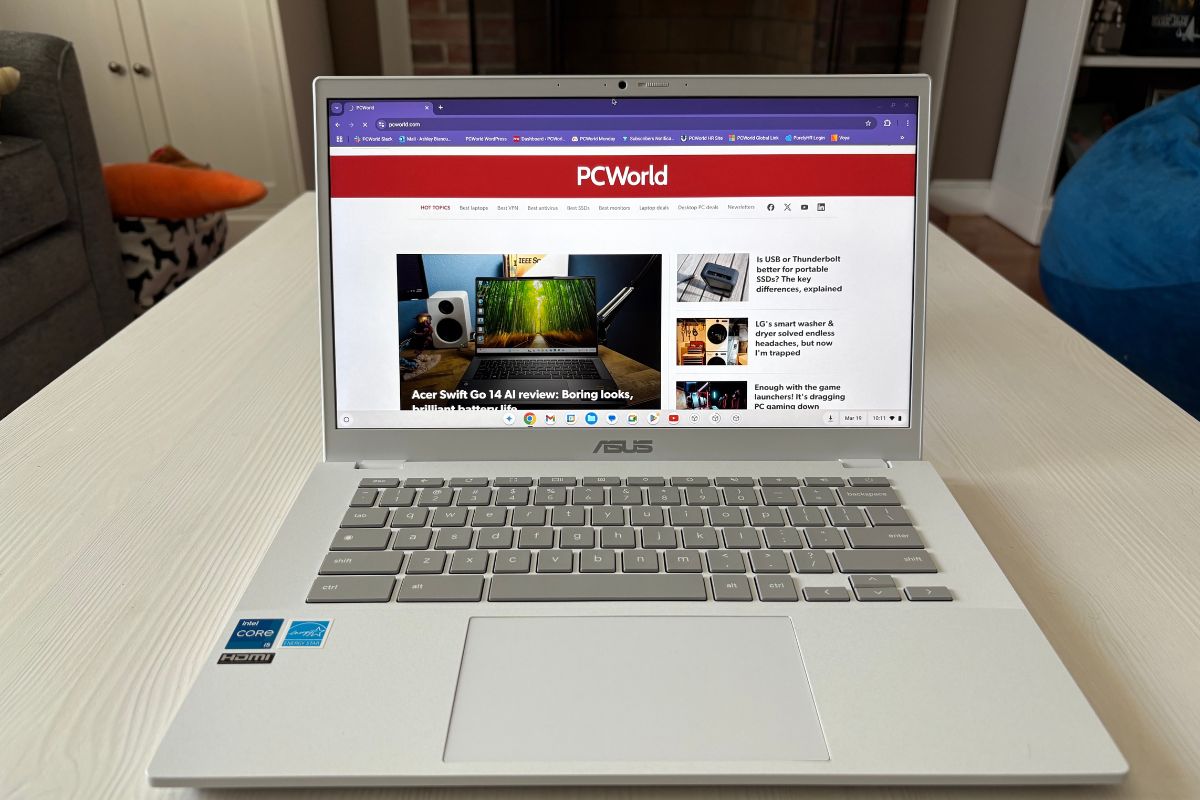
Asus Chromebook Plus CX34 – Best Chromebook
Pros
- Zippy processor performance
- Memorable keyboard
- A wide array of connectivity options
- Chic design
Cons
- Battery life isn’t competitive
- The display’s 16:9 aspect ratio feels a little cramped
Price When Reviewed:
$499
Best Prices Today:
$399
CPU: Intel Core i5-1335U | RAM: 8GB | Storage: 128GB (universal flash storage) | Screen size: 14-inch, 1920×1080 touchscreen | Battery life: 13 hours | Weight: 3.17 lbs
Who should buy the Asus Chromebook Plus CX34?
If you need a zippy Chromebook for everyday tasks, the Asus Chromebook Plus CX34 won’t let you down–it’s simple, reliable, and ready to handle whatever your day throws at it. This machine will easily crush your daily workflow thanks to its Intel i5 processor and 8GB of RAM. The 14-inch 1080p display also looks sharp, and the 1080p webcam is perfect for Zoom calls.
Asus Chromebook Plus CX34: Further considerations
While the Asus Chromebook Plus CX34 offers smooth performance and a pretty design, there are minor trade-offs to be aware of like the non-competitive battery life (13 hours) and the lack of a touchscreen. You’ll also need to be comfortable with ChromeOS. If you prefer Windows or macOS, we’d recommend looking elsewhere.
Read our full
Asus Chromebook Plus CX34 review
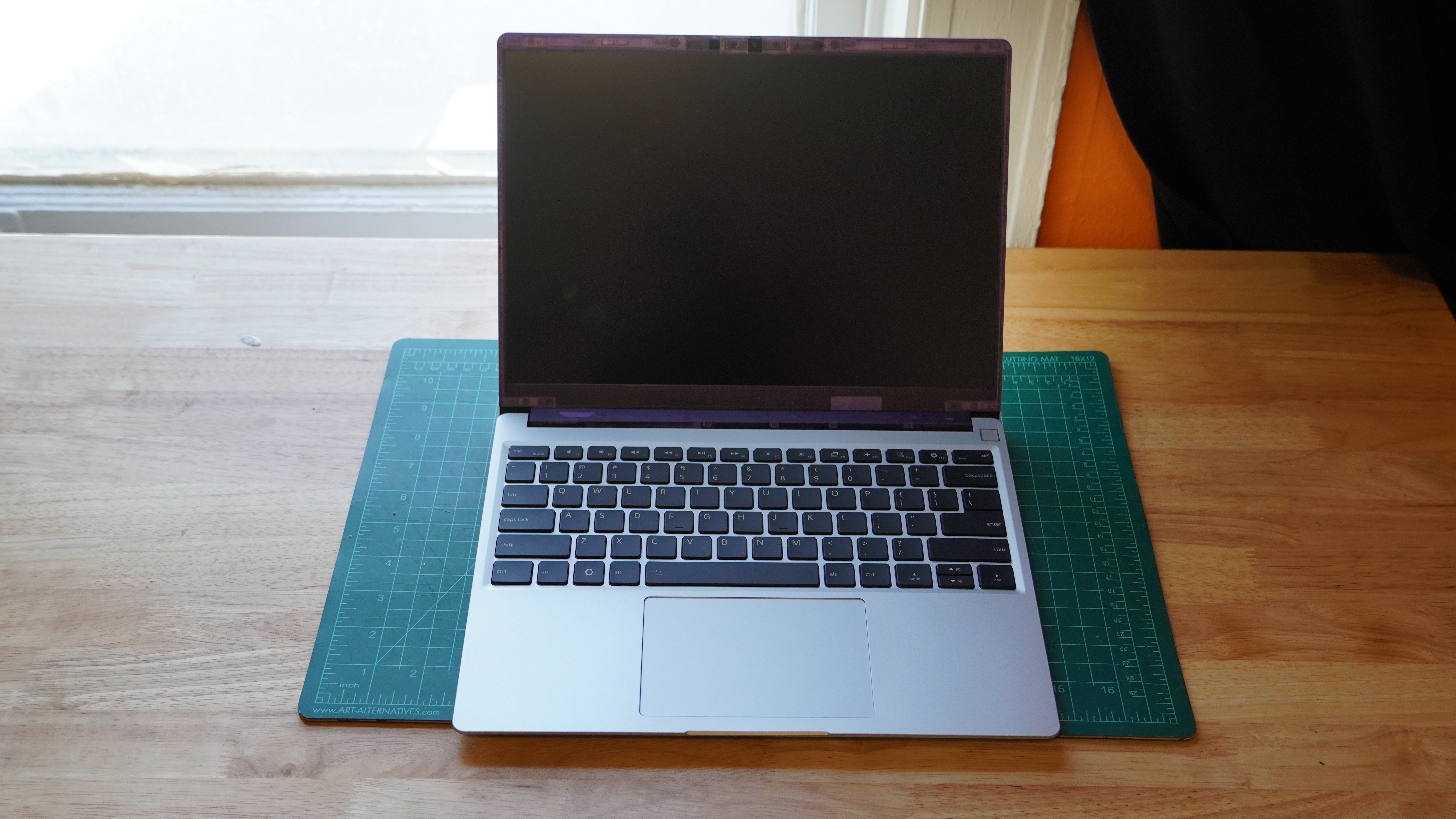
Framework Laptop 13 – Best laptop for upgrading
Pros
- Repairable and upgradeable
- Great keyboard
- Display is easy on the eyes
Cons
- High up-front cost
- Battery life lags way behind
- Not quite seamless design
Price When Reviewed:
$1,946
CPU: AMD Ryzen AI 7 350 | RAM: 16GB DDR5-5600 | Storage: 1TB PCIe 4.0 SSD | Screen: 13.5-inch, 2880×1920 IPS | Battery life: Just over 11 hours | Weight: 2.99 lbs
Who should buy the Framework Laptop 13?
Need a laptop that’s super easy to upgrade and tough enough to stick around? The Framework Laptop 13 is where it’s at. You can swap out pretty much anything—RAM, storage, even the motherboard if you want! It runs on an AMD Ryzen AI 300 processor and is slim enough to toss in your bag and go wherever.
Framework Laptop 13: Further considerations
The price might sting a bit upfront, and the built-in graphics are okay for everyday stuff, but don’t expect much gaming performance. Battery life’s decent, but nothing groundbreaking.
Read our full
Framework Laptop 13 (2025) review
Other notable laptops we’ve tested
- MSI Prestige 16 Flip AI+: The MSI Prestige 16 Flip AI+ is a great laptop with a quality build, zippy speeds in everyday operation, and a wonderful display for work and play.
- HP OmniBook Ultra 14: The HP Omnibook Ultra 14 is a luxurious portable laptop that provides solid portability alongside surprisingly excellent performance.
- Razer Blade 18: The Razer Blade 18 isn’t cheap—even with 32GB of RAM—but it provides excellent performance in an attractive chassis.
- Asus ProArt PX13: A relatively affordable laptop that targets creative professionals.
How we test laptops
The PCWorld team puts each and every Windows laptop through a series of benchmarks that test GPU and CPU performance, battery life, and so on. The idea is to push the laptop to its limits and then compare it against others we’ve tested. Chromebooks, on the other hand, go through a series of web-based tests.
For a much deeper look at our review methodology, check out how PCWorld tests laptops.
Who curated this article?
Hi, I’m Ashley Biancuzzo, and I oversee all laptop and Chromebook coverage at PCWorld. While you’ll see me review Chromebooks on occasion, I’m also deeply immersed in the broader world of consumer tech. I spend a lot of time writing and thinking about where laptops are headed–from AI and sustainable designs to long-term trends. When I’m not deep in the world of tech, you’ll probably find me gaming, getting lost in a book, or chilling with my rescue greyhound.
How to choose the best laptop
What’s the best laptop style?
Regular ones are fine for everyday stuff. 2-in-1s are cool because the screen flips around. Chromebooks are cheap and good if you mostly do web browsing.
How much power?
Depends on what you’re doing. For basic web or email, an Intel Core i3 or Ryzen 3 works fine. If you’re into video editing or creative stuff, an i7/i9 or Ryzen 7/9 is better. And if you’re handling heavy 4K editing or lots of apps, a Ryzen 9 is your best bet.
Discrete graphics vs. integrated graphics?
Gamers and video editors need a legit graphics card—Nvidia, AMD, something with real muscle. But if all you’re doing is YouTube, emails, and Netflix, the built-in graphics won’t hold you back.
How much RAM?
RAM is more important than ever, especially with AI-powered features using more memory. 16GB is the sweet spot for most folks today. 8GB is fine for the basic stuff, but can quickly feeling limiting after a year or so. 32GB or more is ideal for gaming, heavy multitasking, and content creation.
What’s the right display size?
Doing video edits? Go bigger—15 or 17 inches helps a ton. For everyday use, 13 or 14 inches usually does the trick. Light enough to toss in your bag, not a pain to carry, and still plenty of space to get stuff done.
Battery-life expectations
If you’re gonna carry your laptop around, try to get one that lasts 10 to 12 hours on a charge. That’s usually enough for a long flight or a full day of classes. Some of the new Snapdragon laptops are even crushing that, with one going up to 25 hours thanks to their super-efficient chips. Just remember, bigger batteries usually mean heavier laptops.
Laptop pricing guide
A decent laptop usually runs $500 to $750. If money’s tight, a Chromebook or a basic work laptop under $500 will get you by. Push closer to $1,000 and you’ll start seeing nicer screens and more speed, but it really depends on what you need.
Don’t forget the ports
I like laptops with lots of ports so you don’t need adapters. Having both USB-C and USB-A is great. An HDMI port is especially useful for hooking up to an external monitor, especially if your laptop display just isn’t cutting it the way you want it to.
FAQ
What is the best laptop?
PCWorld calls the Acer Swift 16 AI the best overall laptop. It delivers fast, responsive performance thanks to Intel’s Panther Lake platform, handles multitasking without breaking a sweat, and packs impressive battery life for a 16-inch OLED machine, lasting around 18.5 hours in testing.
What is the best cheap laptop?
The MacBook Neo is PCWorld’s favorite budget pick. It packs Apple’s A19 Pro chip, which delivers plenty of speed for everyday work and browsing. You also get a gorgeous 13-inch Liquid Retina display and a premium aluminum design.
What is the best gaming laptop?
The Alienware 16X Aurora is a powerful gaming laptop that handles modern games with ease and makes them look amazing. It’s got an Intel Core Ultra 9 275HX CPU and RTX 5070 graphics, so performance is top-notch without going overboard on price.
When is the best time to buy a laptop?
The best time to buy a laptop is usually during big sales events like Black Friday or Cyber Monday. Back-to-school season’s also good.
What is a 2-in-1 laptop?
A 2-in-1 is a flexible laptop that can flip and fold, more or less–basically, the acrobat of the laptop world. Want to kick back and watch Netflix? Prop it up like a tent. Need to take notes at your next meeting? Fold the keyboard back and jot things down on the touchscreen. They’re a hit with students and creatives who want a bit of everything in one device.
What is a Copilot+ laptop?
A Copilot+ laptop is a PC with AI built right in. It helps you draft emails, generate images, and more. Since the AI runs locally, AI performance should be snappier. But at the end of the day, it’s still just a normal laptop (more or less), with a little helper that makes life easier to manage. To qualify as a Copilot+ laptop, though, it needs an NPU that can meet 40 TOPS of performance.
