


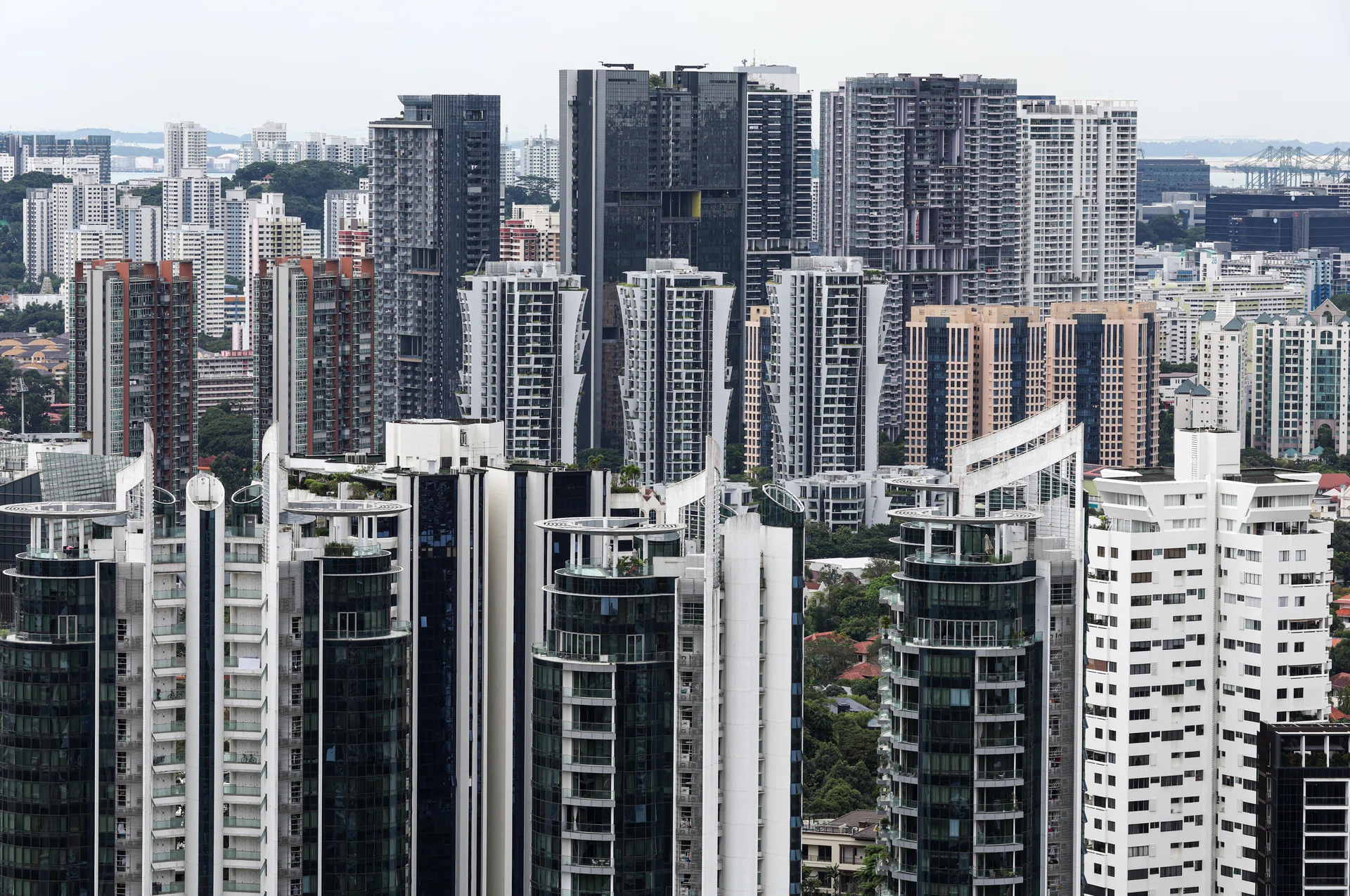
These are broadly comparable to advanced economies with similar wealth Gini coefficients
[SINGAPORE] The wealthiest 1 per cent of resident households in Singapore hold about 14 per cent of the Republic’s total household wealth, while the top 5 per cent hold about 33 per cent, Senior Minister of State for Finance Jeffrey Siow said on Wednesday (Feb 25).
These are broadly comparable to advanced economies with similar wealth Gini coefficients as Singapore, he said in Parliament, even as he warned that these estimates “should be interpreted with caution, due to sample size limitations and potential under-reporting in survey responses at both ends of the distribution”.
The government does not currently plan to seek more legislative or administrative powers to require more granular asset disclosures solely for inequality measurement, Siow added.
An occasional paper on income growth, inequality and social mobility trends published earlier this month found that Singapore’s Gini coefficient for wealth is estimated at 0.55, higher than the income Gini coefficient of 0.379 after taxes and transfers based on household market income.
This is based on data from the Household Expenditure Survey – last conducted in 2023 – which captures information on assets such as bank deposits and unlisted assets, including overseas assets, and liabilities such as household arrears and bank loans.
It also considers administrative records on properties, Central Provident Fund (CPF) accounts, Singapore Savings Bonds, shares and securities held in Central Depository accounts and the CPF Investment Scheme-Special Account, life insurance policies, balances in the Post-Secondary Education Account and Edusave accounts, and HDB-administered loans.
Navigate Asia in
a new global order
Get the insights delivered to your inbox.
Noting that the paper is Singapore’s first compilation of the wealth Gini coefficient, Siow said that the government intends to track this measure over time, with the next Household Expenditure Survey slated for 2028.
While absolute numbers are an indication of where Singapore stands relative to other countries, it is important to look at how the data trends, to track if wealth inequality is going in the right direction, he said.
The government will consider whether additional indicators can be provided, he added.
SEE ALSO
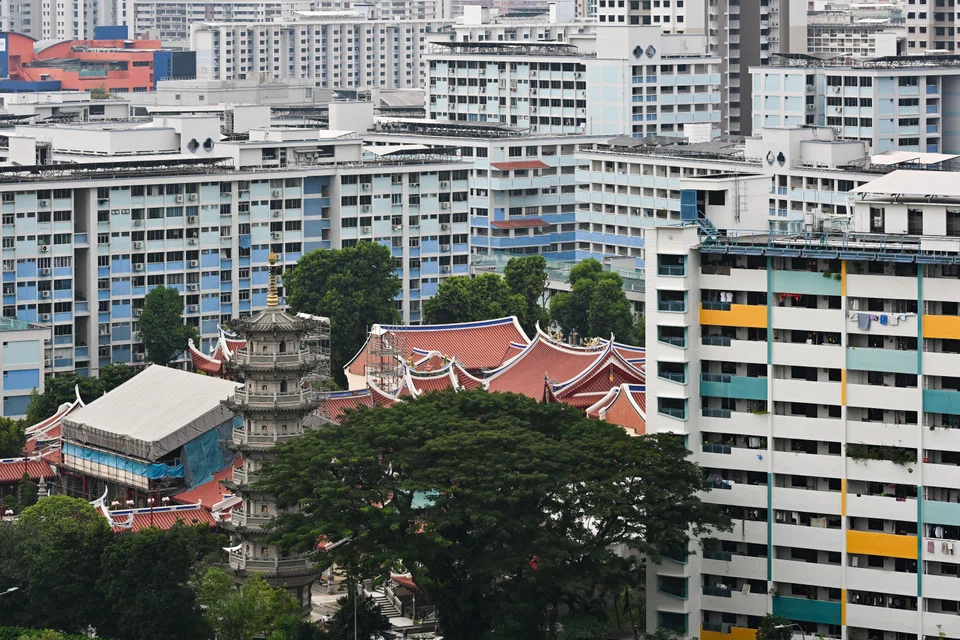
Siow also addressed requests for further breakdowns of wealth inequality, by age cohort, asset type and housing type.
The Gini coefficient is not broken down by age cohorts, as it is measured at the household and not the individual level, he said. It is also not computed by asset type, as households “can and do convert their wealth from one asset type to another”.
The government does not differentiate between public and private housing, or owner-occupied and non-owner-occupied housing. It also does not have sufficiently granular data to differentiate local and overseas holdings.
In line with international guidelines, the measures do include both liquid and illiquid assets, he elaborated.
Asked about whether the government has considered forms of wealth taxes beyond property tax, Siow explained that Singapore’s approach focuses less on mobile assets such as property and motor vehicles, as this approach is less susceptible to cross-border movement and tax planning, while preserving competitiveness.
Addressing Yio Chu Kang SMC MP Yip Hon Weng’s supplementary question on the impact of higher property taxes on asset-rich, cash-poor retirees, Siow noted that the system is progressive.
Investment properties and higher-value properties are taxed higher, whereas homeowners with only one property are taxed lower and receive property tax rebates when necessary.
But he acknowledged that some owners “may face different financial circumstances, particularly on cash flow”. Deferral mechanisms for property tax payments are available to help ease such pressures, he said, highlighting that eligible seniors and retirees can apply to pay via extended interest-free instalments.
More measures needed?
The issue of wealth inequality also arose during the second day of the Budget debate.
Workers’ Party MP Louis Chua urged the government to address this issue, which he said was missing from the Budget’s strategic focus.
He reiterated his 2023 proposal for a net annual value (NAV) tax on properties to be reinstated, particularly targeting high-end properties such as Good Class Bungalows or those who own secondary residences. He also called for the return of estate duty – abolished in 2008 – with exemption thresholds.
Chua also noted the case for inheritance taxes, citing an Organisation for Economic Co-operation and Development 2021 report which said that such a tax, which can enhance equality and reduce wealth concentration, “can be strongest where the effective taxation of personal capital income and wealth tends to be low”.
Singapore has no capital gains nor dividend taxes, he noted.
Chua made the point that taxing wealth via property tax, stamp duty, and motor vehicle-related taxes results in suffering for the middle-income and upper-middle-income groups, too.
“Policies intended to target the affluent can still impact the middle-income segment, while the truly wealthy, like those who rent high-end properties, remain largely unaffected,” he said. “We must ensure our tax policies are truly progressive and do not inadvertently burden the middle class.”
He suggested studying wealth taxes in other jurisdictions, highlighting Switzerland’s lump-sum taxation based on lifestyle expenditure, or a multiple of living expenses as one “interesting alternative” that could be explored.
Decoding Asia newsletter: your guide to navigating Asia in a new global order. Sign up here to get Decoding Asia newsletter. Delivered to your inbox. Free.
