


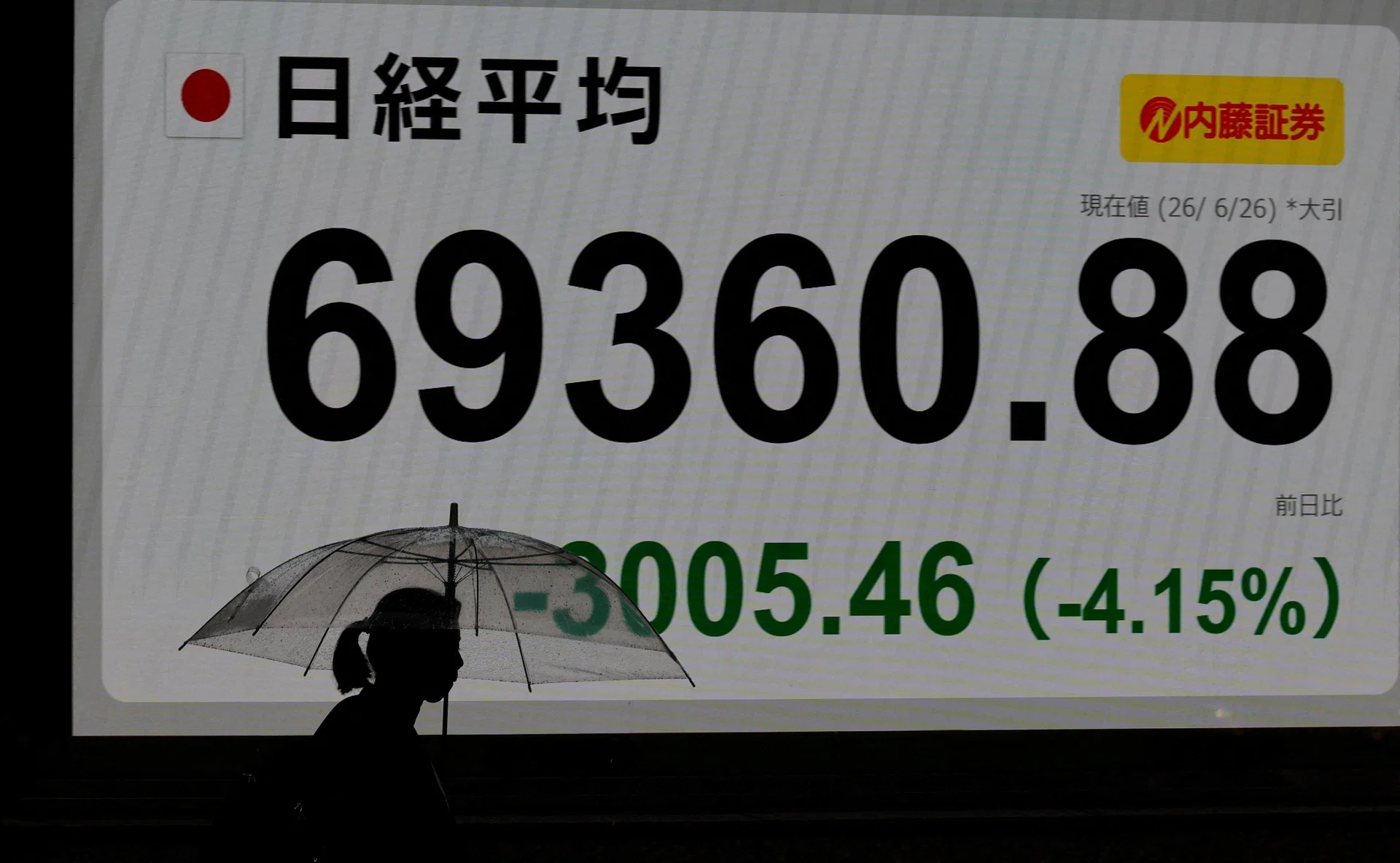
Stocks in Japan and Taiwan also advance as the MSCI’s Asia-Pacific equities gauge climbs 1.5%
Published Wed, Jul 22, 2026 · 09:49 AM — Updated Wed, Jul 22, 2026 · 11:45 AM
STOCKS in Asia on Wednesday (Jul 22) climbed for a second day as chipmakers at the heart of the artificial intelligence boom extended their rebound, offsetting concerns over rising oil prices after renewed escalation in the US-Iran conflict.
MSCI’s Asia-Pacific equities gauge rose 1.5 per cent, extending Tuesday’s biggest one-day gain in a month.
South Korea’s Kospi, a bellwether for AI investments, jumped 6 per cent as the unwinding of leveraged bets that drove the benchmark nearly 30 per cent below its peak appeared to be nearing its end. Stocks in Japan and Taiwan also advanced.
Among the main moves across markets, the S&P 500 futures were little changed as at 10.51 am Tokyo time.
Japan’s Topix rose 1.3 per cent, Australia’s S&P/ASX 200 advanced 0.2 per cent, the Shanghai Composite climbed 0.2 per cent and Hong Kong’s Hang Seng fell 0.6 per cent.
Elsewhere, crude oil prices climbed, reigniting inflation concerns that pushed Treasury yields to their highest in two months. Brent rose 1.6 per cent to about US$92.50 a barrel after US President Donald Trump minimised the prospect of immediate talks with Iran.
Traders are also focused on the yen, which slid past 163 per US dollar on Tuesday for the first time since 1986, increasingly testing Japanese authorities’ resolve to intervene.
The rally in technology stocks followed weeks of volatility in 2026’s best-performing corner of the market as investors questioned whether massive AI spending will translate into commensurate returns.
The focus now shifts to earnings from Alphabet and Tesla beginning on Wednesday, with lofty expectations leaving little room for disappointment.
SEE ALSO
“The burden of proof has changed. Investors are no longer asking whether companies can withstand the uncertainty,” said Bret Kenwell, an analyst at eToro.
“They want growth and guidance strong enough to justify elevated valuations.”
Garfield Reynolds, markets live Asia team leader at Bloomberg, said that the extreme fluctuations in the Kospi are captivating global investors, as doubts swirl about the sustainability of the AI boom.
Today’s action would do little to assuage such concerns even if local stocks rally, as the gyrations have become a feature, rather than a bug, noted Reynolds.
Elsewhere, gold rose 1 per cent to almost US$4,120 an ounce, while silver climbed about 2 per cent to just below US$60.
Treasuries held their losses, which pushed 10- and 30-year yields to the highest levels in about two months on Tuesday. A surge in oil prices has rekindled concerns that inflationary pressures will prompt the Federal Reserve to raise interest rates.
“The market is learning to live with higher oil prices,” wrote Tim Waterer, chief market analyst at KCM Trade in Sydney.
“However, the big question is, for how long? Right now, solid earnings are coming to the rescue and are helping divert market focus away from the fact that oil prices are advancing.”
Attention is also on pharmaceutical companies after Trump announced plans to impose 100 per cent tariff on generic drugs imported to the US, beginning in August 2028.
Adding to the optimism in tech, Nvidia said its latest chip designs are now reaching customers, while Intel shares rose on plans for further job cuts.
After the US close, Super Micro Computer surged following an update that pointed to a growing order backlog.
Investors also remain focused on company results. US earnings growth should continue to support stocks in the second half of 2026, even as near-term bullish positioning and macro headwinds weigh on share prices, according to Goldman Sachs Group strategists.
Nearly 20 per cent of companies in the S&P 500 by market value are slated to report results this week. Alphabet and Intel – which reports on Thursday – will give investors a clearer read on how AI spending is reshaping the tech industry.
While the recent sell-off in AI-related shares has raised questions about the durability of the trade, some strategists see it as a reset rather than a sign of deteriorating fundamentals.
“The long-term AI backdrop appears to be intact,” said Adam Turnquist at LPL Financial.
“The recent correction appears more consistent with a healthy reset following a parabolic advance than a fundamental breakdown in the AI investment theme.” BLOOMBERG
