



Learn about some really good plant substances that can take your health to the next level
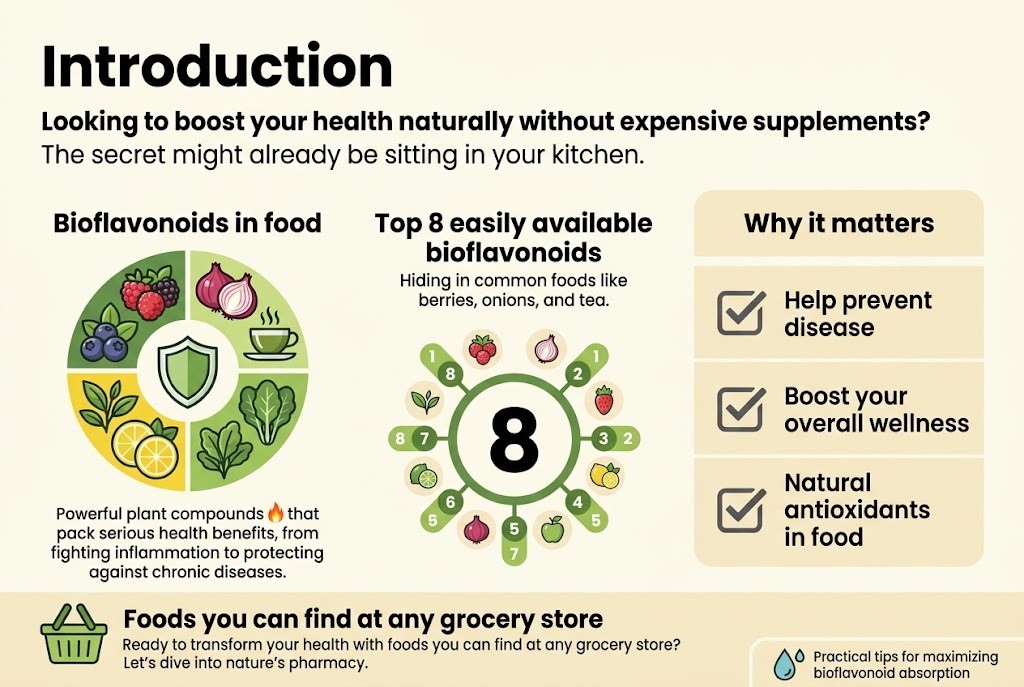
Looking to boost your health naturally without expensive supplements? The secret might already be sitting in your kitchen. Bioflavonoids in food are powerful plant compounds that pack serious health benefits, from fighting inflammation to protecting against chronic diseases.
This guide is perfect for health-conscious individuals, busy professionals, and anyone wanting to harness the healing power of everyday foods. You don’t need to be a nutrition expert to start benefiting from these natural antioxidants in food.
Before we jump into the main content, here’s a short video to take you through the 8 Bioflavonoids that are easily available in the foods we eat-
Introduction
Hello & Welcome to yet another new article on health promotion through foods.
Today, we’ll explore the top 8 easily available bioflavonoids hiding in common foods like berries, onions, and tea. You’ll discover how these bioflavonoid-rich foods can help prevent disease and boost your overall wellness.
Plus, I’ll share some practical tips for maximizing bioflavonoid absorption so your body gets the most out of every bite.
Ready to transform your health with foods you can find at any grocery store? Let’s dive into nature’s pharmacy.
Understanding Bioflavonoids and Their Natural Sources
What are bioflavonoids, and their role in plant biology
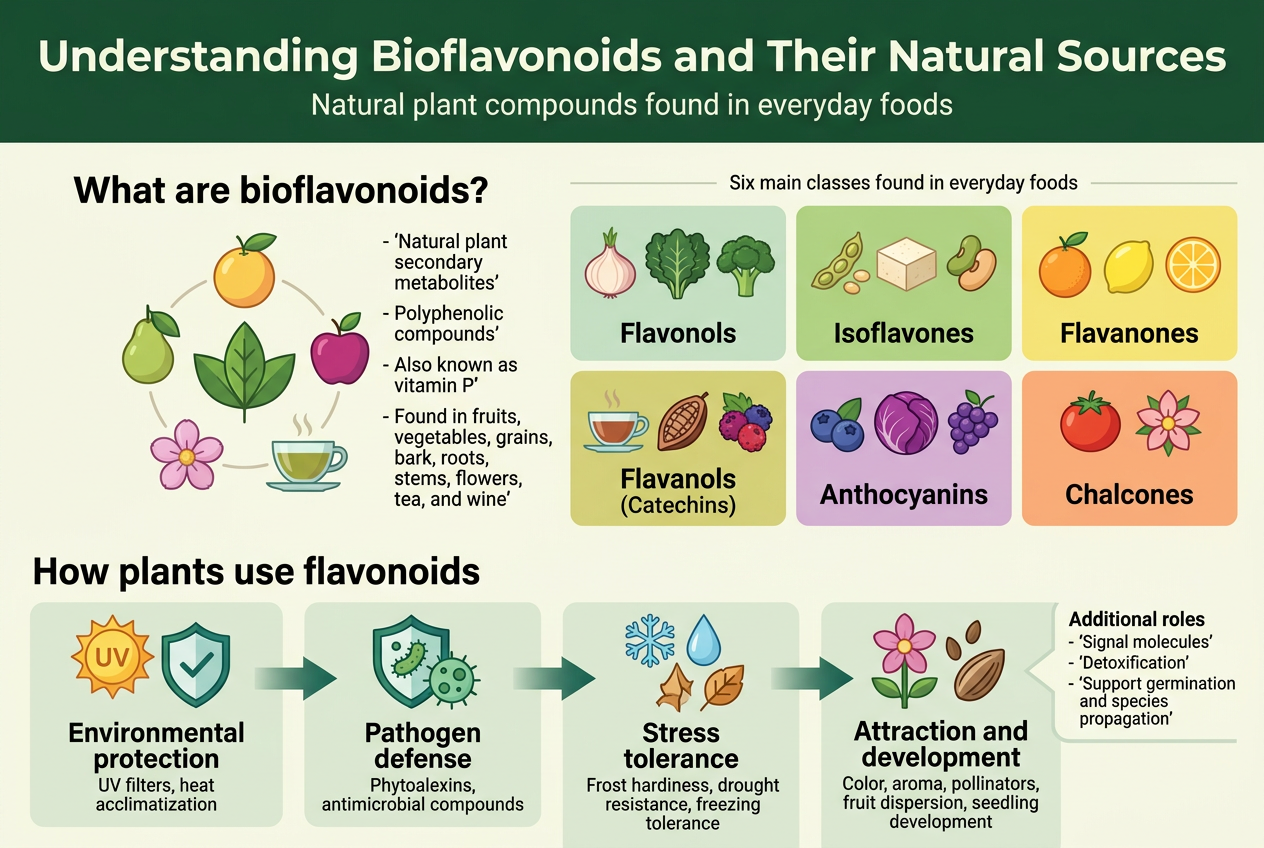
Bioflavonoids, also known as vitamin P or polyphenols, are natural plant compounds that nourish the body and support overall well-being.
Polyphenolic compounds are found to exhibit potent free radical scavenging activity.”
They are natural substances with a range of phenolic structures, meaning they carry powerful plant antioxidants that nourish and protect your body.
These compounds belong to a class of plant secondary metabolites.”
These compounds belong to a class of plant secondary metabolites with a distinct polyphenolic structure that plays crucial roles in plant survival and development.
What foods are high in bioflavonoids?
These natural bioflavonoids are widely distributed throughout the plant kingdom, appearing in fruits, vegetables, grains, bark, roots, stems, flowers, tea, and wine.
As plant secondary metabolites, they serve essential functions beyond basic plant growth, acting as sophisticated chemical tools that help plants navigate their environment and ensure species survival.
The significance of bioflavonoids in food extends far beyond their nutritional value for humans. In plant biology, these compounds function as multifaceted agents that support various physiological processes, from basic cellular functions to complex environmental adaptations.
Six main classes of flavonoids found in everyday foods
The diverse world of dietary bioflavonoids can be organized into six primary categories, each with distinct chemical properties and biological functions:
| Flavonoid Class | Common Food Sources |
|---|---|
| Flavonols | Onions, kale, broccoli, apples |
| Isoflavones | Soybeans, legumes, tofu |
| Flavanones | Citrus fruits, oranges, and lemons |
| Flavanols (Catechins) | Tea, cocoa, grapes, berries |
| Anthocyanins | Berries, red cabbage, purple grapes |
| Chalcones | Tomatoes, certain flowers |
These easily available bioflavonoids represent the primary categories that consumers encounter in their daily diet, making them accessible sources of these beneficial compounds through regular food consumption.
Based on these categories, here are the top 8 bioflavonoids, their sources, and their health-promoting properties:
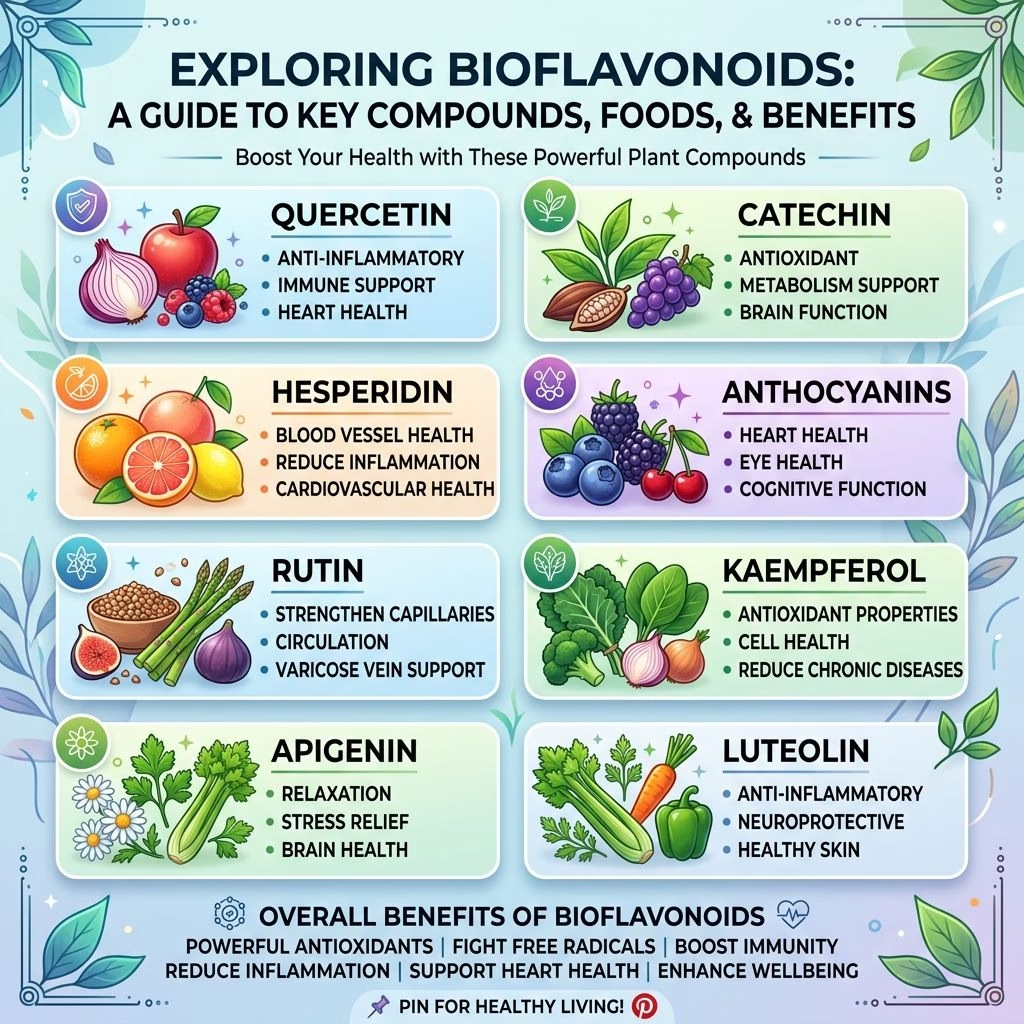
- Quercetin: Abundant in apples, onions, and berries, quercetin is known for its anti-inflammatory and antihistamine effects.
- Catechins: Found in green tea, catechins may help improve heart health and boost metabolism.
- Hesperidin: Present in citrus fruits, hesperidin is believed to improve blood circulation and reduce inflammation.
- Anthocyanins: These are found in dark fruits like blueberries, blackberries, and cherries, and are linked to improved cognitive function and heart health.
- Rutin: Commonly found in buckwheat, rutin may strengthen blood vessels and reduce inflammation.
- Kaempferol: Found in kale, spinach, and broccoli, kaempferol has potential anti-cancer properties and may promote heart health.
- Apigenin: Present in parsley, chamomile, and celery, apigenin may have calming effects and promote sleep.
- Luteolin: Found in peppers, celery, and thyme, luteolin may help reduce inflammation and combat oxidative stress.
How plants use flavonoids for growth, defense, and attraction
Plants utilize flavonoids as sophisticated biological tools that serve multiple critical functions in their survival strategy. These compounds act as powerful protective agents, functioning as UV filters that shield plant tissues from harmful solar radiation while simultaneously serving as antimicrobial defensive compounds against pathogens.
Natural antioxidants in food derived from plants reflect the defensive capabilities these compounds provide to their host organisms. Flavonoids protect plants from various biotic and abiotic stresses, including:
- Environmental protection: Acting as UV filters and heat acclimatization agents
- Pathogen defense: Functioning as phytoalexins and antimicrobial compounds
- Stress tolerance: Supporting frost hardiness, drought resistance, and freezing tolerance
- Detoxification: Serving as detoxifying agents against harmful substances
Beyond protection, flavonoids serve as signal molecules and allelopathic compounds that facilitate plant communication and competitive advantages.
These compounds are responsible for the vibrant colors and distinctive aromas of flowers and fruits, strategically designed to attract pollinators essential for reproduction and seed dispersal.
The multifunctional nature of flavonoids in plant biology demonstrates their importance in
- supporting fruit dispersion,
- seed and spore germination, and
- seedling development
making them indispensable for the completion of the plant lifecycle and species propagation.
Top 8 Easily Available Bioflavonoid-Rich Foods for Daily Consumption
1. Berries – powerhouse sources containing all six flavonoid types
Berries stand out as exceptional bioflavonoid-rich foods, offering unparalleled diversity in their flavonoid profiles.
Blackberries emerge as the most powerful option, uniquely containing all six types of flavonoids in significant concentrations.
Blueberries, cherries, and raspberries similarly provide comprehensive flavonoid coverage, making them excellent choices for maximizing health benefits of bioflavonoids through daily consumption.
Strawberries, while offering moderate amounts of anthocyanidins, contribute valuable natural bioflavonoids to your diet.
These colorful fruits serve as convenient, easily available bioflavonoids that can be incorporated into meals, snacks, or smoothies.
2. Citrus fruits – concentrated flavanone sources for heart health
Moving beyond berries, citrus fruits represent concentrated sources of flavanones, a specific type of bioflavonoid in food. These flavonoids are mainly found in the citrus peel and are easily available in Indian foods through lime/lemon pickles.
Oranges, grapefruits, tangerines, lemons, and limes deliver these powerful compounds that contribute to lower inflammation while acting as potent antioxidants.”
The flavanones in citrus fruits specifically help reduce cholesterol and fat levels in the blood, making them particularly valuable for cardiovascular health.
Regular consumption of these dietary bioflavonoids provides accessible protection against heart disease through their anti-inflammatory and lipid-lowering properties.
3. Tea varieties – convenient daily sources of protective flavanols
Tea varieties offer one of the most convenient ways to incorporate bioflavonoids in food into your daily routine.
Green, oolong, and black teas are exceptionally high in flavanols, specifically catechins, which provide significant heart and brain health benefits.
These beverages serve as an effortless method to consume natural bioflavonoids regularly, requiring minimal preparation while delivering consistent flavonoid intake.
The accessibility and variety of tea options make them ideal for sustained bioflavonoid absorption throughout the day.
4. Dark leafy greens like kale – flavonol-rich vegetables for cancer protection
Kale represents an excellent source of flavonols among bioflavonoid-rich foods, with these compounds being specifically linked to reduced risk of heart disease and prostate cancer.
This dark leafy green provides concentrated natural antioxidants in food that support bioflavonoid disease prevention mechanisms. The flavonols in kale offer protective benefits that extend beyond basic nutrition, making it a cornerstone vegetable for easily available bioflavonoids with proven cancer-fighting properties.
5. Onions and parsley – highest dietary sources of quercetin and flavonols
Onions serve as outstanding sources of flavonols, particularly known for their ability to reduce prostate cancer risk.
Parsley provides exceptional concentrations of dietary bioflavonoids, delivering over 130 milligrams of flavonols per gram, making it one of the most concentrated sources available.
These common ingredients offer practical ways to boost bioflavonoids in food intake without requiring specialty items, demonstrating how easily available bioflavonoids can be seamlessly integrated into everyday cooking.
6. Dark chocolate and cocoa – brain-boosting flavanol treats
Dark chocolate and cocoa products are rich sources of flavanols that provide both pleasure and health benefits of bioflavonoids.
Cocoa has been extensively studied for its brain-boosting properties and protective effects on the cardiovascular system.
These natural bioflavonoids offer a more indulgent approach to flavonoid consumption while delivering scientifically backed cognitive and heart health benefits.
The flavanols in cocoa products represent accessible natural antioxidants in food that combine enjoyment by tickling your taste buds with wellness.
7. Red cabbage – anthocyanidin-rich vegetable for disease prevention
Red cabbage, also known as purple cabbage, stands out as an excellent source of anthocyanidins, compounds that provide comprehensive protective effects against cancer, cardiovascular disease, diabetes, and age-related cognitive decline.
This vibrant vegetable offers concentrated bioflavonoid disease prevention benefits through its rich anthocyanidin content.
As one of the most affordable bioflavonoid-rich foods, red cabbage makes powerful natural antioxidants in food accessible to all dietary budgets while providing broad-spectrum health protection.
8. Soybeans and legumes – isoflavone sources for hormone balance
Soybeans, including forms like edamame, tofu, and tempeh, represent the top sources of isoflavones among easily available bioflavonoids.
These compounds function as phytoestrogens and are particularly valuable for protecting against reproductive cancers, including breast, ovarian, prostate, and testicular cancers.”
AICR
The isoflavones in soy products and legumes provide unique flavonoids health benefits related to hormonal balance and cancer prevention, making them essential components of a comprehensive dietary bioflavonoids strategy.
Before we end this article, here are some links that you may find interesting:
- Rhodiola
- Ginseng
- Schsandra Berries
- Holy Basil
- How Flavonoids and Bioflavonoids Can Improve Health
Affiliate Disclosure
Some links in this article are affiliate links. This means:
- If you click a link and make a purchase, I may earn a small commission.
- You pay nothing extra—your price stays the same.
- Your purchase helps support this site and keeps new content coming.
I appreciate your support. Thank you for being so supportive.
Key takeaways….
Bioflavonoids found in nature help us cope with many health issues. In this article, we learned what they are and in which foods they are found.
In the next edition on this topic, I will let you know the benefits of these substances, which are backed by solid research.
Till then, take care and find out how the foods mentioned above help you live a better life by thinking about the particular bioflavonoid in that food you are eating 😋.
Kindly share your views on this topic in the comments below and let me know if you are interested in any topic of interest to you.
Adios.
