


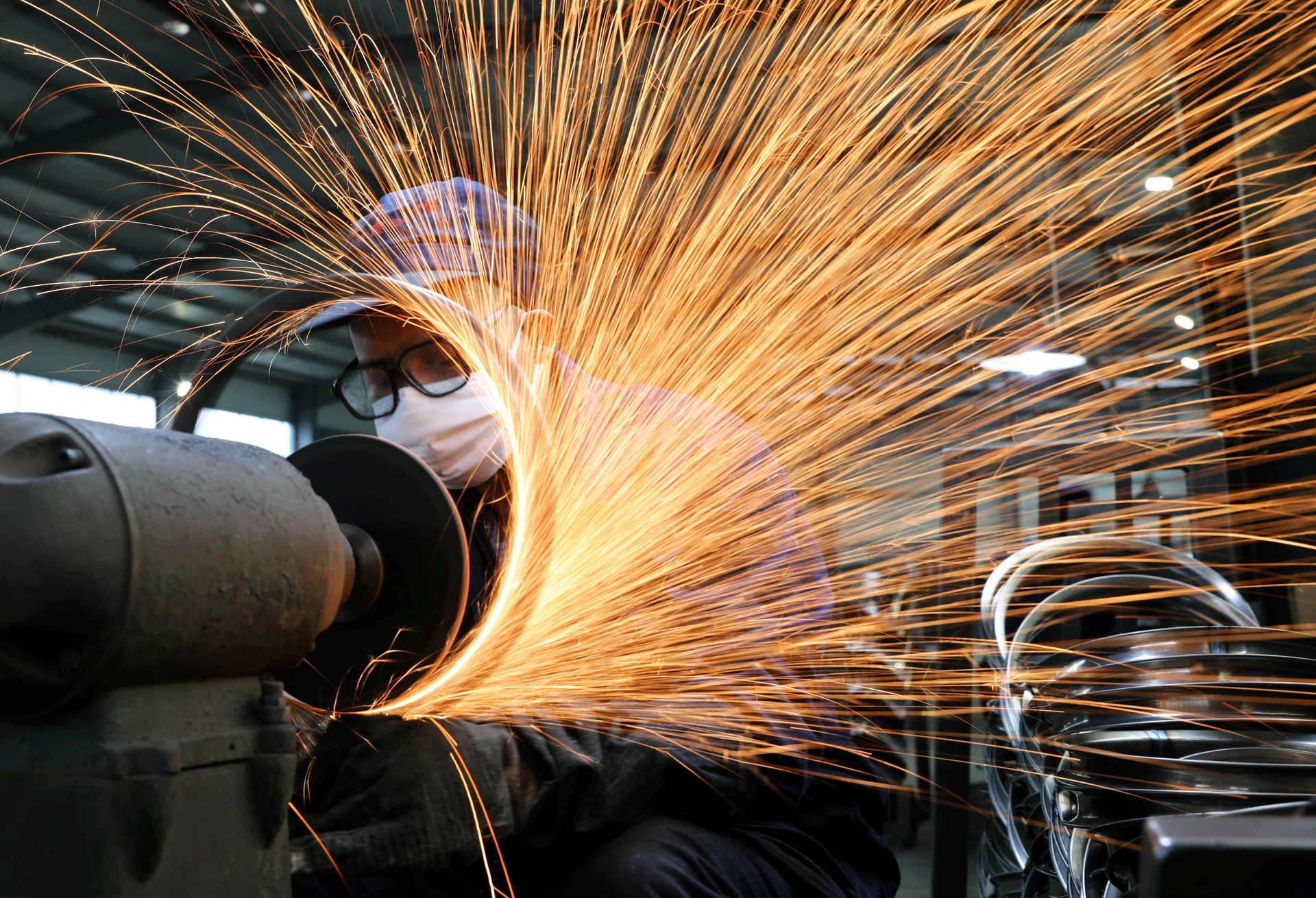
[BEIJING] Economic activity in China’s most important manufacturing hub is heaping pressure on power supplies, sparking an energy stress test as the Iran war chokes shipments of fuel.
A surge in power demand in Guangdong, a province with a population comparable to Japan and an economy the size of South Korea, is colliding with rising costs for imported fuels. Average spot electricity prices have nearly doubled since the war began. The government has ordered utilities to increase coal stockpiles to counter shortages of natural gas from the Middle East, potentially foreshadowing a bigger shift in energy usage.
Although it would probably take a series of calamitous events to create a power crisis in the province, the reaction shows that China – for all of its success in muting the impact of the war – is not immune to the stresses caused by the near-halt to shipments from the Strait of Hormuz. And as the country’s biggest user of gas, Guangdong’s struggles pose a question for the fuel’s long-term future in the national energy mix.
China is the world’s largest importer of crude oil and gas, but has been able to largely shield its businesses and residents from the shortages that have rocked other nations. That success is the culmination of years of preparation: building up oil stockpiles, diversifying foreign suppliers and shifting to electricity powered by domestic coal, nuclear and renewable sources.
Guangdong is different. Far from the coal-rich regions of China’s interior, it relies heavily on imported fuel and hydroelectricity transmitted from neighbouring provinces on long-distance power lines. The province has also invested heavily in nuclear plants, offshore wind farms and rooftop solar.
It’s also unique in China for its commitment to cleaner-burning gas to improve the air quality for its increasingly wealthy citizens, building a fleet of generators larger than those of France and Germany combined. The province hosts the country’s biggest collection of liquefied natural gas (LNG) terminals, a strategic advantage that has now become a vulnerability if seaborne supply tightens to the point where facilities fall idle.
Navigate Asia in
a new global order
Get the insights delivered to your inbox.
Price signals
The stress is most visible in Guangdong’s spot electricity market – the venue for generators to meet short-term demand – where prices have surged as fuel supplies dwindle. Gas-fired plants, despite accounting for only about a fifth of the province’s capacity, often set the marginal price, allowing rising costs to ripple through the entire system. The average price in April of 509 yuan (S$95) per megawatt-hour, was nearly double that of February, before the war began.
Some trading firms, which had expected stable or falling prices, have seen long-term supply deals become deeply loss-making due to the spike. The Guangdong exchange has pointed to excessive risk-taking as a problem, after companies left large portions of their portfolios exposed to a volatile spot market.
For large industrial users, the impact remains manageable for now. Much of their electricity is secured through long-term contracts, insulating them from daily price swings. Still, the surge in spot prices is a warning sign, and if elevated costs persist, could gradually feed into contract negotiations and ultimately raise costs for manufacturers.
SEE ALSO

Industrial squeeze
Guangdong’s manufacturing sector is diverse – spanning electronics and appliances to ceramics and petrochemicals – and export-driven. Many of its industries are energy-intensive, and some rely directly on gas.
Ceramics producers, in particular, have been hit hard. Rising fuel costs have forced some factories to scale back production or halt operations altogether. The shock is most acute for smaller firms operating on thin margins, as the surge in monthly energy bills erodes profitability.
At the same time, the broader industrial picture shows resilience. Demand for Chinese exports has been supported, in part, by the very disruptions affecting energy markets. Supply constraints in other parts of Asia have shifted orders to China’s coastal manufacturing hubs, including Guangdong.
Power consumption in the province jumped 7.6 per cent in the first quarter from the same period last year, thanks to expanded manufacturing activity and surging demand from electric vehicles and data centres. In the coming weeks, grid operators will also have to contend with scorching summer heat and an ever-rising number of air conditioners.
Narrow path
Similar circumstances produced a series of power shortages in the province at the beginning of the decade. Now, having learned those lessons, Guangdong is better-positioned to avoid blackouts.
“Summer blackout risk in Guangdong is elevated due to strong demand growth, but not inevitable,” said Rystad Energy analyst Simeng Deng. “If the Middle East crisis extends into summer, the province may rely more on coal instead of costly spot LNG.”
Utilities have been instructed to boost coal inventories, and state-owned firms have procured cargoes from overseas. But even coal offers only limited relief. Global prices have risen, and production curbs in key exporters such as Indonesia have further tightened availability.
The margin for error is narrowing. A prolonged disruption in LNG supplies, a severe heat wave, or a drought in neighbouring hydro-rich provinces could quickly tighten conditions further.
The crisis in the Persian Gulf is also forcing a reassessment of gas, long viewed as a bridging fuel between coal and renewables. Now, with LNG prices spiking, some generators are cutting output, shifting either to coal or cleaner sources to limit losses.
It’s possible that this week’s much-anticipated summit between presidents Donald Trump and Xi Jinping could see Beijing commit to buying more US energy to replace losses from the Middle East. China might also help Trump find a diplomatic breakthrough with Iran that could loosen supplies from the Persian Gulf.
But if the current crisis persists – or recurs – it threatens to diminish gas’s role, with broader implications. It would weaken the case for further LNG investment around the world, and complicate China’s efforts to reduce emissions without compromising energy security.
Gong Zhenzhi, director general of the Guangdong Provincial Development and Reform Commission, said in an interview last month that, while the province will continue to use gas to ensure stable power supplies, future growth lies in vigorously developing clean energy, especially offshore wind and nuclear, as well as a moderate increase in new coal-power plants to provide flexibility.
“Guangdong relies heavily on imported natural gas,” Gong said. “Due to changes in the external environment, international LNG prices have fluctuated significantly in recent years, and this has had a noticeable impact on natural gas prices within the province.” BLOOMBERG
Decoding Asia newsletter: your guide to navigating Asia in a new global order. Sign up here to get Decoding Asia newsletter. Delivered to your inbox. Free.
