


Why Hepatitis Flares up in monsoon
How Raw or Contaminated Food Becomes a Major Source of Hepatitis A
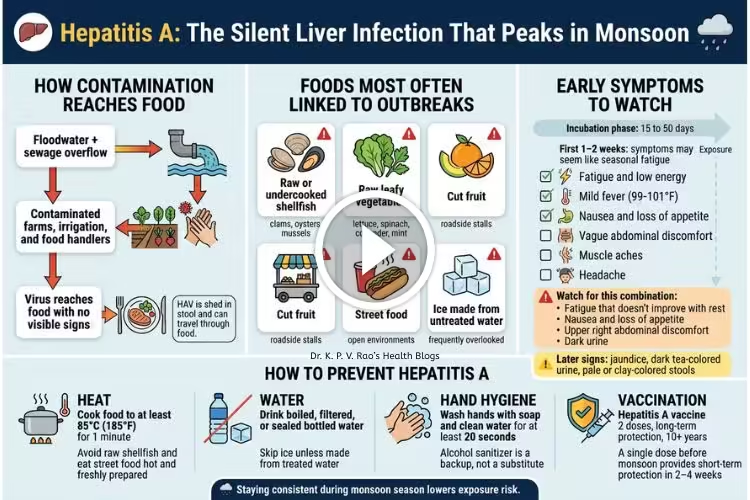
Hepatitis A doesn’t need dirty water alone to reach you — it’s remarkably good at traveling through food.
The hepatitis A virus (HAV) is shed in the stool of infected individuals, and during monsoon season, the routes from contamination to your plate multiply fast.
Here’s what typically happens: floodwater and stormwater runoff mix with sewage systems that are already overwhelmed.
That water gets into vegetable farms, irrigation channels, and the hands of food handlers who may not even know they’re infected.
Unlike bacteria that cause immediate spoilage, the hepatitis A virus leaves no visible trace on food — contaminated shellfish looks perfectly fine, and a freshly sliced salad can carry the virus without any obvious sign.”
Disclaimer
The information in this article is intended for reference purposes only, is informative in nature, and is not intended as individual advice. I advise consultation with a qualified health professional or your family physician to assess your individual health concerns.”
Hepatitis A Transmission- How it Happens
The foods most commonly linked to hepatitis A outbreaks during monsoon season include:
- Raw or undercooked shellfish — especially clams, oysters, and mussels that filter water and concentrate the virus
- Raw leafy vegetables — lettuce, spinach, coriander, and mint washed with contaminated water
- Cut fruit sold at roadside stalls, handled without proper hygiene
- Street food prepared in open environments where monsoon runoff can easily contaminate surfaces
- Ice made from untreated water — a frequently overlooked vehicle for the virus
What makes this a monsoon-specific problem is the combination of flooding, overwhelmed sanitation infrastructure, and the social habit of eating out more during rains.
Contamination chains become harder to break when water quality is unpredictable and hand hygiene in food preparation gets inconsistent.
Early Symptoms That Most People Mistake for Seasonal Fatigue
This is where hepatitis A earns its reputation as a silent infection. The early symptoms are so nonspecific that most people chalk them up to the usual monsoon-season sluggishness or a mild flu.
In the first one to two weeks after exposure — a period known as the incubation phase, which can last anywhere from 15 to 50 days — the virus quietly multiplies in the liver while you feel completely fine. Then, as the infection becomes active, the initial symptoms show up looking like almost anything but a liver disease:
| Early Symptom | Why People Dismiss It |
|---|---|
| Fatigue and low energy | Assumed to be weather-related tiredness |
| Mild fever (99–101°F) | Blamed on seasonal cold or flu |
| Nausea and loss of appetite | Attributed to something eaten |
| Vague abdominal discomfort | Dismissed as indigestion |
| Muscle aches | Confused with body pain from dampness or cold |
| Headache | Chalked up to humidity or dehydration |
The problem is that this pre-icteric phase (before jaundice appears) can last one to two weeks, during which the person is highly contagious and typically not seeking medical attention.
Children especially tend to have very mild or even symptom-free infections, which makes it easy for them to spread the virus within households and schools.
The more definitive signs — the Icteric Phase- yellowing of the skin and eyes (jaundice), dark tea-colored urine, and pale or clay-colored stools — show up later, often after a week or more of vague symptoms. By the time jaundice appears, some people have already unknowingly spread the infection to others.
Pay attention to this combination:
- Fatigue that feels deeper than usual and doesn’t improve with rest
- Nausea specifically around food, with a noticeable drop in appetite
- Upper right abdominal discomfort (beneath the ribcage, where the liver sits)
- Urine that appears noticeably darker than normal
If two or more of these symptoms appear together during or after monsoon season — especially if you’ve eaten at new places or consumed raw food — getting tested early makes a real difference in managing the infection before complications arise.
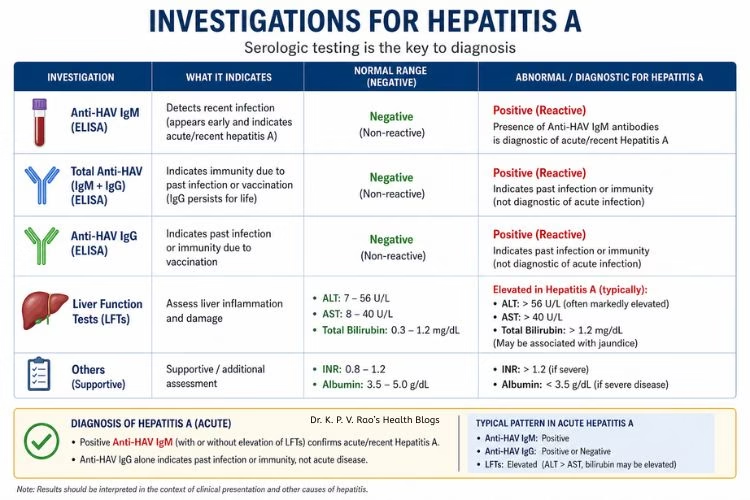
Investigations that your doctor may order
If your doctor suspects you have hepatitis A, he may order these tests-
- Serum Hepatitis A IgM antibody test
- Serum Hepatitis A IgG antibody test
- Liver function tests (LFTs) – almost all the values may be high
- Complete blood count (CBC)
- Ultrasound of the abdomen
- Hepatitis panel (including Hepatitis B and C tests)
- Blood tests for other viral infections (e.g., Epstein-Barr virus, Cytomegalovirus)
- Coagulation profile (PT/INR)
- Abdominal CT scan (if needed)
- Liver biopsy (in rare cases)
Interpretation of the major investigations
The image below shows all the major investigations and what they imply about suspected Hepatitis A:
Simple Dietary Precautions That Dramatically Lower Your Exposure Risk
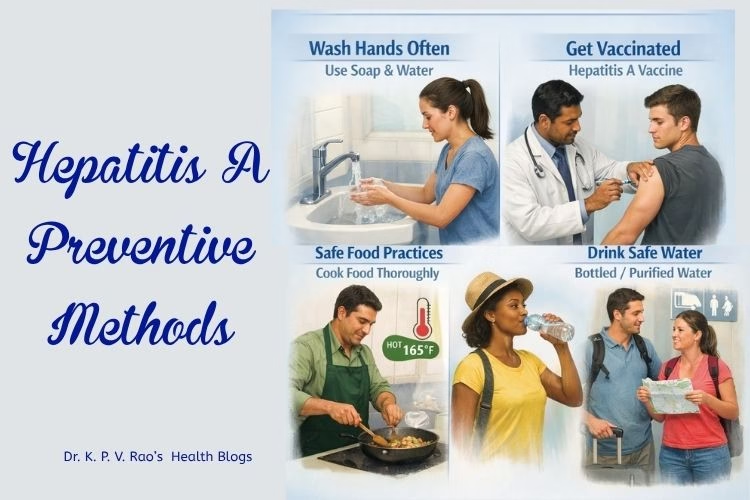
The good news is that hepatitis A is largely preventable, and most of the prevention comes down to consistent food and water habits that aren’t complicated — just easy to forget when you’re hungry and it’s raining outside.
Cooking and Heat
Heating food to at least 85°C (185°F) for one minute inactivates the hepatitis A virus. This is why thoroughly cooked meals carry a much lower risk than raw ones. The rule is simple: if in doubt, heat it out.
- Avoid raw or lightly steamed shellfish entirely during monsoon season, regardless of the restaurant’s reputation
- Make sure street food is served hot and freshly prepared — avoid anything that’s been sitting at room temperature
- Reheat leftovers properly rather than eating them cold
Water and Beverages
- Drink only boiled, filtered, or sealed bottled water
- Skip ice in drinks unless you can confirm it was made from treated water
- Avoid fresh fruit juices from street vendors, as these often use tap water or unclean blenders
Raw Produce Handling
If you’re preparing salads or using raw herbs at home during monsoon season:
- Wash all produce under clean running water
- Soak vegetables in a diluted potassium permanganate or food-safe antiseptic solution for a few minutes
- Dry produce thoroughly before cutting — moisture helps microorganisms survive longer
- Use a separate cutting board for raw vegetables and cooked foods
Vaccination — The Most Reliable Protection
Dietary caution is important, but the hepatitis A vaccine is the single most effective way to protect yourself. It’s a two-dose vaccine that provides long-term protection (10+ years with both doses) and is especially recommended if you:
- Travel frequently or live in areas with poor sanitation
- Work in food handling or healthcare
- Have children in school or daycare settings
A single dose given before monsoon season provides substantial short-term protection within two to four weeks of administration.
Hand Hygiene — The Underrated Shield
Washing hands with soap and clean water for at least 20 seconds before handling food and after using the restroom can interrupt the fecal-oral transmission route that drives most hepatitis A cases.
Alcohol-based hand sanitizers are a backup, but they are not as effective against HAV as thorough soap-and-water washing.”
Staying consistent with these habits throughout the monsoon season — not just when you feel under the weather — is what actually should follow.
Conclusion
To summarize, let’swatch this video:
Hepatitis A is a highly contagious liver infection caused by the hepatitis A virus (HAV). It is primarily transmitted through ingestion of contaminated food and water or through direct contact with an infected person.
Symptoms include fatigue, nausea, abdominal pain, loss of appetite, and jaundice. Prevention includes vaccination, practicing good hygiene, and ensuring safe food and water consumption.
While it can affect anyone, those at higher risk include travelers to areas with high infection rates, individuals with liver disease, and those who engage in certain high-risk behaviors.
Treatment focuses on relieving symptoms, as most people recover fully without long-term complications.
Related Topics on Hepatitis:
- Cleveland Clinic on Hepatitis
- Wikipedia.org
- Medplus.gov
- WHO
- World Hepatitis Day
- Medical Treatment for Hepatitis
- Viral Hepatitis Treatment
- Hepatitis A
- Health Direct AU
- What Causes Hepatitis
My next article to be published shortly will be on Gastroenteritis. So, please tuned on to Dr. K. P. V. Rao’s Health Blogs for further updates
Adios.
