


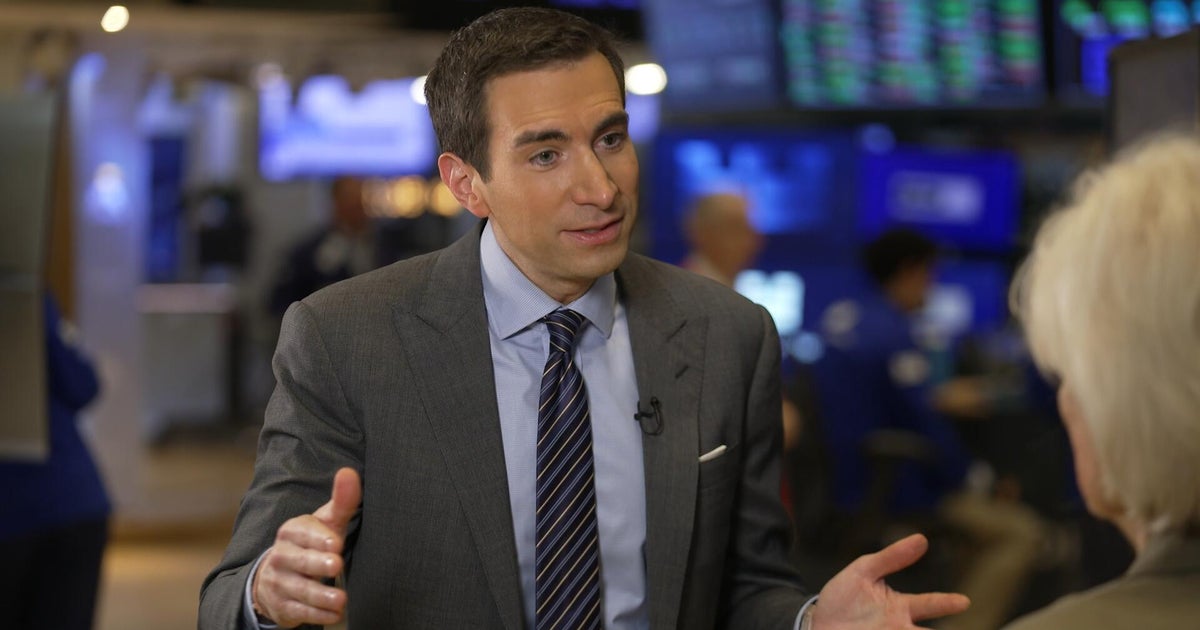
After nearly a decade spent studying the most famous stock market crash in history, financial journalist Andrew Ross Sorkin warns that the Wall Street of today echoes the market of 1929, when highs preceded a massive slump, leading to the Great Depression.
Artificial intelligence and technology have contributed to a remarkable boom in recent years. But, Sorkin said, today’s economy is being propped up by the AI boom, and it’s too soon to tell if this is a sugar rush, a short-term and unsustainable boost to the markets. But, Sorkin is positive there’s a crash coming.
“I just can’t tell you when, and I can’t tell you how deep,” he said. “But I can assure you, unfortunately, I wish I wasn’t saying this, we will have a crash.”
The Roaring ’20s
Despite a tumble this Friday, stocks on Wall Street have shot up in recent months. Still, some investors are getting weak in the knees, fearing stocks are overheated. Sorkin, author of “1929: Inside the Greatest Crash in Wall Street History – and How It Shattered a Nation,” out Oct. 14, says the U.S. is in a new roaring 20s, the 2020s, with stocks pushing to record highs, just as they were in the 1920s.
Market highs today have him feeling anxious.
“I’m anxious that we are at prices that may not feel sustainable. And what I don’t know is we are either living through some kind of remarkable boom and part of that’s artificial intelligence and technology, and all of that, or everything’s overpriced,” he said.
60 Minutes 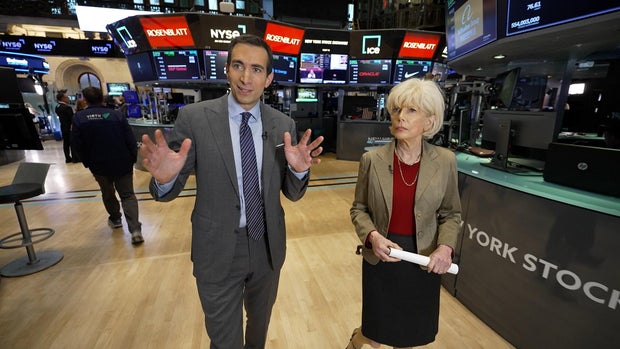
The market of 1929 was fueled by rampant speculation, including by ordinary investors unaware of the mounting risks, and of heavy borrowing. People of modest means were lured by Wall Street bankers and other stock market touts to invest using what was then a newfangled concept: credit. It was called buying on a margin. You only had to put down 10% of the stock price, borrowing the rest from your banker.
Before 1919, most people did not take on credit or debt, influenced by religious views and moral norms against borrowing money, Sorkin said. That changed when General Motors, in 1919, started lending people money so they could afford to buy the company’s cars. It changed out Americans shopped.
“And then the bankers realize what’s happening, and they realize that they can lend out money so that more folks can buy stocks. It was all sort of wrapped in the flag of democratizing access,” Sorkin said. “And in good times, when the stock is going up, it’s like free money. In bad times, you’re on the hook, and you’re on the hook in a very bad way.”
Today, it’s hundreds of billions being invested in AI, with some investment pros warning of a possible bubble as stocks soar to stratospheric heights even amid significant economic uncertainty, such as Friday’s slide after President Trump threatened more China tariffs.
“I think it’s hard to say we’re not in a bubble of some sort,” Sorkin said. “The question is always when is the bubble going to pop?”
Protecting consumers in the market
When things got out of control in 1929, frightened traders dumped stocks as investors lost their businesses and homes. In the years since, laws, regulations and agencies have been put in place to protect investors.
Some of those barriers to prevent exploitation are now coming down, Sorkin said. U.S. Securities and Exchange Commission rules have become less stringent and “the Consumer Protection Bureau practically doesn’t exist anymore.”
“That’s what concerns me,” Sorkin said. “It’s not that we’re going off a cliff tomorrow. It’s that there’s speculation in the market today, there’s an increasing amount of debt in the market today, and all of that’s happening against the backdrop of the guardrails coming off.”
Those guardrails include ones that allow only the wealthy to invest directly in private companies that have fewer regulations, like AI startups before they go public.
In recent decades, people who could invest in private equity and venture capital outperformed investors who did not. Those kinds of assets, generally restricted to wealthy investors, are potentially more rewarding, but also riskier.
“Public companies, after the SEC was created, were required to have all sorts of disclosure rules so that the public could understand what’s going on inside them. Private companies don’t have that,” Sorkin said. “But historically, the average ordinary American wasn’t really allowed to invest in the private companies. But in this flag of democratizing finance, there’s a lot of people who want access to that.”
Some people feel elite investors have better access, while others are unable to get in early on opportunities, Sorkin said. There’s been a push by both the Trump administration and the financial sector to open up the market to more people.
But that would also require moving the guardrails designed to protect people.
“They have protected a lot of people, but some people would say they protected people from getting rich,” Sorkin said.
Push today for democratizing investing
In his latest annual letter to investors, BlackRock CEO Larry Fink suggested opening retirement 401(k)s to riskier private investments in the name of democratizing investing. He said there were opportunities for investing in AI or data centers.
Right now money managers are precluded from investing in those types of assets in many retirement products, but the Trump administration is in the process of changing that, Fink explained.
The new investment opportunity comes with risk.
“But everything is risky other than keeping your money in a bank account overnight,” Fink said.
60 Minutes 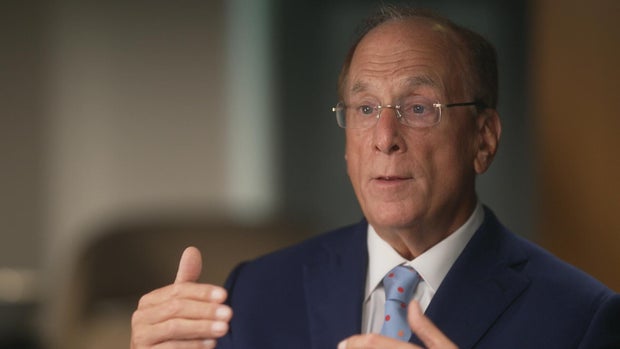
Fink, who once called bitcoin the domain of money launderers and thieves, also wants to add crypto to investment portfolios.
“The markets teach you, you have to always relook at your assumptions,” he said. “There is a role for crypto in the same way there is a role for gold — that is, it’s an alternative.”
He sees it, as he does AI, as an opportunity to add diversity to a portfolio.
But Sorkin says some crypto products, like meme coins, can be abused in ways similar to 1929, with speculators sending the value of cryptocurrencies soaring before they come crashing down. Sorkin has his own personal example involving a television appearance with Fink.
“He makes a joke, I think, about how there should be a Sorkin coin. Well, two hours later, somebody makes a Sorkin coin. And all of a sudden, this Sorkin coin is now worth millions of dollars. And I’m watching it,” Sorkin said.
The Sorkin coin peaked at $170 million worth of trading in a day.
“And I think today it does something like $20 or $21 a day,” Sorkin said.
