


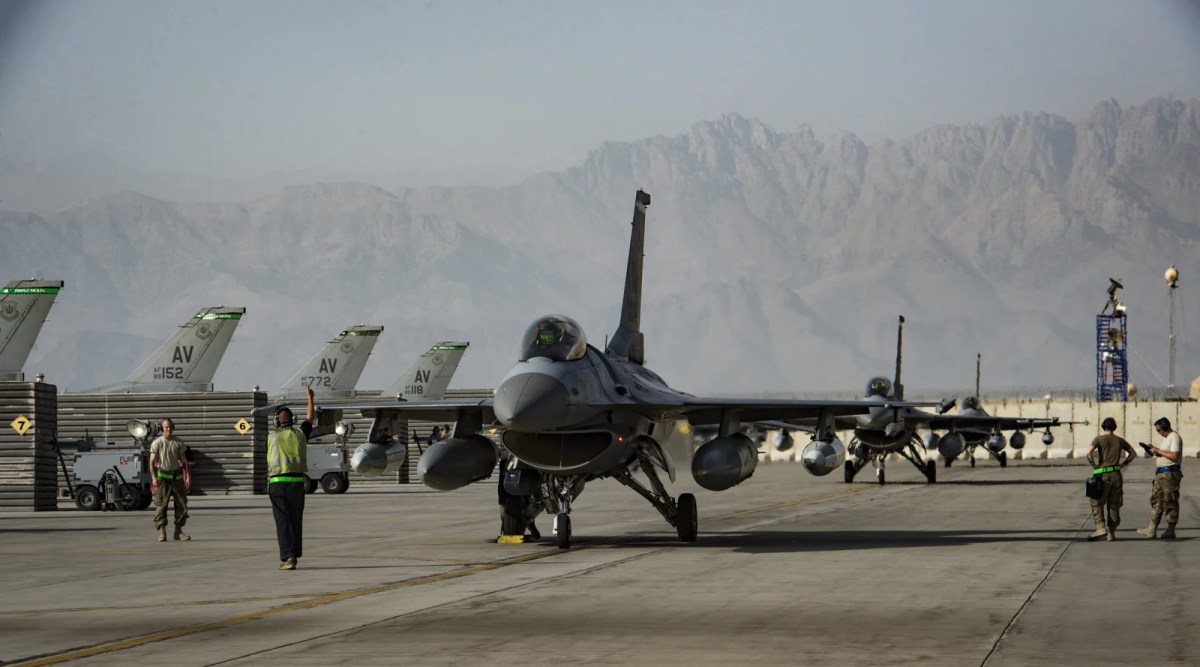

The Bagram Air Base saga is back in the news, and for good reason. What was once the hub of U.S. military activity in Afghanistan, Bagram is now at the center of a new controversy regarding American influence, international competition, and the war on terror’s unfinished agenda. President Donald Trump has made it very clear: he wants Bagram back, and he won’t hesitate to explain why.

During a recent news conference with British Prime Minister Keir Starmer, Trump announced the United States is actively working to reclaim Bagram from the Taliban. Trump referred to the 2021 withdrawal as a “total disaster,” claiming the U.S. “gave it to them for nothing.” Trump’s argument is straightforward—Bagram’s no longer about Afghanistan. It’s about China. He underscored that the base is “an hour away from where China makes its nuclear weapons,” and it is a strategic position to track and respond to Beijing’s rising military might. Trump asserted, “We’re trying to get it back because they need things from us. We want that base back.”. But one of the reasons we require the base is, as you are well aware, it’s an hour from where China makes its nuclear weapons.”

Bagram is more than its runways and hangars. Built by the Soviets in the 1950s and expanded by the U.S. into one of the world’s biggest air bases, Bagram has been for decades a symbol of the outside power extending its influence into Afghanistan. Its location—above the capital city of Kabul and close to China, Pakistan, Iran, and Central Asian borders—is strategically positioned to project military might and espionage into several of the world’s most troubled nations. The base itself is massive, with an 11,800-foot runway large enough to handle heavy bombers and cargo planes, fortified shelters, and large command and logistical facilities.

But it’s the connection to China that has brought Bagram back onto Washington’s radar. The U.S. military and the intelligence community are increasingly alarmed at China’s accelerating nuclear expansion, especially in the northwestern province of Xinjiang, which borders Afghanistan. Satellite photos have revealed fresh fields of missile silos and nuclear facilities there. The Pentagon’s recent reports highlight China’s “most frenetic expansion and ambitious nuclear modernization in history,” with projections that Beijing now has more than 600 deployed nuclear warheads and will likely surpass 1,000 by 2030. Bagram’s proximity—shorter than 500 miles from Xinjiang—is temptingly priceless as a listening post and quick-response asset, especially in comparison to other U.S. bases around the Indo-Pacific, which are thousands of miles away from the mainland.

The security scenario in the region is no simpler as well. Post the American withdrawal, the nation has also become a hotbed of terrorist groups like ISIS-K, al Qaeda, and the Tehreek-e-Taliban Pakistan (TTP). The Taliban, who now hold Bagram, have been accused of sheltering or abetting these groups, even though they had signed earlier pledges to see that Afghanistan would not serve as a launching pad for terrorist strikes against the West. American and foreign commentators warn that the return of terrorist activity in Afghanistan poses a new threat, not just to the nation but to global security. The fall of Bagram has deprived the U.S. of a military presence in Central Asia, limiting its ability to respond quickly to emerging threats.

The issue of who currently owns Bagram continues to be contentious. Though there have been rumors of clandestine US-Taliban negotiations and even the return of American aircraft to the air base, Taliban spokesman Zabihullah Mujahid has vehemently rejected any transfer, calling it “propaganda.” He insists that the Taliban will never permit any foreign military presence in Afghanistan, making control of Bagram one of national sovereignty. Meanwhile, the U.S. continues to demand the return of vacated military hardware upon withdrawal, with Trump making future assistance to Afghanistan contingent on the return of billions of dollars’ worth of hardware by the Taliban.

The Bagram drama is a case study in the pitfalls of U.S. foreign policy. The chaotic 2021 pullout, the precipitous collapse of the Afghan regime, and the loss of a strategic asset like Bagram have all been attributed to planning and execution failures. Critics argue that holding onto Bagram would have provided leverage against the Taliban and a beachhead for counterterrorism activities. Rather, the U.S. must confront the task of reclaiming influence in a region where competitors such as China, Russia, and Iran are keen to fill the void.

For Washington, it’s not a case of nostalgia for lost power. It’s a matter of adapting to a new great power game, where military bases are not footprints in the sand but pawns on the world board. Whether or not America can truly reclaim Bagram—and what it will cost—remains to be seen. But this is one thing: the fate of this air base will decide the next act of America’s engagement with Afghanistan, China, and the world.
