



The conflict in Ukraine-Russia has emerged as the world’s most stubborn conflict, and President Donald Trump’s re-entry into the White House has shed light on whether diplomacy can finally bring it to an end. Trump’s campaign had been built on the promise that he could negotiate peace “in a day.” Still, reality has proved much more complicated to manage, with each round of negotiations revealing fresh layers of challenge, resistance, and shifting priorities.

Trump’s Diplomatic Effort: Meetings, Calls, and Shifting Tactics
Since taking office, Trump has made ending the war in Ukraine a centerpiece of his foreign policy. He’s engaged in marathon phone calls and face-to-face summits with both Russian President Vladimir Putin and Ukrainian President Volodymyr Zelenskyy, hoping to strike a deal that will stop the bloodshed. In his own words, his discussion with Putin was “highly productive,” with both nations’ leaders deciding to end the millions of lives lost in the war. He has also spoken positively about speaking to Zelenskyy, citing that both sides want peace.
But the devil is in the details. While Trump has called for swift talks and even half-step ceasefires—such as a lull in bombardments of energy installations—Putin has never drawn back from grand concessions. Putin’s idea of negotiation, according to the BBC, is to offer limited pauses and demand that Ukraine surrender its foreign military aid and mobilize. It has meant that Trump can boast small triumphs, such as an energy ceasefire, while the overall war rages on.

Territorial Conflicts: Crimea, Donbas, Kursk, and Land Exchanges Idea
One of the thorniest issues is territory. Trump’s advisers have suggested that regaining Crimea is unrealistic and not the goal of the United States. Bryan Lanza, a former Trump campaign adviser, bluntly stated that “Crimea is gone,” and that the US would focus on peace rather than enabling Ukraine to reclaim all occupied land. According to Lanza, if Zelenskyy insists on getting Crimea back, “you’re on your own”.
The exchange of territories has also been proposed, with Zelenskyy floating a possible trade deal where Ukrainian-held enclaves in Russia’s Kursk region could be exchanged. The Kremlin, though, has categorically ruled out any such exchange. The mouthpiece of Putin, Dmitry Peskov, informed that “Russia has never negotiated and will not negotiate the exchange of its territory,” and vowed to drive Ukrainian forces out of Kursk. The costly fight at Kursk, where Ukrainian forces hung on to land as a bargaining factor, illustrates how territorial matters are a key roadblock.

NATO Membership and Security Assurances: US and European Stances
Another area of disagreement is the ultimate fate of Ukraine in NATO. US Defense Secretary Pete Hegseth was candid in expressing that Ukrainian membership in NATO is not a viable part of any negotiated settlement. Even Zelenskyy has conceded that joining the alliance may be off-limits, proposing instead that an army of the same size as Russia’s should be built—with Western help. European politicians have framed NATO as being back in the waiting room for Ukraine, as long as it qualifies, but the US position is uncompromising: no membership in NATO, no US on the battlefield.
Security promises are also an enigma. Hegseth suggested that Ukraine’s security would be defended by capable European and non-European warriors, but not by warriors in NATO. Chatham House analysts argue that this “effectively rules out … credible security guarantees” from NATO or the US, which means Ukraine is in a vulnerable position.

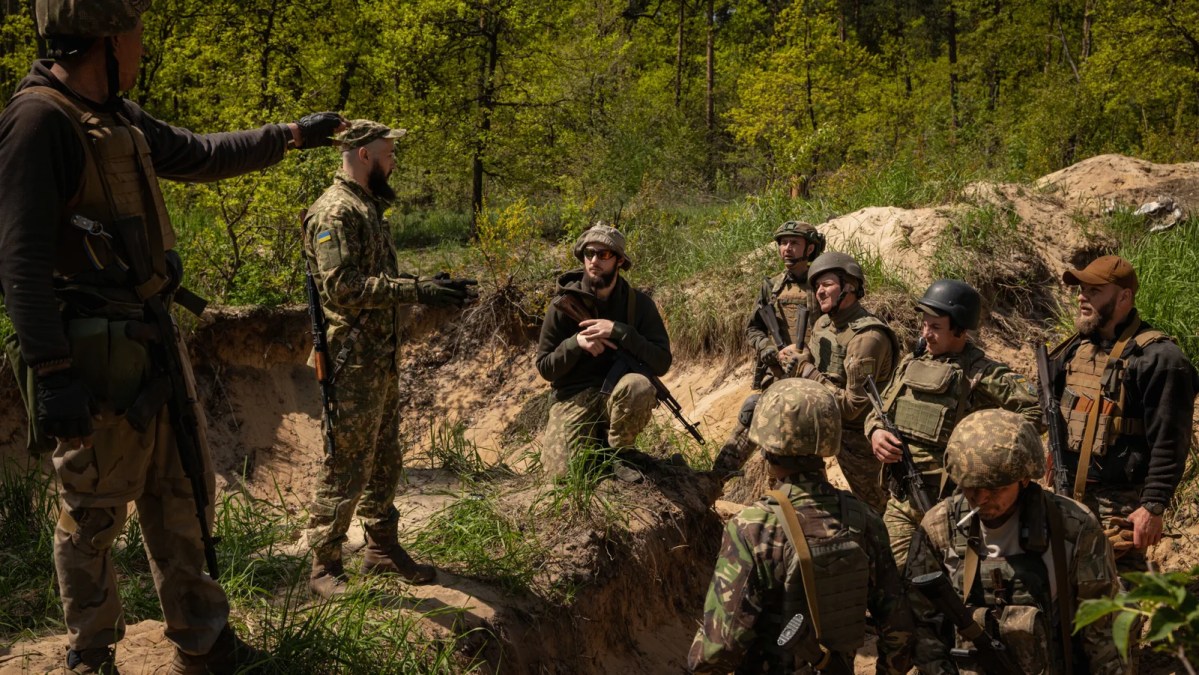
While diplomats fight over maps and agreements, combat on the battlefield continues to have a deadly cost. Russian forces have moved their control incrementally deeper into eastern Ukraine, specifically into the Donbas, and made indiscriminate air raids on urban areas like Kyiv. BBC News identifies that Russia has pushed ahead up to strategic towns like Pokrovsk and Chasiv Yar, with the ability to encircle Ukrainian defenders. There are significant civilian fatalities, with dozens murdered in recent weeks by drone strikes.
Ukraine has also launched aggressive counterattacks, for example, against Russian airfields and oil infrastructure, but they have not been sufficient to counter the overall trend. An estimated 165,000 to 235,000 Russian soldiers have been killed since the invasion began, according to the Institute for the Study of War, while official Ukrainian reports—the most recent of which came in December—put their own 43,000 military fatalities at odds with what Western analysts consider to be a low estimate.

Ceasefire Negotiations: Energy Truce, Prisoner Exchanges, and Challenges
Trump’s latest diplomatic efforts have been focused on negotiating partial ceasefires, starting with a pause in attacks on energy infrastructure. Both sides committed to a 30-day energy ceasefire, which is some solace for Ukrainian citizens who risked blackouts and the cold. Putin’s conditions for a total ceasefire, however—the halting of foreign military aid and intelligence-sharing with Kyiv—are seen as existential threats by Ukraine and its allies.
Discussions have also touched upon prisoner exchanges and Black Sea naval security, but the overall goal of a complete ceasefire still eludes them. As BBC correspondents noted, every step forward is greeted with new conditions and demands from Moscow, leaving the process stalled in limbo.

Expert Insights: Expert Analysis of Alaska Summit and Diplomatic Impasse
Trump and Putin’s all-the-spoiler Alaska summit was touted as a potential turning point, but collapsed in failure without a deal. Putin was “intransigent” and refused to make any serious concessions, and Trump will look weak unless he makes good on his threatened tougher sanctions and military support, experts at the Atlantic Council say. Putin’s play, analysts all concur, is to stall for time to cement his gains and push against further economic pressure.
Others commend Trump for taking the risk of his political capital and trying to stop the killing, but warn that diplomacy alone will not do. America possesses tremendous leverage, but if it is not ready to apply actual pressure—by sanctions, arms sales, and diplomatic isolation—then Putin will not change direction.

Economic and Military Aid: Shifting Burdens and Future Prospects
The US has traditionally been the largest military aid donor to Ukraine, but the Trump administration is pressing Europe to become more responsible. Defense Secretary Hegseth encouraged NATO members to increase defense spending to 5 percent of GDP and provide the majority of future assistance. The US is negotiating a new minerals and energy pact with Ukraine meant to promote continued investment in Ukraine’s defense and rebuilding.
As the war continues, the question is whether Trump’s approach—diplomacy, economic pressure, and shifting alliances—is strong enough to break the stalemate. The battlefield, not the negotiating table, may well decide the fate of Ukraine, unless the US and its allies can find a way of tipping the balance.
The stakes are not greater, and the world holds its breath to see whether American diplomacy will lead to peace or whether the war will persist, reshaping the map of Europe and the future of international security.
