


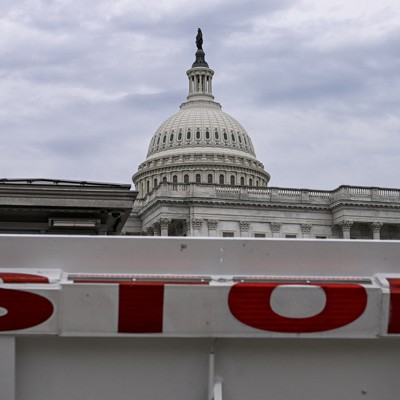
A potential shutdown could stall modernization efforts if lawmakers and the White House aren’t able to reach a deal to avert a funding lapse by Tuesday at midnight, former tech leaders and experts have told Nextgov/FCW.
Even planning for a potential shutdown takes time and attention away from normal work in government technology shops, they say.
“You have to divert what you were doing on the day-to-day to shut down,” one former federal agency CIO, not authorized to speak on the record, told Nextgov/FCW. “Shutdown planning consumes all of your time. It does take a lot to shut the government down.”
If a shutdown does occur, there are implications for cybersecurity, modernization efforts and more. An agreement to fund the government by the deadline looks increasingly unlikely.
Agencies are under unusual directions from the White House Office of Management and Budget this year to prepare to layoff employees whose work isn’t funded by means other than annual appropriations and doesn’t align with the administration’s priorities, although some agency managers have told their employees not to take the threat seriously. Agencies should continue to revise their reduction in force plans even if a shutdown is averted, OMB has told agencies.
Within agencies, federal employees funded by means other than annual appropriations continue to work and be paid during shutdowns, as do those whose roles involve the safety of human life or protection of property, although they work without pay. Other federal employees are furloughed, although how they will fare under the Trump administration’s threat of layoffs isn’t yet clear.
Agency contingency plans for a lapse in appropriations — hosted this year on agency websites individually instead of by OMB centrally, as they typically are — offer a window into how agencies are categorizing different tech workers.
At the Justice Department, cybersecurity professionals needed to operate the department’s 24/7 security operations center are “excepted” and therefore expected to continue working, as are employees working on cybersecurity prosecutions and investigations. Employees needed for systems to support ongoing law enforcement operations also keep working during any appropriations lapse.
Cybersecurity is a critical concern for experts heading into the shutdown who have warned that a diminished workforce could exacerbate risks.
The contingency plan at the Department of Veterans Affairs makes clear that some IT work will stop if there’s an appropriations lapse, including IT application management, enterprise portfolio management and finance and acquisition management.
The plan at the Environmental Protection Agency is similar.
“Unless otherwise identified as a system supporting excepted or exempted activities, most agency IT systems should be scaled back to basic operational status, which would include all cybersecurity measures necessary to protect the agency’s IT infrastructure and data assets,” the EPA contingency plan says. “ This will ensure the protection of government records, that information and cyber security controls are in place, and assist in reactivating once the period of the shutdown is over.”
The EPA CIO is in charge of deciding what systems must stay up during a shutdown. Mission critical IT systems are among those that will get full support during a lapse, the plan says, though non-mission critical systems will still be maintained and secured.
As a result, some IT workers may be able to continue working.
The Labor Department’s plan notes that some tech-focused Labor employees will be able to continue working under money from the Technology Modernization Fund, a revolving fund not funded by annual appropriations.
Only a “minimal number” of staff in the department’s Office of the Chief Information Officer will continue working to ensure that the technology functions needed for the other Labor employees still working are supported, like email, network and help desk functions.
A few agencies specifically note in their plans that government websites won’t be updated during shutdowns unless it’s relevant to exempted or excepted activities.
Even after shutdowns end, the effects on modernization efforts linger.
“All modernization or anything that you were doing from a modernization perspective stops,” the former CIO said. “So it slows down any work or momentum that had been gained to move the ball forward, because all those contracts get paused and — depending on how long a shutdown lasts — some people go and find other jobs.”
“You do lose talent. I do think this, for many, will be the straw that breaks the camel’s back. It is poison for an effective organization, for an effective government,” said Max Stier, the president and CEO of the Partnership for Public Service.
For those that stay, IT work doesn’t “simply switch back on” after funding is approved, Gary Barlet, public sector CTO at Illumio and former CIO at the U.S. Postal Service Office of the Inspector General, told Nextgov/FCW in a statement.
“Work has piled up and slowed down, projects underway or just starting have been stalled and funding pauses have thrown off timelines,” he said. “Such delays ripple across planned cyber and IT efforts. Important cybersecurity projects are pushed aside, and, when money finally becomes available, agencies often face pressure to catch up fast — sometimes prioritizing immediate fixes over the deeper, long-term improvements needed to keep the government’s systems, and our nation, secure.”
A shutdown “interrupts the longer term investments that are necessary to make our government run over time,” said Stier. “Our government becomes slower, less efficient, those tech modernization projects wind up taking more time and more money than anyone anticipated.”
