


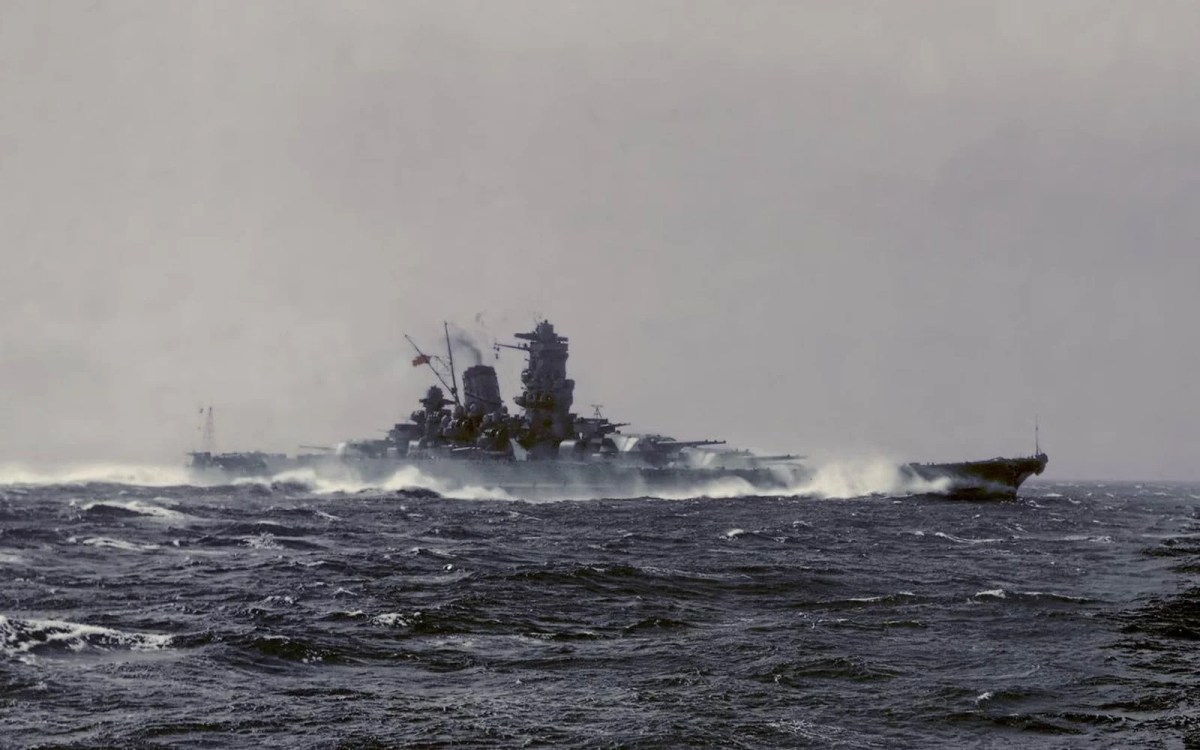

The history of the Japanese battleship Yamato is more than the story of a single massive warship—it is the tale of a turning point in naval history, when centuries-old concepts of sea power were supplanted by new ones. The construction of Yamato in the 1930s was shrouded in mystery. The Imperial Japanese Navy desired a ship strong enough to compete with any enemy, especially the U.S. Navy. Almost 70,000 tons when carrying a load and measuring 863 feet long, Yamato was a moving fortress.

She sported nine enormous 18-inch guns—the largest ever on a battleship—supporting armor strong enough to withstand the most powerful enemy shells. Her guns had ranges over 25 miles, having a plain logic: if you can’t outnumber the enemy, create something that’s so dominating it can confront more than one of them simultaneously.

While Yamato and her sister ship, Musashi, were nearing completion, the character of naval warfare was changing. Aircraft carriers were becoming the new lords of the seas, capable of striking distances far beyond any battleship’s guns. However, in December 1941, Yamato was put into service as a symbol of Japan’s naval might. Most of her early life, though, was spent in port, limited by shortages of fuel and a defensive policy in a navy under mounting pressure.

Her most significant action was at the Battle of Leyte Gulf in October 1944, the greatest naval battle in history. Yamato launched her main armament, but the final blows were from the skies. American carrier aircraft pounded the Japanese fleet, sending Musashi to the bottom and crippling others. The message was clear: battleships in isolation could no longer control the seas; air power was supreme.

By the spring of 1945, Japan was in crisis. American troops took Iwo Jima, cities throughout the homeland were bombed day and night, and the Okinawa campaign was ongoing. Desperate, Japan sent off Operation Ten-Go—a suicidal venture by Yamato, the light cruiser Yahagi, and eight destroyers towards Okinawa. The strategy was bleak: Yamato would be run aground and used as a fixed gun platform against the enemy forces. It had only enough fuel to make the trip, without any prospect of making it back home.

The decision was a combination of impulsive judgment, misinterpretations of the emperor’s motives, and a need to maintain naval prestige. Most on board the Yamato allegedly questioned the purpose of the mission. The fleet sailed on April 6, 1945, with over 3,300 men who understood chances for survival were not good.

The U.S. Navy was prepared. On April 7, American aircraft spotted the fleet, and Task Force 58 launched more than 300 carrier aircraft to intercept. Dive bombers and torpedo planes hit in waves from all sides. Yahagi and some destroyers were sunk early on, and Yamato received multiple hits from bombs and torpedoes.

Flooded her power and steering, leaving her dead in the water. The last torpedo hit caused a devastating explosion in her guns. At 2:23 p.m., Yamato rolled over on her side and sank, taking more than 3,000 crew with her. Only 269 remained alive. American losses were few: 10 aircraft and 12 men.

Yamato’s sinking was not just the loss of a vessel—it was the end of the era of battleships. Previous engagements, such as Midway, had presaged this transformation, but the sinking of Yamato left little room for doubt: from then on, aircraft carriers, rather than huge gun-platform warships, dictated naval dominance.

For Japan, Yamato is a symbol of national sacrifice, tragedy, and the futility of war with obsolescent tactics. For military historians, it’s a grim reminder that tactics and technology change, and hanging on to old habits can be disastrous. Commissioned for a form of warfare that no longer existed, Yamato was both the world’s largest battleship and one of the final ones.

Today, she lies a thousand feet under the sea—a quiet witness to the bravery of her mariners and to the day that naval war forever altered.
